



CONCLUSION
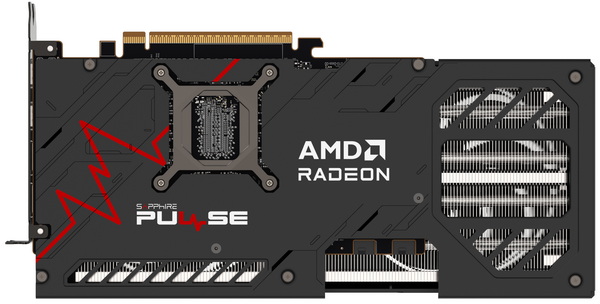
The SAPPHIRE PULSE AMD Radeon RX 9070 GRE proves that AMD's decision to expand the RDNA 4 product stack was a sensible one, offering performance levels that comfortably handle modern games at both 1440p and even 4K while maintaining surprisingly low operating temperatures and a respectable power envelope. Sapphire's implementation complements the GPU particularly well, with the Dual-X cooling solution keeping thermals under control and leaving enough headroom for users interested in squeezing out some additional performance through manual overclocking. Equally important is the fact that AMD's software ecosystem has matured considerably since the launch of the Radeon RX 9000 series, with newer drivers noticeably improving stability and ray tracing performance across a growing number of titles. On the other hand, the graphics card market continues to suffer from steadily increasing prices, making value assessments more difficult than in previous generations. Although RDNA 4 has significantly narrowed the gap, ray tracing performance still trails NVIDIA's competing solutions in many demanding workloads, and despite the impressive improvements introduced by FSR 4, AMD still lacks a direct ecosystem equivalent to the maturity, adoption and feature integration currently enjoyed by NVIDIA's DLSS technology. Even so, for gamers prioritizing strong rasterization performance, solid thermals and a well-rounded feature set, the SAPPHIRE PULSE Radeon RX 9070 GRE presents itself as a compelling addition to AMD's current graphics portfolio.
Right now, the SAPPHIRE PULSE AMD Radeon RX 9070 GRE retails for USD843.57 inside the USA (Amazon.com) and for 697.10Euros inside the EU (Amazon.de) and so just like every other graphics card it has seen a significant price increase since launch (unfortunately the current state of the market/industry is not going away soon). Overall, the SAPPHIRE PULSE AMD Radeon RX 9070 GRE delivers as advertised, it’s fast, cool, inaudible in most scenarios and has plenty of overclock headroom so the Golden Award is in order.

PROS
- Build Quality (Materials / Backplate)
- Good Performance (RT Included)
- Overclocking Headroom
- Noise Levels & Temperatures
- Supported Technologies
- TRIXX Software
CONS
- Current Price (For Some)