



INTRODUCTION
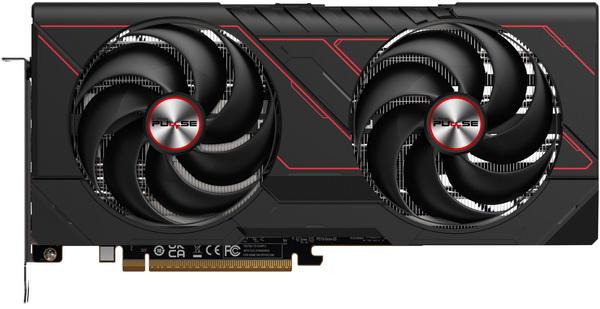
The graphics card market has settled into a more mature phase following the introduction of AMD's Radeon RX 9000 series and NVIDIA's GeForce RTX 50 family. What were once the industry's latest launches have now had ample time to establish themselves, allowing gamers and enthusiasts to better understand the strengths, weaknesses and positioning of each product. With both manufacturers expected to shift attention towards future generations in the coming years, the current line-up represents a relatively stable and well-understood landscape where buyers can make purchasing decisions based on real-world performance rather than launch-day expectations. Competition remains fierce across every price segment. AMD continues to leverage its RDNA 4 architecture with a strong emphasis on traditional rasterisation performance, improved ray tracing capabilities and an expanding suite of software-driven features, while NVIDIA's Blackwell-based GeForce RTX 50 series continues to promote advanced AI-assisted technologies alongside competitive gaming performance. As a result, consumers have access to a wider range of capable graphics cards than ever before, whether targeting high refresh rate gaming at 1080p, demanding 1440p workloads or smooth 4K experiences. Today we're taking a closer look at the SAPPHIRE PULSE AMD Radeon RX 9070 GRE, a custom implementation of AMD's Radeon RX 9070 GRE that aims to deliver a balanced blend of performance, efficiency and value within the increasingly crowded upper-midrange graphics card segment.
SAPPHIRE Technology continues to be a world leading manufacturer and global supplier of innovative graphics and mainboard products, delivering its AMD Radeon based products to the PC market addressing gaming and performance graphics hardware enthusiasts, as well as delivering an array of embedded technology solutions and commercial graphics products.
The Radeon RX 9070 GRE is based on AMD's Navi 48 graphics processor and RDNA 4 architecture, sharing many of the same technologies and features found across the rest of the Radeon RX 9000 series. As such, it supports AMD's latest gaming ecosystem, including FSR 4 AI-powered upscaling, HYPR-RX for simplified performance optimization, Fluid Motion Frames 2.1 frame generation technology, Radeon Anti-Lag 2 and a growing collection of AI-assisted rendering enhancements designed to improve image quality and responsiveness. Unlike the more powerful Radeon RX 9070 XT, however, the RX 9070 GRE is configured with 48 RDNA 4 Compute Units, 3072 Stream Processors, 48 Ray Accelerators, 96 AI Accelerators, 192 Texture Mapping Units and 48MB of Infinity Cache. Memory capacity is reduced to 12GB of GDDR6 operating across a 192-bit memory interface at 18Gbps, delivering bandwidth figures more appropriate for the card's intended position in AMD's product stack while maintaining support for modern high-resolution gaming workloads. As expected, AMD's Out-of-Order Memory Queuing technology remains present, helping improve ray tracing efficiency by reducing memory request bottlenecks. For its custom implementation, Sapphire equips the PULSE Radeon RX 9070 GRE with many of the same design elements found on its higher-end offerings. The Dual-X Cooling solution combines two Dual-Ball Bearing fans utilizing the company's latest AeroCurve fan blade design with Optimized Composite Heatpipes, an Integrated Cooling Module and Honeywell PTM7950 Thermal Interface Material for efficient heat transfer and long-term thermal performance. Sapphire has also included its FrameDefense reinforced mechanical structure, a metal backplate for increased rigidity, a 12-layer High TG Copper PCB, Digital Power Design circuitry and onboard Fuse Protection designed to enhance electrical reliability and operational stability. Clock speeds are set at up to 2200MHz Game Clock and up to 2790MHz Boost Clock, while total board power is rated at up to 220W, considerably lower than the RX 9070 XT. Finally, connectivity is handled by two DisplayPort 2.1a outputs and two HDMI 2.1b ports, allowing the PULSE Radeon RX 9070 GRE to support the latest generation of high-refresh-rate and high-resolution displays.