


INTRODUCTION
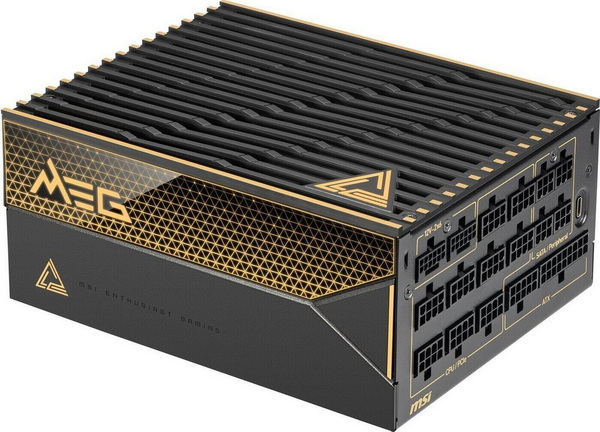
AMD, NVIDIA, Intel and even some emerging graphics cards chip manufacturers are expected to unveil their latest models in the coming months (early to mid-2026) and so I expect many PC users to be upgrading their systems sooner rather than later. The one hardware component that usually goes hand in hand with graphics cards is no other than the power supply unit and due to the vast number of available quality models in the market today, I don't think there's ever been a better time (not to date) for people to get their hands on one. Earlier this year MSI announced their latest flagship power supply unit, the MEG Ai1600T PCIE5 which found its way to the lab a while back.
MSI is a world leader in AI PC, gaming, content creation, business & productivity and AIoT solutions. Bolstered by its cutting-edge R&D capabilities and customer-driven innovation, MSI has a wide-ranging global presence spanning over 120 countries. Its comprehensive lineup of laptops, graphics cards, monitors, motherboards, desktops, peripherals, servers, IPCs, robotic appliances, vehicle infotainment and telematics systems, and EV charger are globally acclaimed. Committed to advancing user experiences through the finest product quality, intuitive user interface and design aesthetics, MSI is a leading brand that shapes the future of technology.
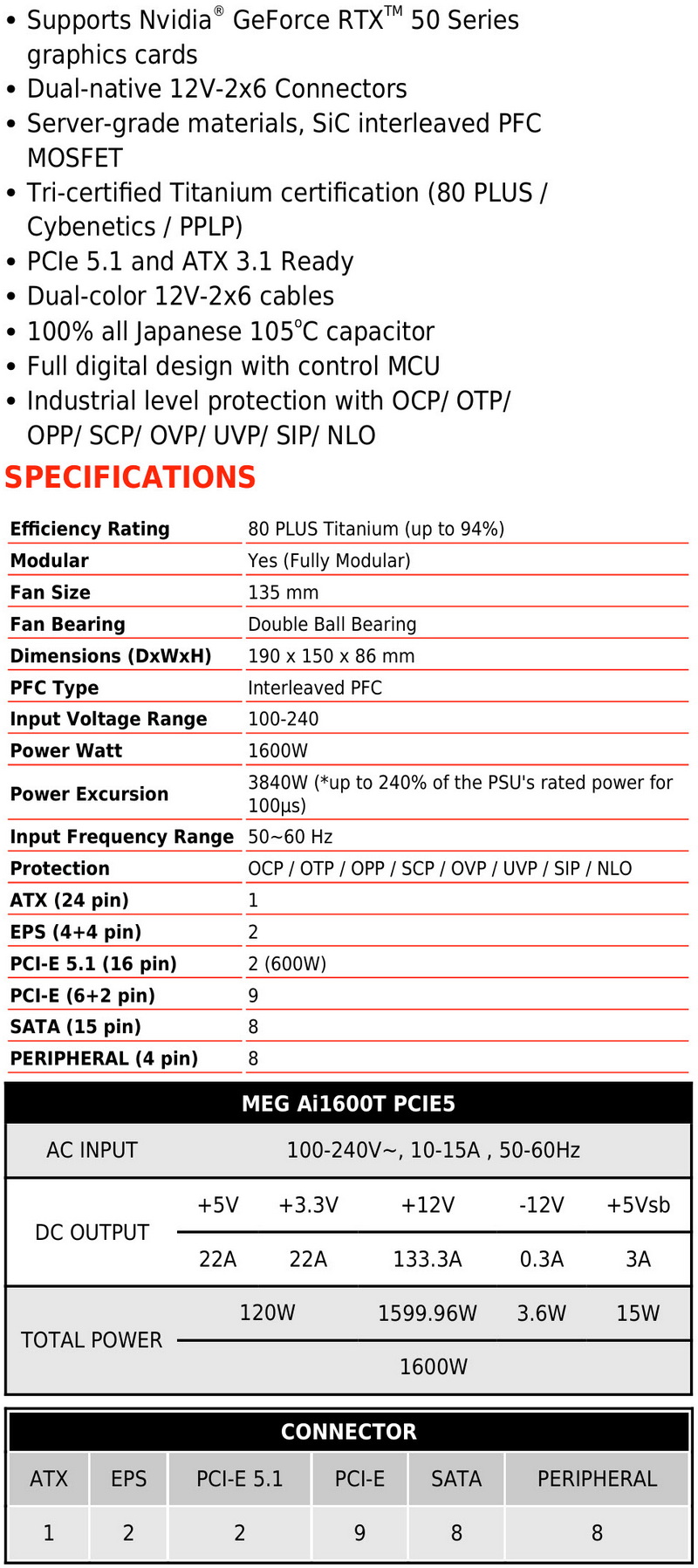
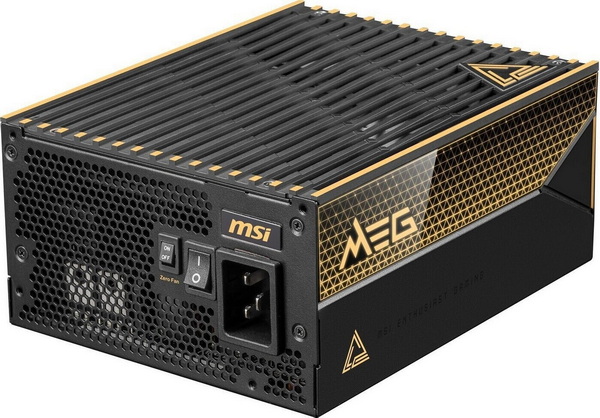
The Ai1600T PCIE5 power supply unit is part of MSI’s MEG (MSI Enthusiast Gaming) lineup and is currently available only with a power output of 1600W. This is a fully modular, ATX 3.1 & PCIe 5.1 compliant and 80 PLUS Titanium certified (up to 94% efficiency) power supply unit that features two 12V-2x6 power connectors (dual color, 600W), nine 6+2 pin PCIe power connectors single powerful +12V rail (133.3A) capable of delivering almost 100% of the units’ total power output (1599.96W) and has a peak power output of no less than 1738W (peak according to MSI is 3840W for up to 100ms - once again however this is not something I can test). The digital MEG Ai1600T PCIE5 also sports full bridge LLC topology with DC to DC module design, Silicon Carbide (SiC) MOSFETs in an interleaved topology, active PFC, zero fan mode for its 135mm fan (starts spinning after a specific load), high-quality server grade Japanese capacitors certified for use up to 105 degrees Celsius, individually sleeved cables and a full array of electrical protections including over-current (OCP), over-voltage (OVP), under-voltage (UVP), short-circuit (SCP), over-temperature (OTP), no-load (NLO), surge and in-rush (SIP), and over-power (OPP). Finally, MSI covers their flagship MEG Ai1600T PCIE5 power supply unit with an extremely generous 12-year limited warranty.
SPECIFICATIONS AND FEATURES
PACKAGING AND CONTENTS
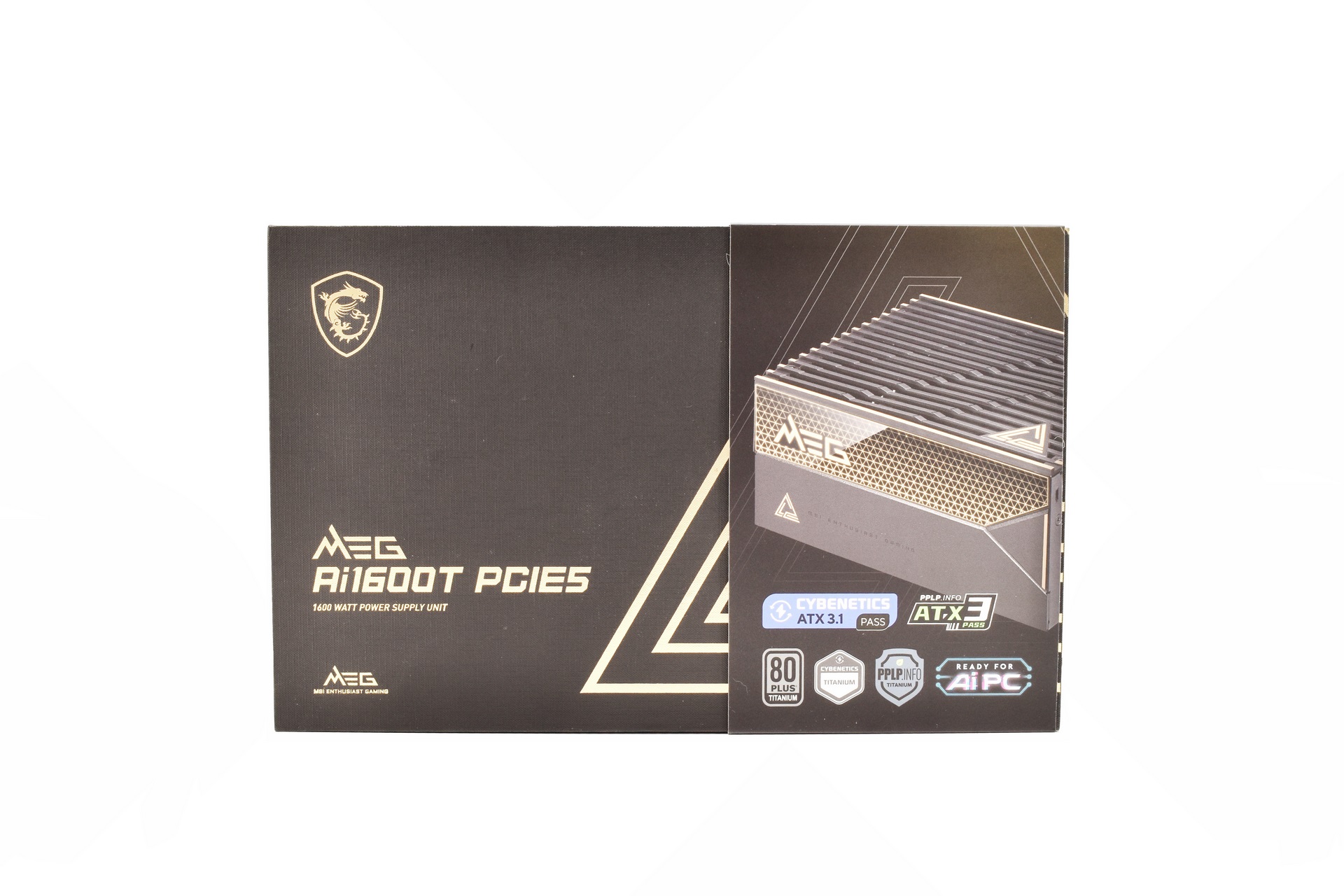
The front as always is taken by a large product picture, company logo and some certifications.

Turning the box around we find the main product features, electrical table, and the available modular cables.

Packing is excellent with the entire bundle placed between two thick pieces of foam and in different cut outs.

Along with the MEG Ai1600T PCIE5 power supply unit and its power cord inside the box you'll also find the modular cables with their storage pouch, USB-C to motherboard header cable, 10 cable straps, 4 mounting screws, EU regulatory notes paper, giveaway paper and a paper explaining how you can get the complete performance test for this particular unit directly from MSI.
THE MEG AI1600T PCIE5 EXTERIOR

Just like with other recent models MSI has used dual-colored 12V-2x6 power connectors with the MEG Ai1600T PCIE5.

The MEG Ai1600T PCIE5 is a large power supply unit that measures 190mm in length, 150mm in width and 86mm in height.
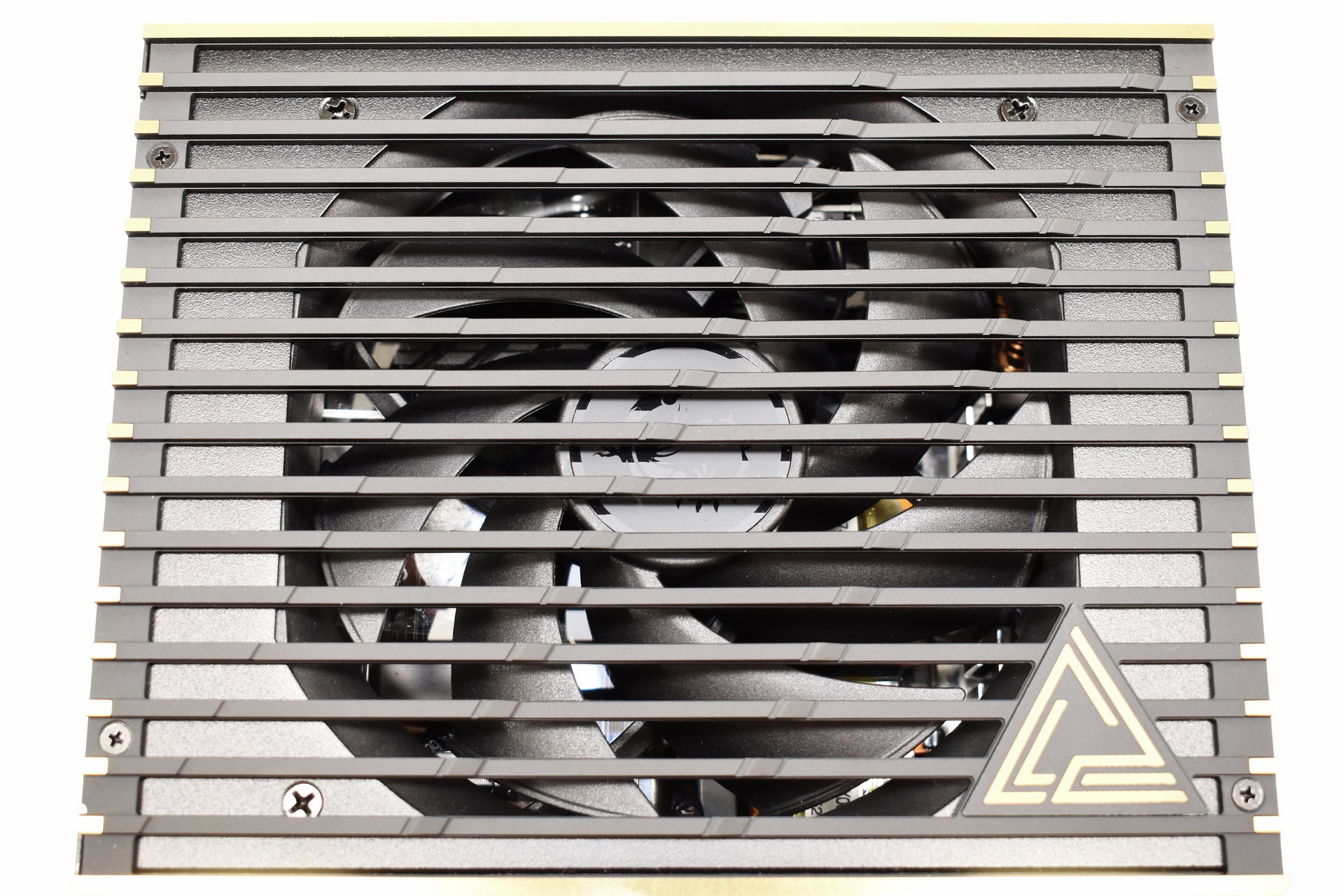
The 135mm fan is placed under a unique looking grill that also has the MEG line logo on it.

The right side of the enclosure is partially RGB illuminated the effects of which you can adjust from within the MSI center software.

As usual you can find the electrical table on the belly of the power supply.

All 17 available modular ports at the front and the USB-C port are all tagged and grouped.
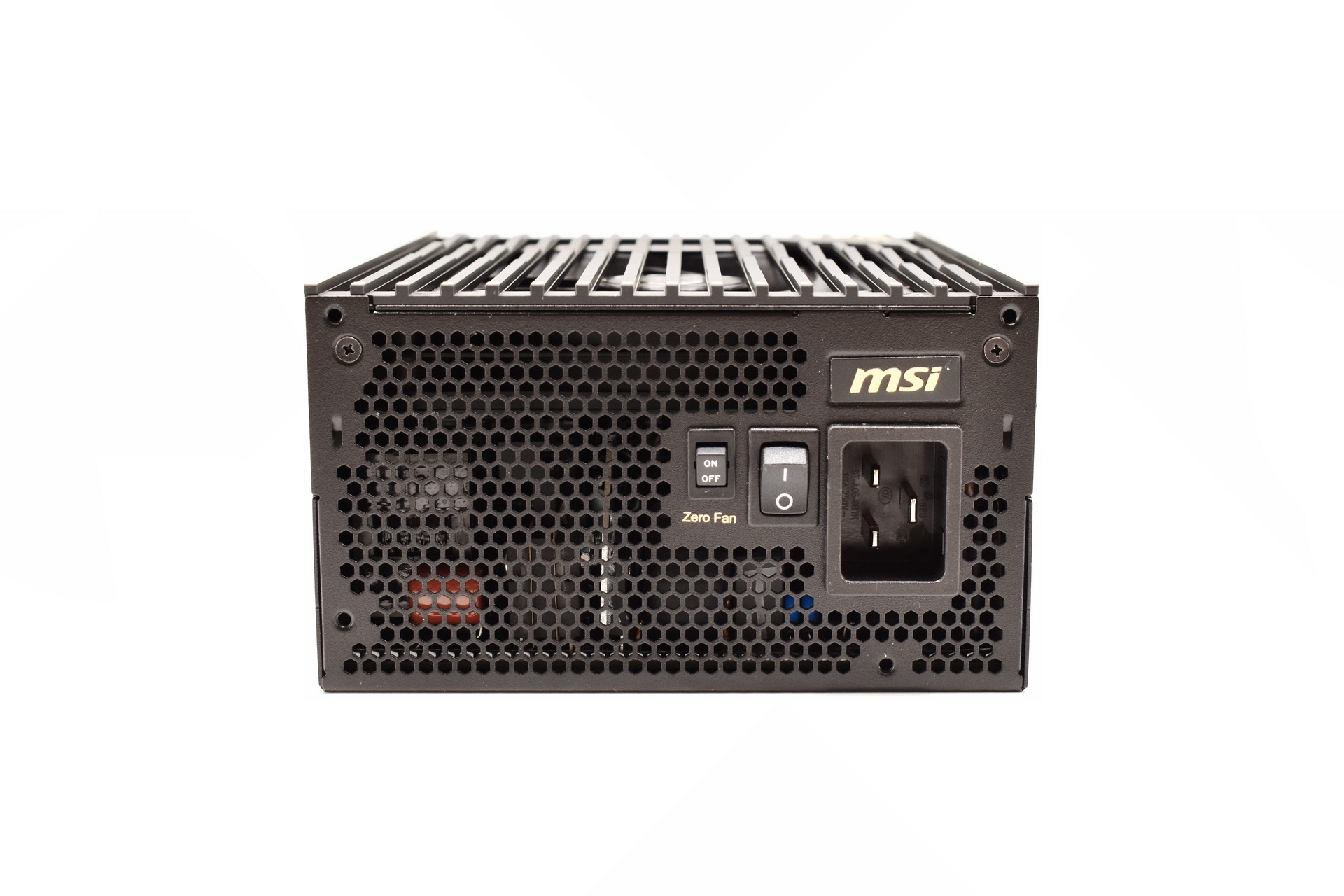
At the rear we find the zero fan switch, on/off power switch, power port and the company logo.
THE MEG AI1600T PCIE5 INTERIOR

The 135mm DC brushless fan is manufactured by ZETA and can reach speeds up to 2450RPM.
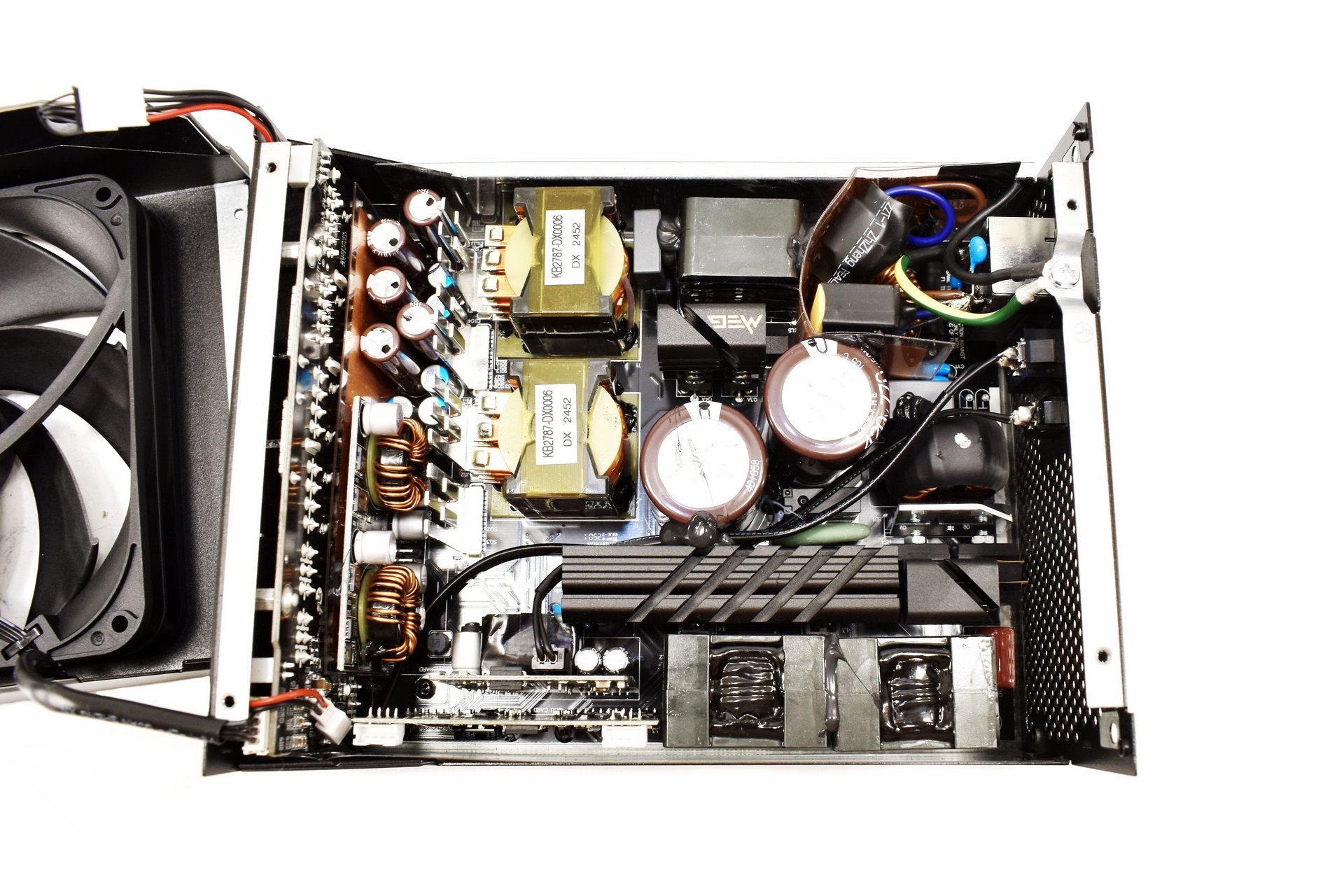
Once again, the OEM behind the this model by MSI is no other than CWT (Channel Well Technologies).

Primary capacitor is manufactured by the Japanese Nippon Chemi-Con and is certified for use up to 105 degrees Celsius.

Secondary capacitors are manufactured by both the Japanese Rubycon and Nippon Chemi-Con and are again certified for use up to 105 degrees.
MSI CENTER
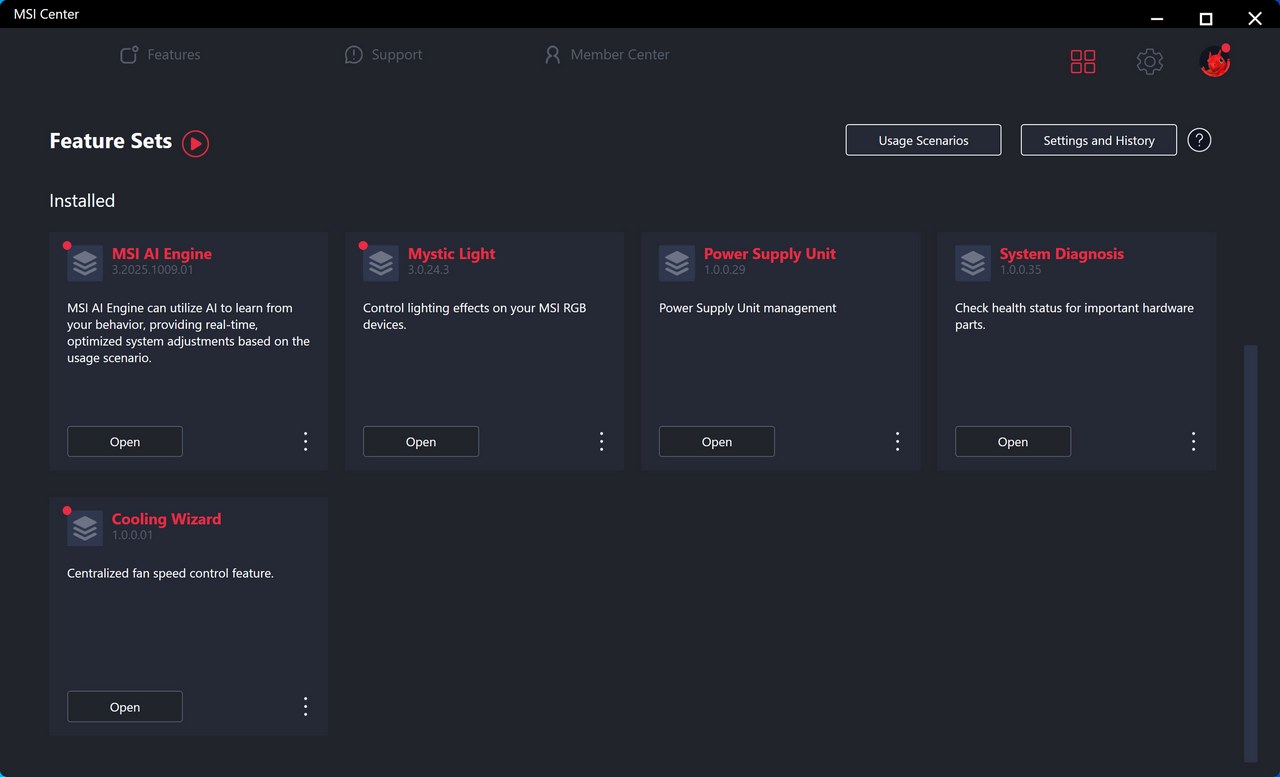
Although once the MEG Ai1600T PCIE5 is detected the MSI center allows you to use a total of 5 apps only power supply unit, mystic light and cooling wizard are compatible with it.
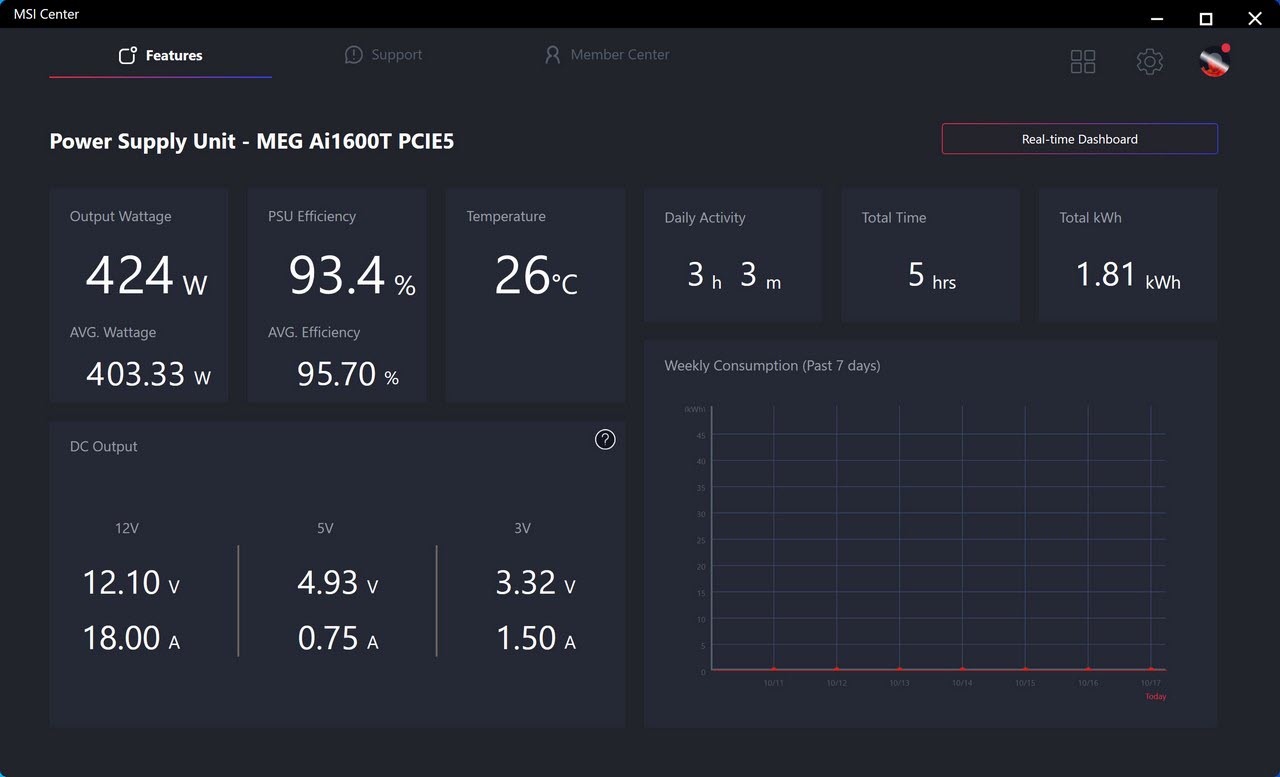
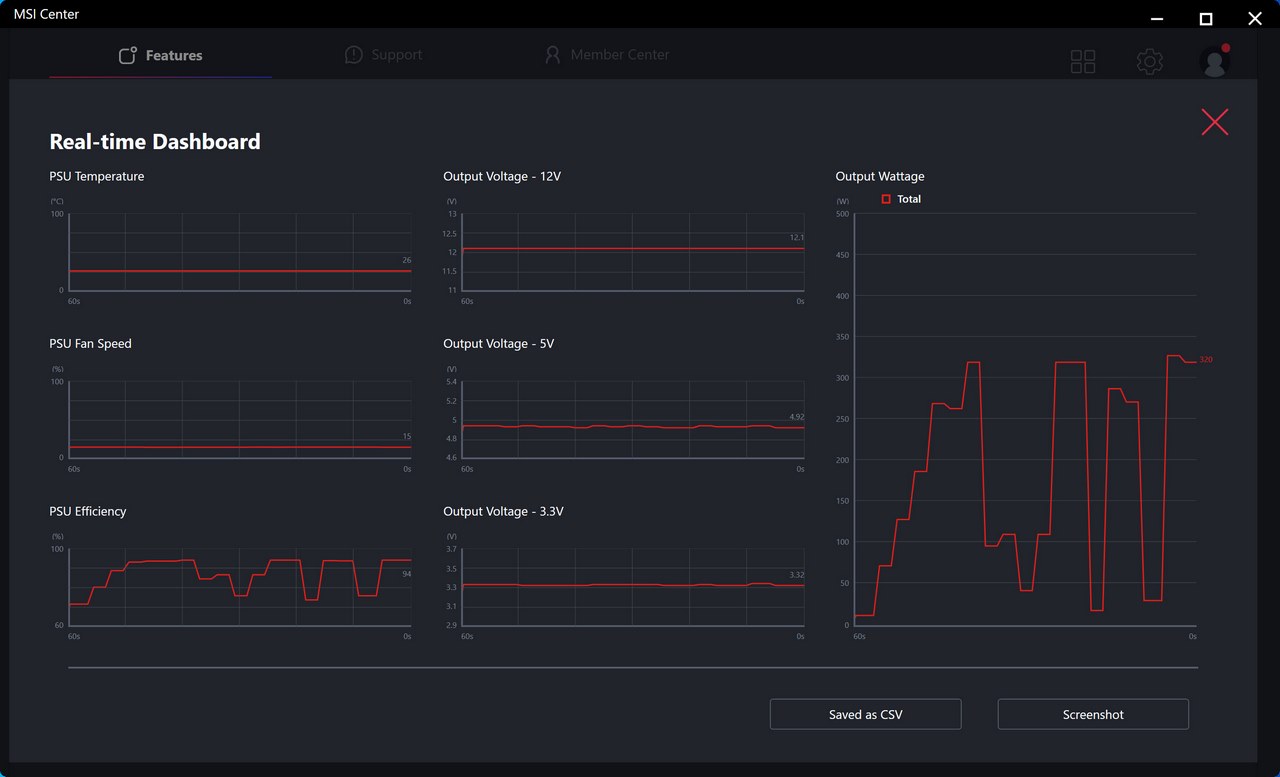
The power supply unit tab wouldn’t load the first couple of times that I tried and even when it did some of the numbers didn’t feel quite right (could be just a bug due to the system being old).
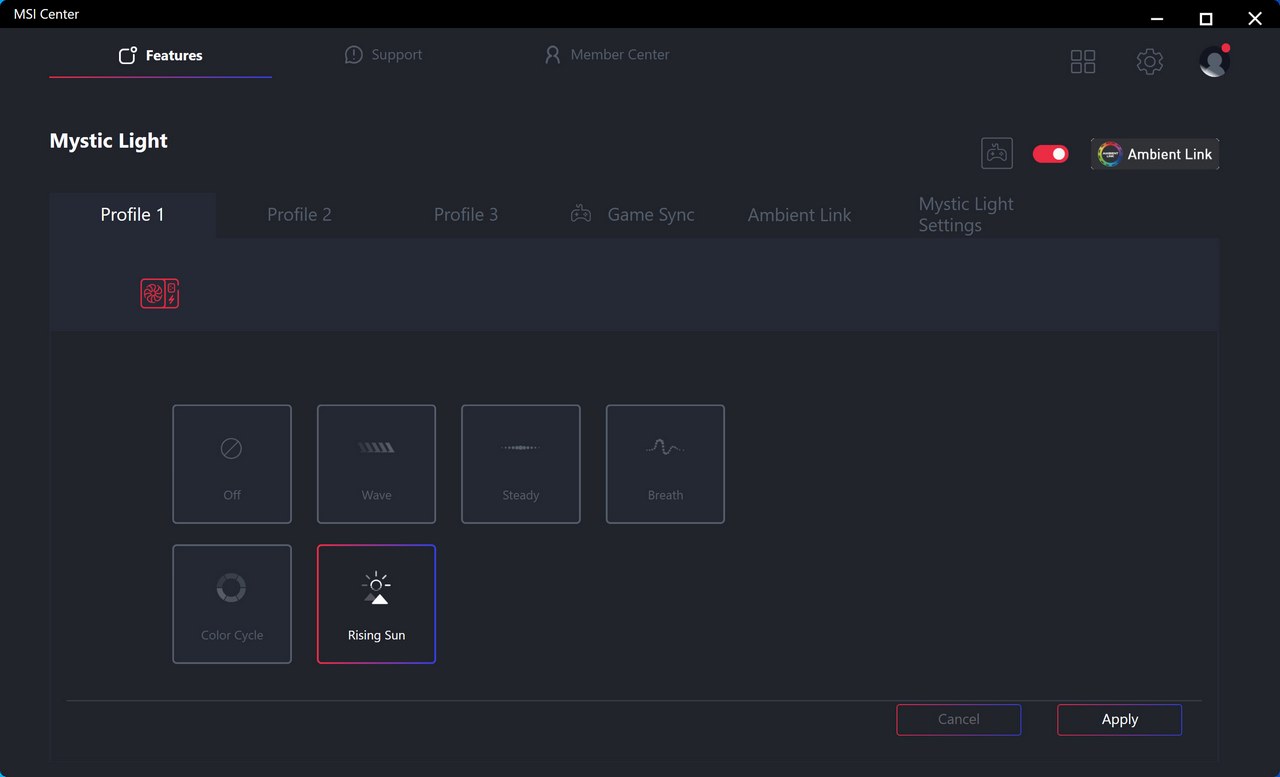
Inside the mystic light tab, you’ll find a total of 5 available lighting effects (plus off entirely – with ambient link you can link effects with other compatible devices).
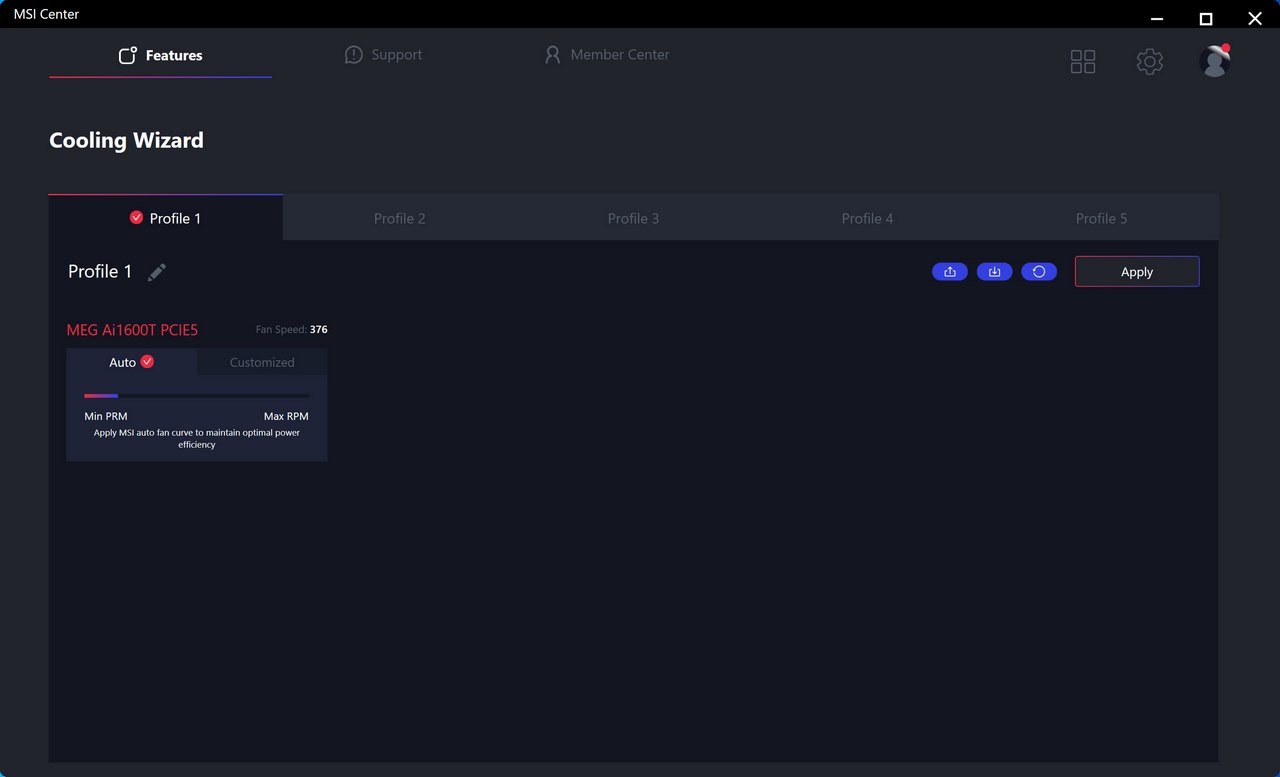
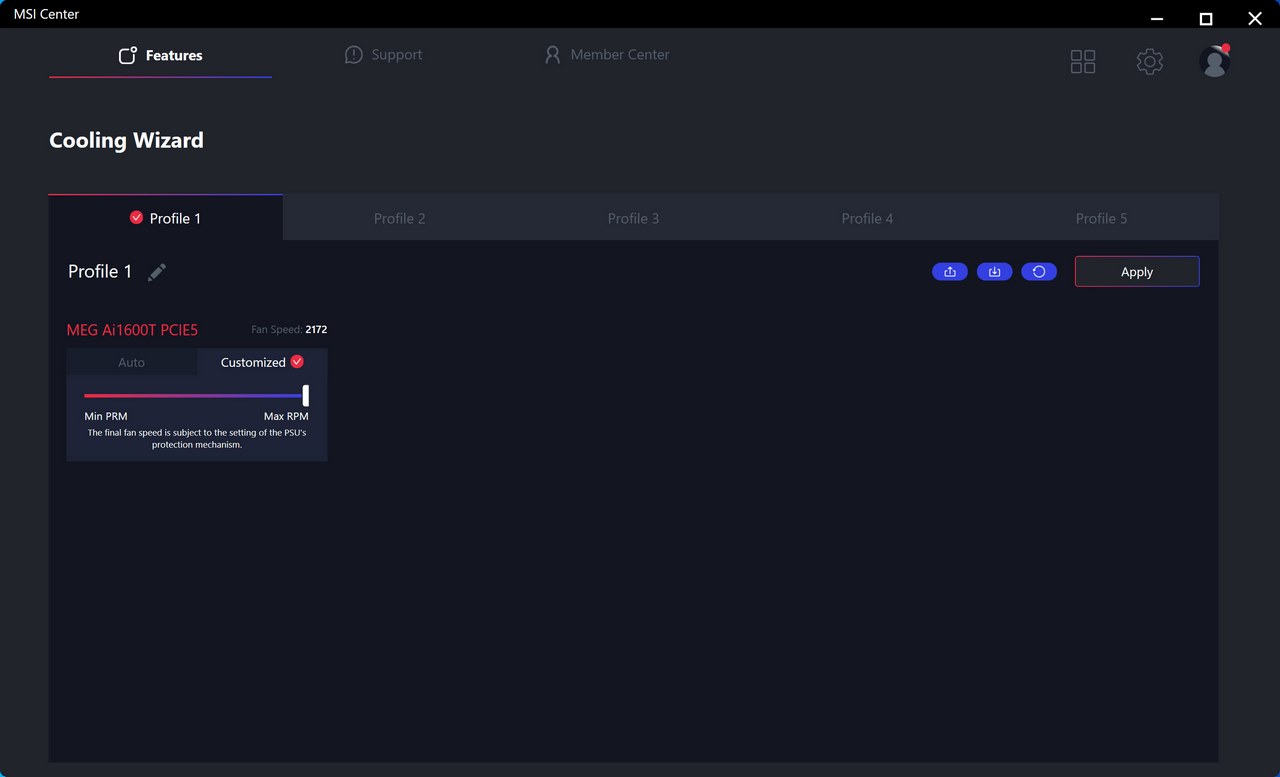
From the cooling wizard tab, you can manually adjust the speed of the 135mm fan or leave it on auto (max speed set manually and recorded here didn’t exceed 2300RPM).
TEST BED
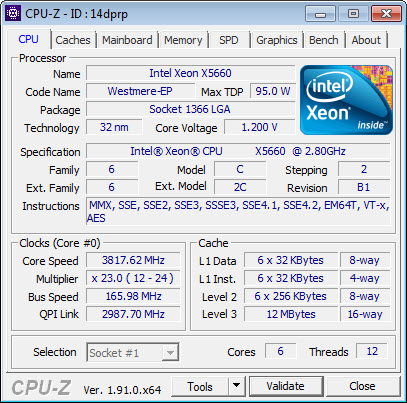
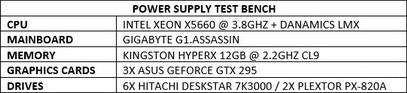
TESTING METHODOLOGY
Using a dedicated measurement instrument such as a Chroma or a SunMoon to test power supply units is without doubt the most ideal and accurate way (not to mention the fastest) to do that currently. However, it's certainly not the only way there is and so pretty much anyone can test a power supply unit just by using a test rig. Certainly, limitations do apply and so you can't really push a 1000W power supply to its limits if your system only uses 500W at peak loads and that's why over the years we saved certain hardware components for the purpose of building a dedicated PSU test rig. True it may not be as accurate as the above mentioned solutions, but it comes really close and is in fact much closer to real world usage. So as always, we ran several games with maximum graphic options enabled at a resolution of 2560x1600 in order to stress every hardware component and increase the overall power demands of the system. The Passmark BurnIn Test was also used to overstress the components in an effort to provide the most accurate results possible. As a final test we also used the latest OCCT software and its dedicated PSU testing suite since it can really bring a power supply to its knees after inside a few minutes.
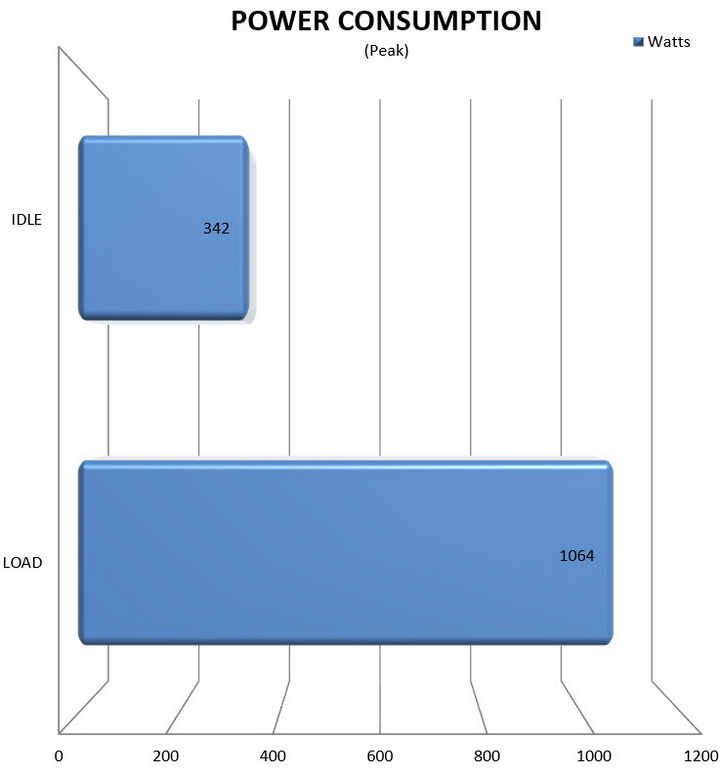
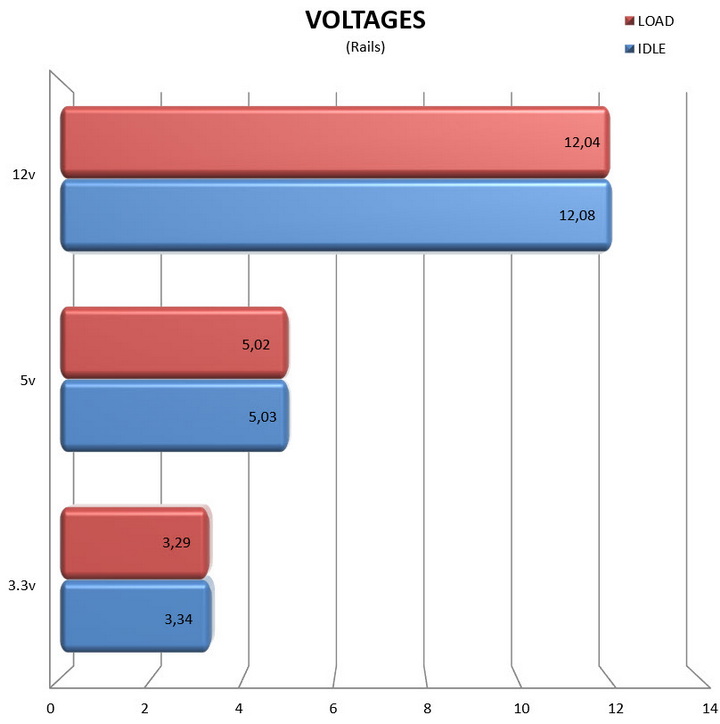
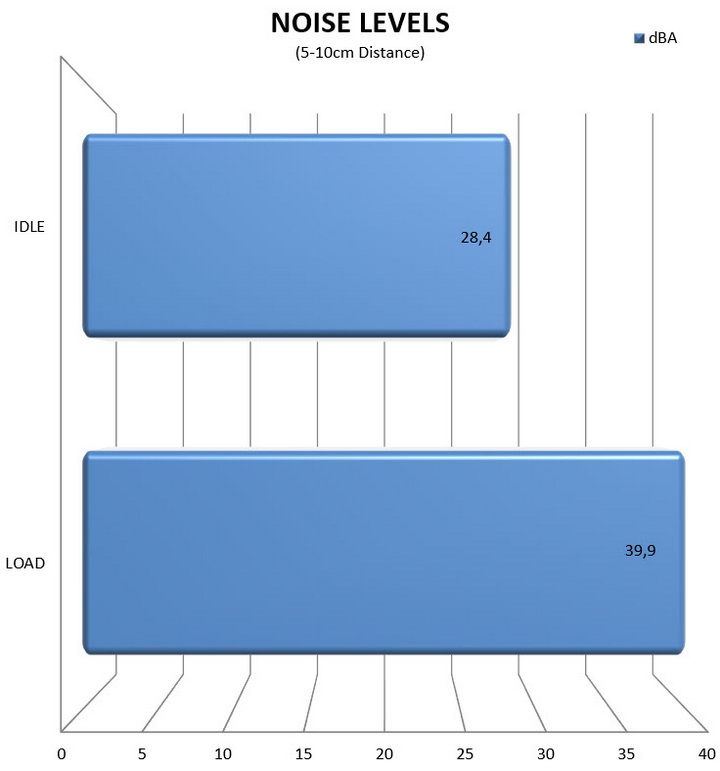
Rail stability was checked/measured with the CPUID Hardware monitor and a Metex multimeter which also recorded the system load in idle and in load. As always try to remember that the power consumption numbers listed in the graph are the highest (Peak) ones recorded during the entire duration of the tests and not the average ones. Noise levels coming from the fan were recorded using the high precision HD600 ExTech Sound dBA Meter from the rear of the unit and at a range of no more than 5-10cm. Readings under load are recorded the exact moment we manually switch the fans of all graphics cards from full speed to almost zero, that way the fan of the power supply does not have enough time to slow its RPM and so by doing this we get very accurate noise level readings. Needless to say, in order to get 100% accurate readings, you need to have a noise isolated room for that exact purpose, something which is quite impossible unless you are working inside a real lab (some people use very small noise insulated boxes but due to their size both heat and noise exceed normal levels and so the results can't really be considered to be 100% accurate, nor realistic for that matter). Also do take into account that since all noise measurements take place from just 5-10cm away the final noise levels to reach your ears will be considerably less.
* After well over 10 years of testing PSUs the Intel Core i7-920 CPU of this rig failed and so we replaced it with a Xeon X5660 (we also swapped the GA-X58A-UD7 for the G1. Assassin).
TEST RESULTS
CONCLUSION
The MEG line has always carried the flagship models of MSI’s entire lineup and the Ai1600T PCIE5 power supply unit is no exception. Not only does it output a total of 1600W which should be enough to power pretty much anything in the PC hardware market available today, it does so with rock solid rail stability, great electrical efficiency, and low noise levels. MSI even takes things a step further by adding adjustable ARGB lighting on its side, something we don’t see a lot (although to be honest, I’d had liked a side OLED screen a lot more). Build quality is all but excellent with server grade parts, state of the art technologies and 100% Japanese capacitors. The USB-C connectivity may not be needed really to use the MEG Ai1600T PCIE5, but it does allow you to control the RGB LEDs, speed of the 135mm fan and monitor the status of the unit so it’s a good addition. Length might be the only downside of this model (which is why I think MSI should also release an 1KW variant) as with other high-wattage ones, so be certain to check that prior to making the purchase.
Currently the MEG Ai1600T PCIE5 power supply unit by MSI retails for USD679.35 inside the USA (Amazon.com) and for 632.75Euros inside the EU (Amazon.de) thus landing it right in the middle of similar output units. At the end of the day there’s no denying that the MEG Ai1600T PCIE5 is among the top power supply units in the market today. Yes, I do think that a small OLED screen like the one used in competing products would make it even more appealing to enthusiasts all over the world (that would probably however up its price) but once again I guess we just can’t have it all. Performance, quality, looks and even noise levels, the MSI MEG Ai1600T PCIE5 delivers on everything and that’s why it gets the Platinum Award.

PROS
- Excellent Build Quality
- Rock Solid Rail Stability
- 1600W Output (3840W Peak)
- 80 PLUS Titanium Certified
- Electrical Protections (OCP/OVP/SSP/OPP/UVP/OTP/NLO/SIP)
- Low Noise Levels
- Interleaved Silicon Carbide (SiC) MOSFETs
- Two 12v-2x6 Connectors (2x600W)
- ARGB Lighting
- MSI Center
- Zero Fan Mode
- Powerful Single Rail (133.3A)
- 12 Year Limited Warranty
CONS
- Price (For Some)
- Length (Case Compatibility)