

INTRODUCTION
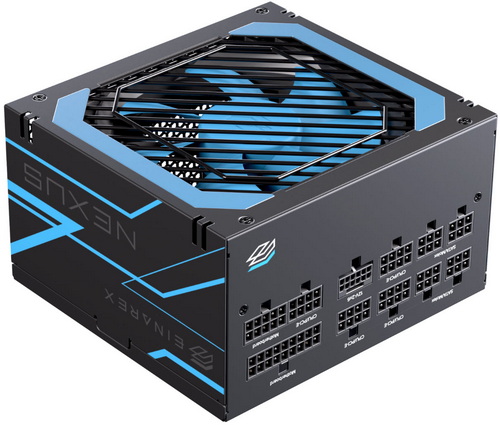
Every system, from minimalist desktops to high‑draw gaming rigs, ultimately leans on the PSU to keep voltages steady and thermals predictable. It’s the one part of a PC that never gets to rest, quietly managing load shifts and protecting hardware from electrical surprises. That constant, behind‑the‑scenes workload is what makes the PSU feel less like a component and more like the system’s electrical infrastructure, the layer that determines whether everything above it operates smoothly or struggles against instability. EINAREX’s NEXUS L1 850W steps into that role with a straightforward, regulation‑focused design.
At EINAREX, we imagine a future where our innovations seamlessly integrate into the fabric of everyday life, empowering users to achieve more than they thought possible. Picture a world where technology not only understands your needs but anticipates them, where the boundaries between the digital and physical realms blur to create a harmonious and enriching experience. Our vision is not just about pushing technological limits; it’s about forging connections, fostering creativity, and ultimately contributing to a global community that thrives on the possibilities unlocked by EINAREX’s forward-thinking approach. Every EINAREX product is the result of careful research and development, ensuring that it not only meets present demands, but also adapting to future trends. Every product we bring to market, will guarantee our users exciting experiences.
The NEXUS L1 line of power supply units by EINAREX includes 3 models (750/850/1000W) all of which are fully modular, Cybenetics Gold certified (over 80% electrical efficiency) and ATX 3.1 & PCIe 5.1 compliant. The 850W output model which I have here with me today is equipped with a single 12V-2X6 power connector (450W), four 6+2 pin PCIe power connectors, single strong +12V rail (70.5A) capable of delivering roughly 98% of the units’ total power output (846W) and a peak power output of no less than 972W (peak should now be up to around 1.94KW for up to 100ms - once again however this is not something I can test). It also features full-bridge LLC with DC-to-DC design topology, active PFC and a full array of electrical protections including over-current (OCP), over-voltage (OVP), under-voltage (UVP), short-circuit (SCP), over-temperature (OTP), over-power (OPP) and surge in rush (SIP). As for warranty EINAREX covers the entire Core GX line with a very generous 10-year limited one.
SPECIFICATIONS AND FEATURES

PACKAGING AND CONTENTS
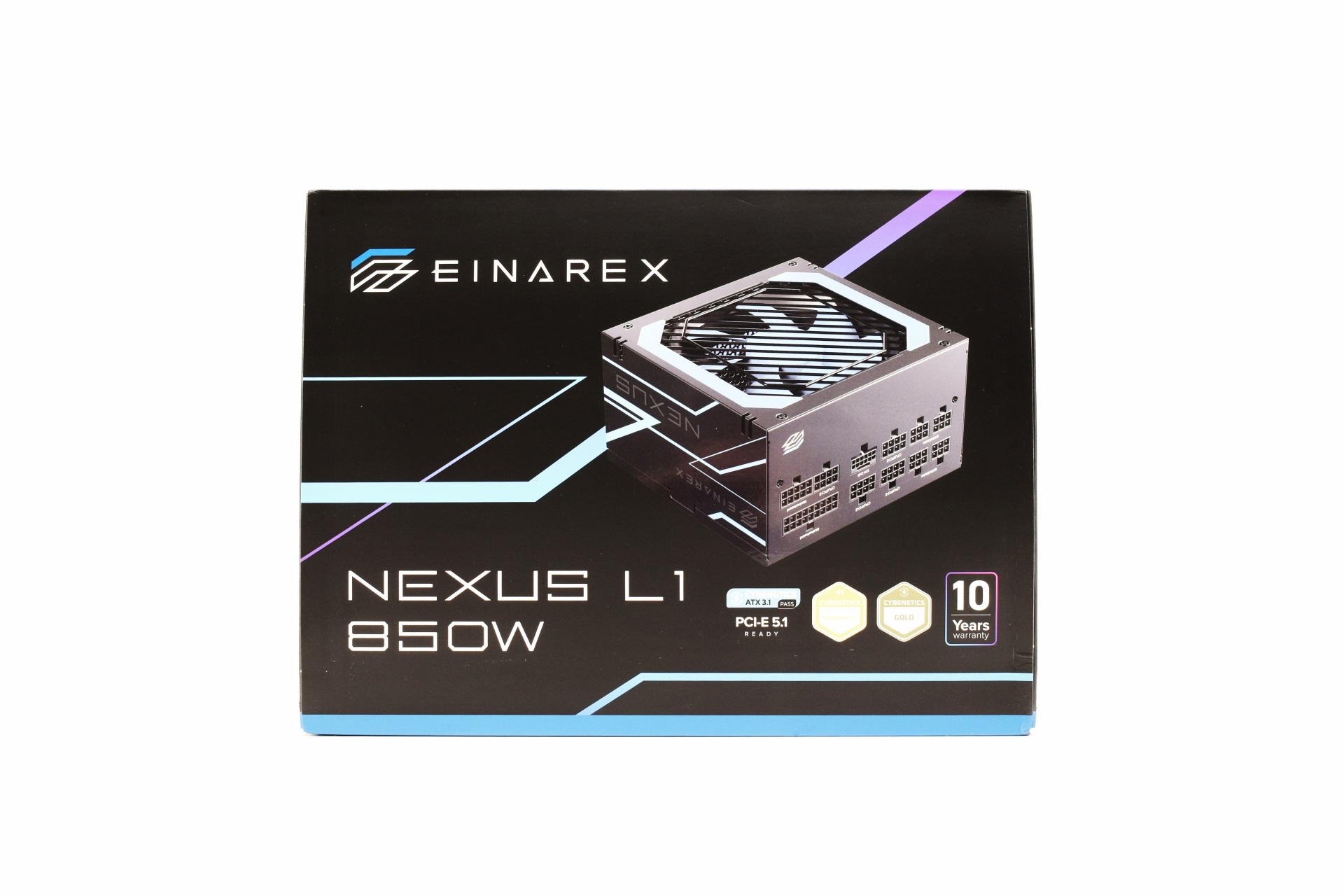
As usual at the front of the box we find a product picture, company logo and the model name and available certifications.
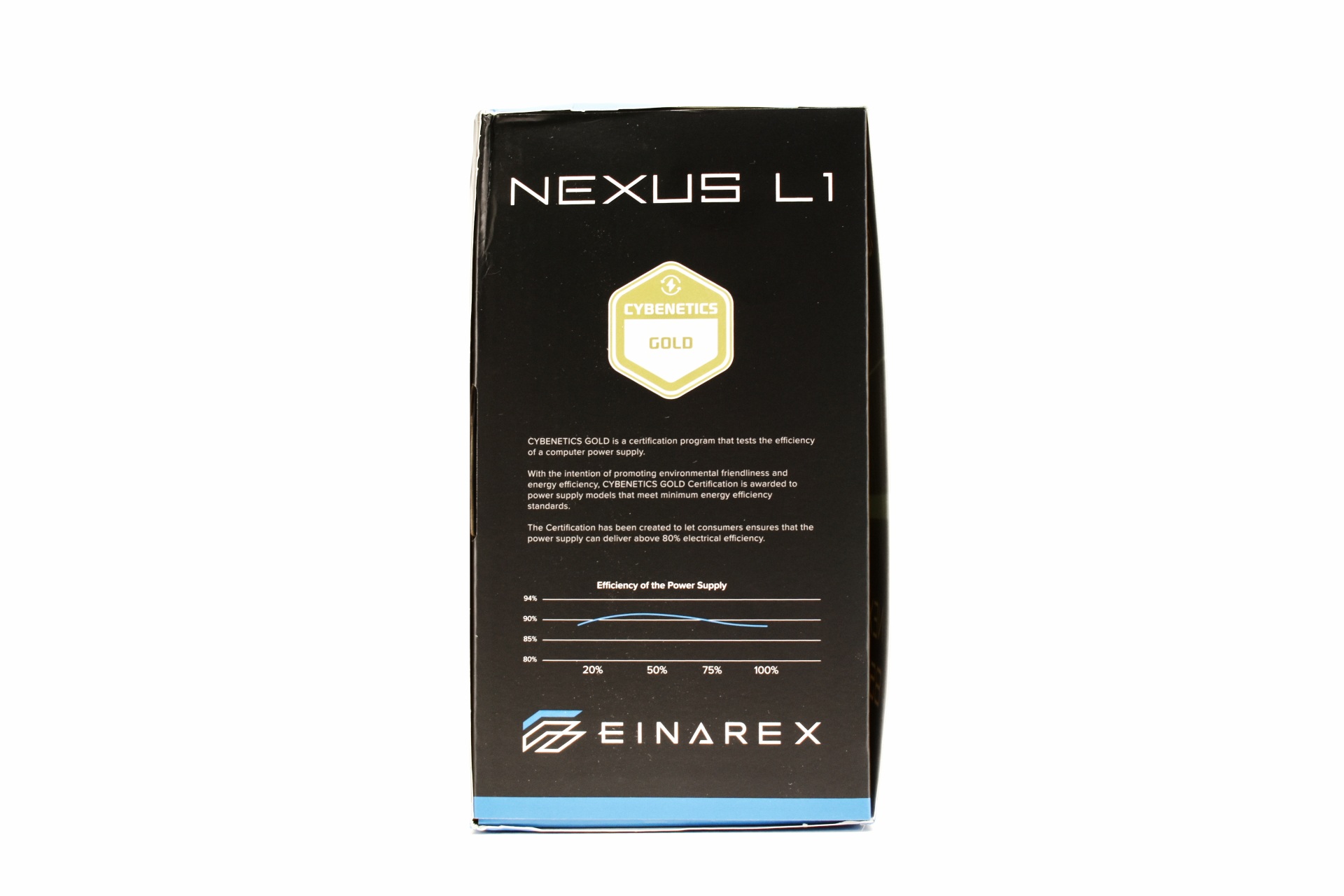
The electrical efficiency of the unit is showcased on the right side of the box.
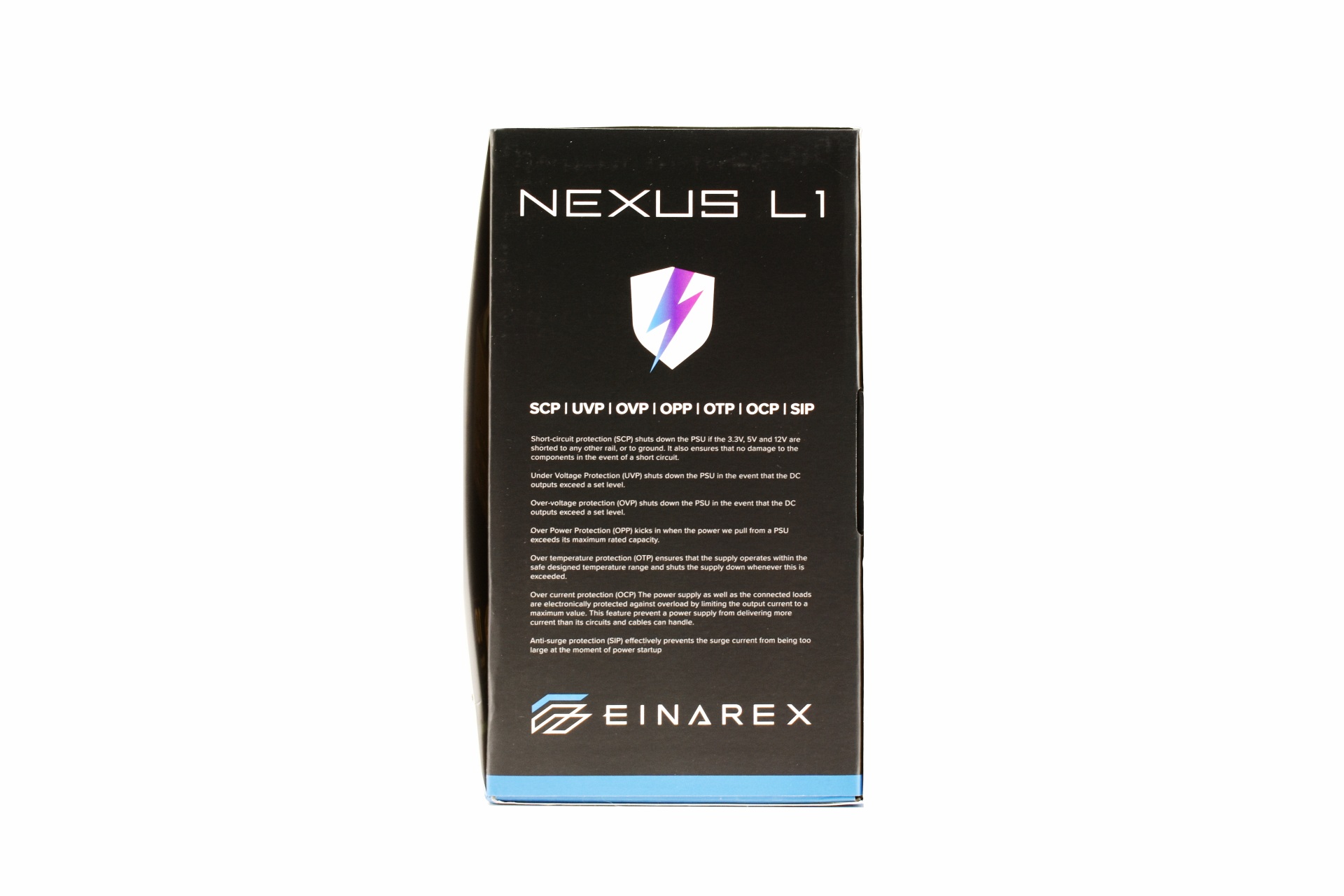
All available electrical protections are listed on the left side.
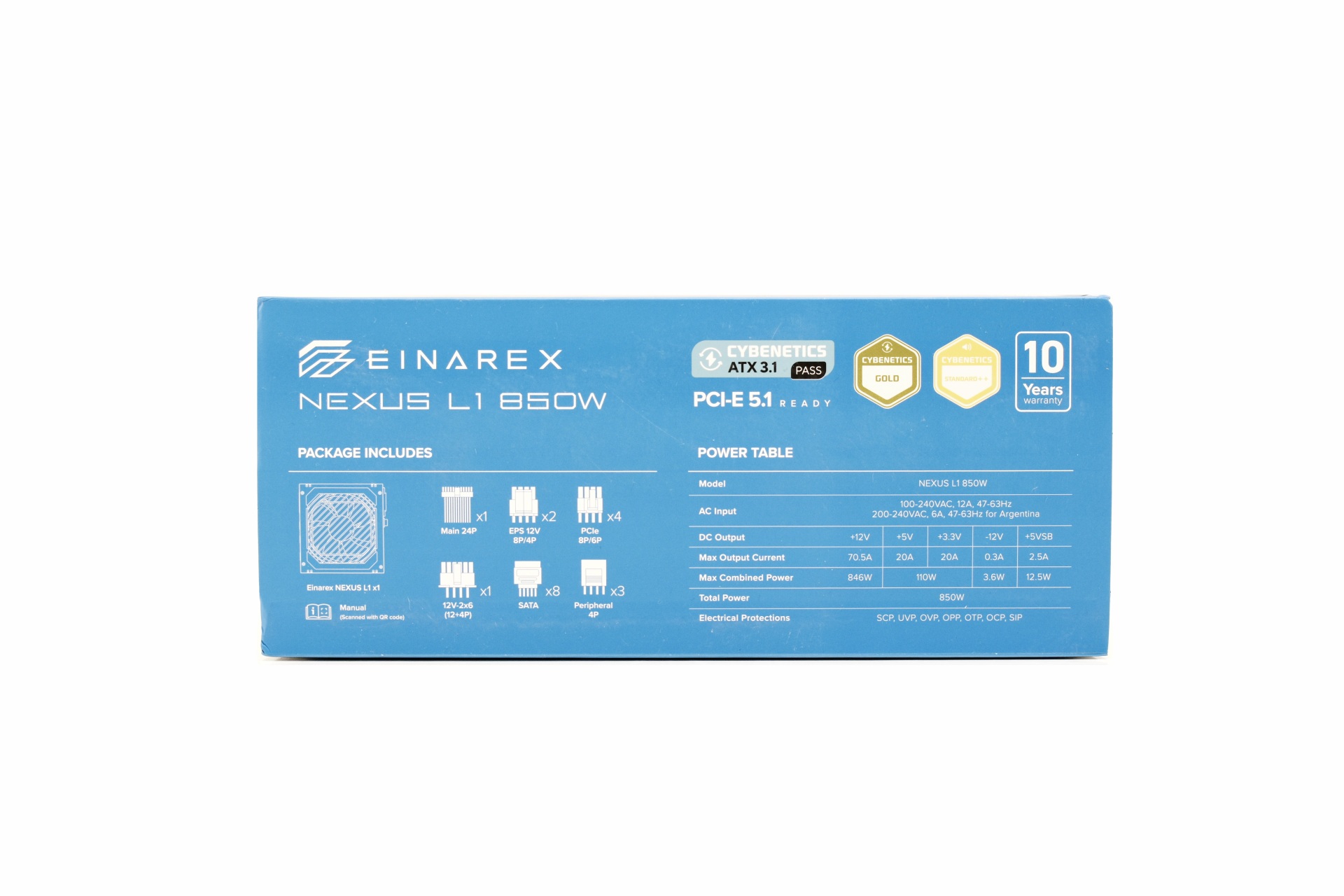
The electrical table with all available power cables are printed on the base of the box.
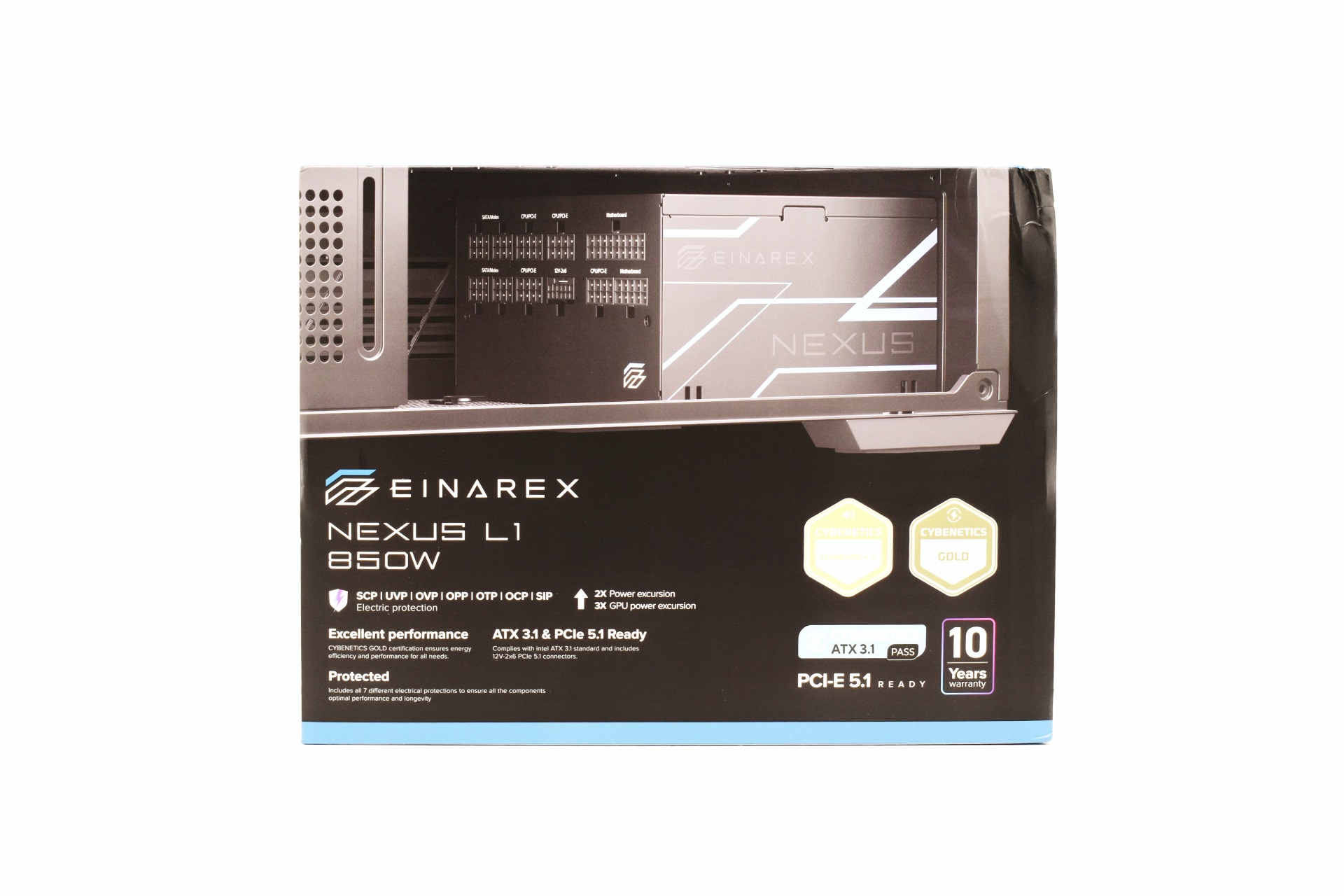
Moving at the rear we basically find the same items as the front.
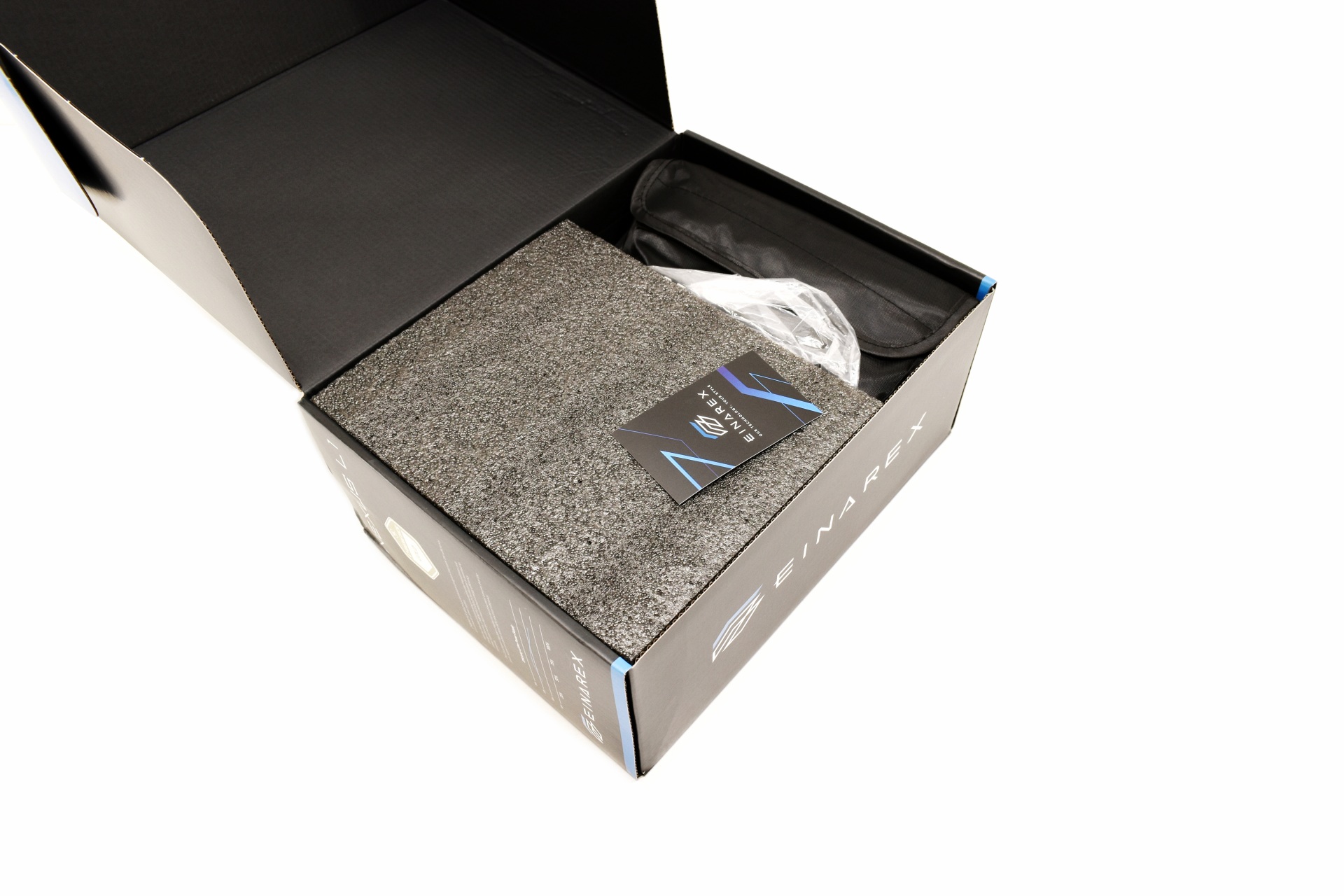
Typically, the unit is placed between two pieces of foam while all of the cables are placed inside a storage pouch.
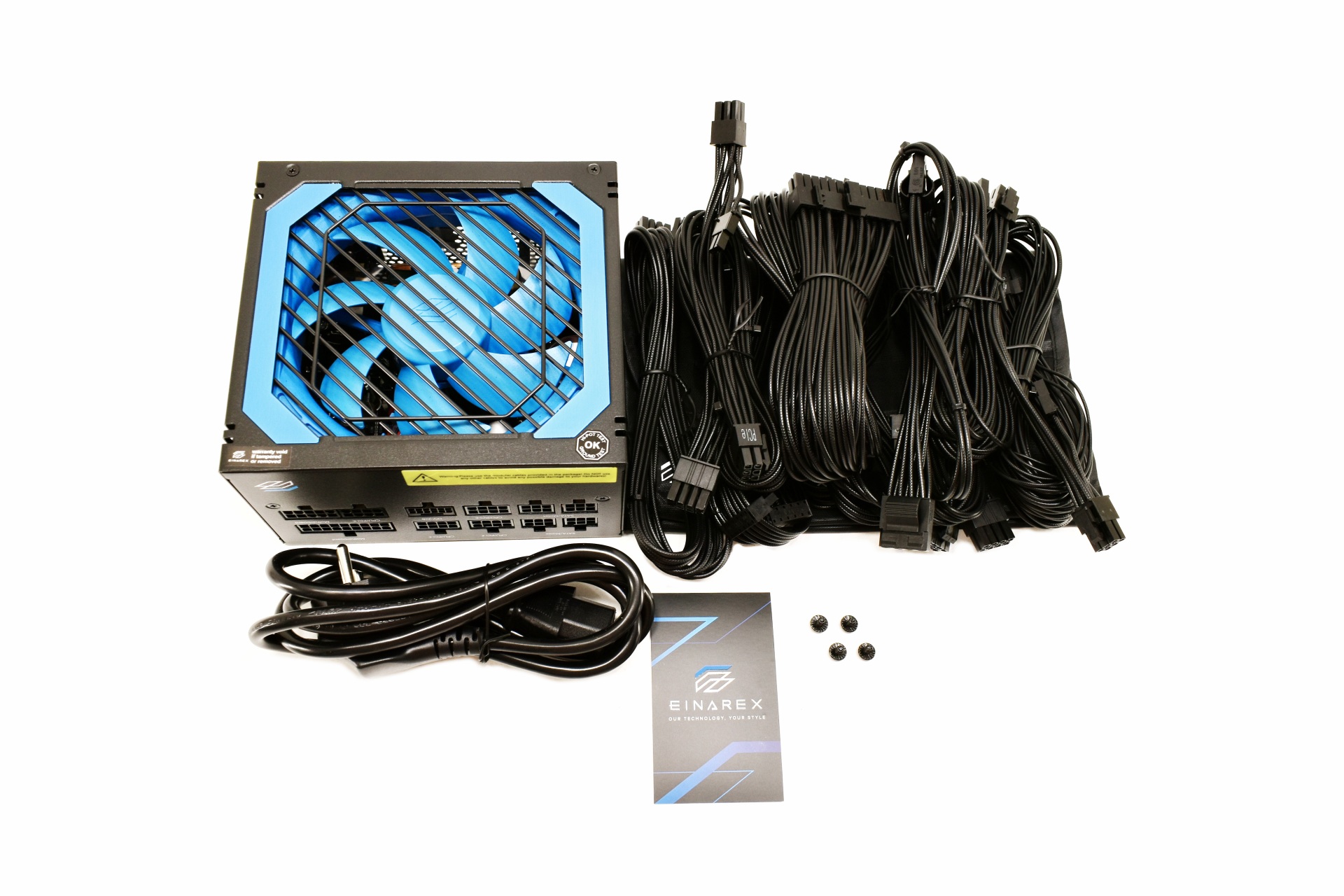
Along with the NEXUS L1 850W and its power cord inside the box you'll also find all power cables, storage pouch, 4 mounting screws and a company card.
THE NEXUS L1 850W EXTERIOR
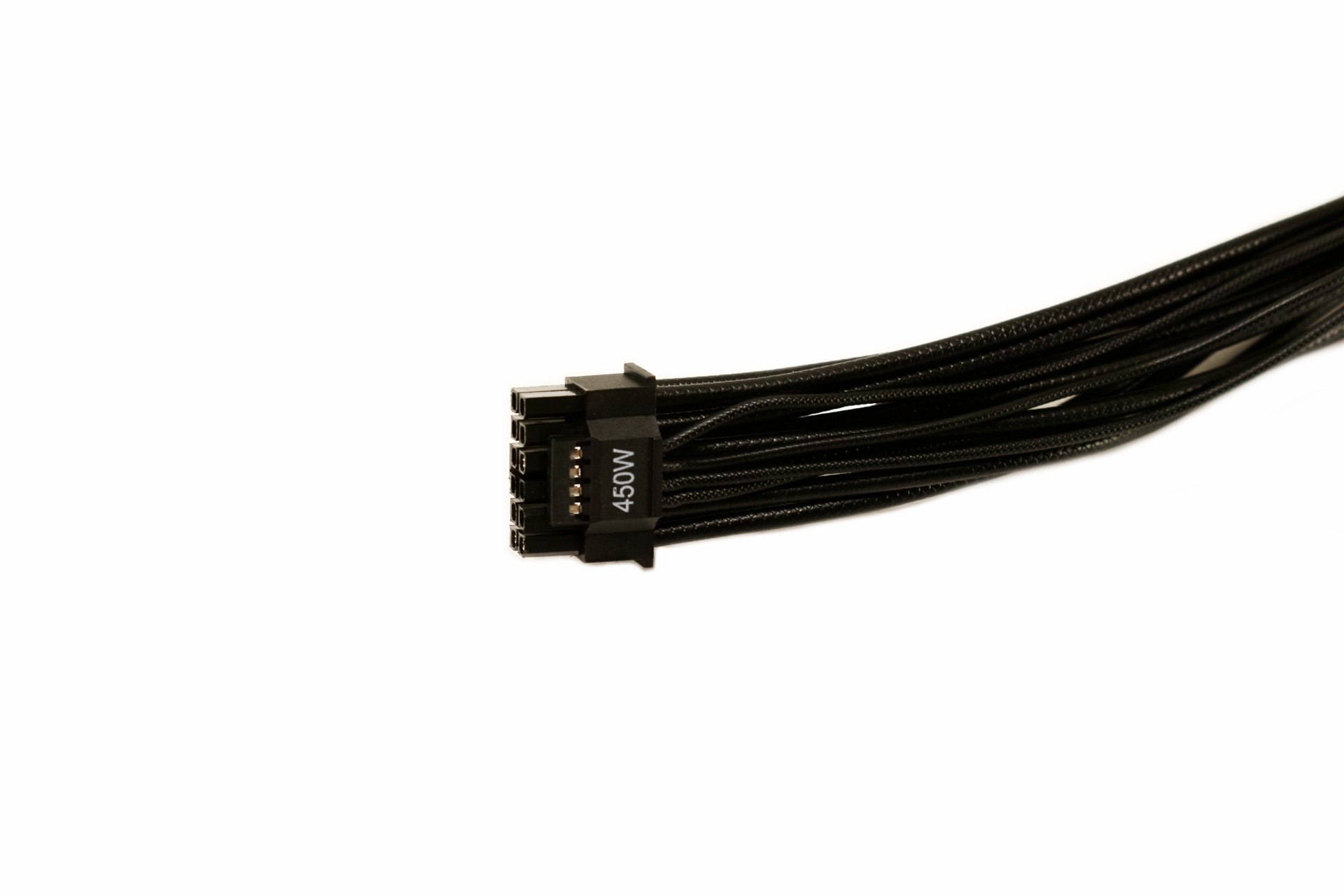
EINAREX has used individually sleeved cables with the NEXUS L1 line as seen above.
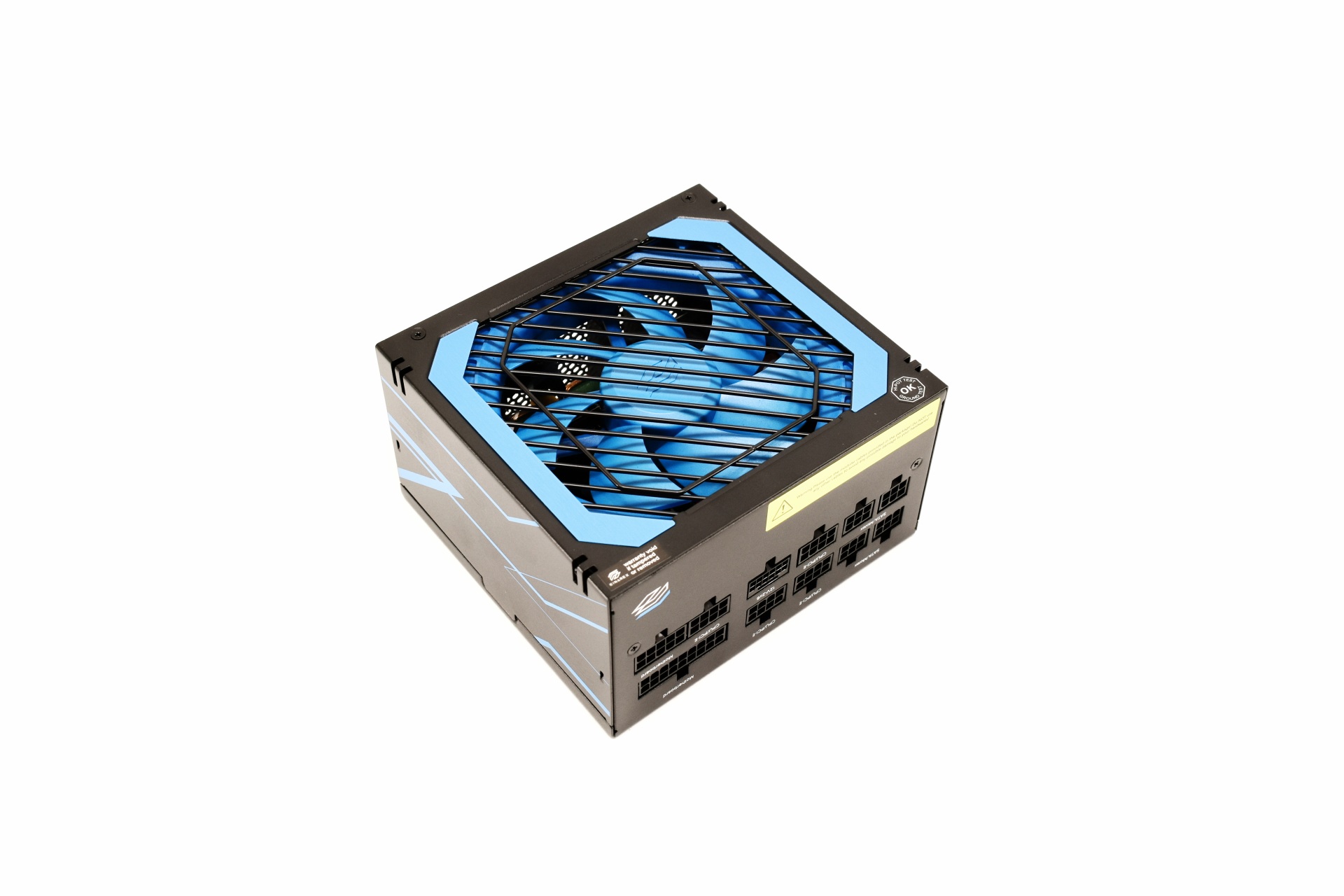
For their NEXUS L1 line EINAREX has chosen a blue and black color theme that looks quite unique (size wise it's a compact 140x150x86mm unit).
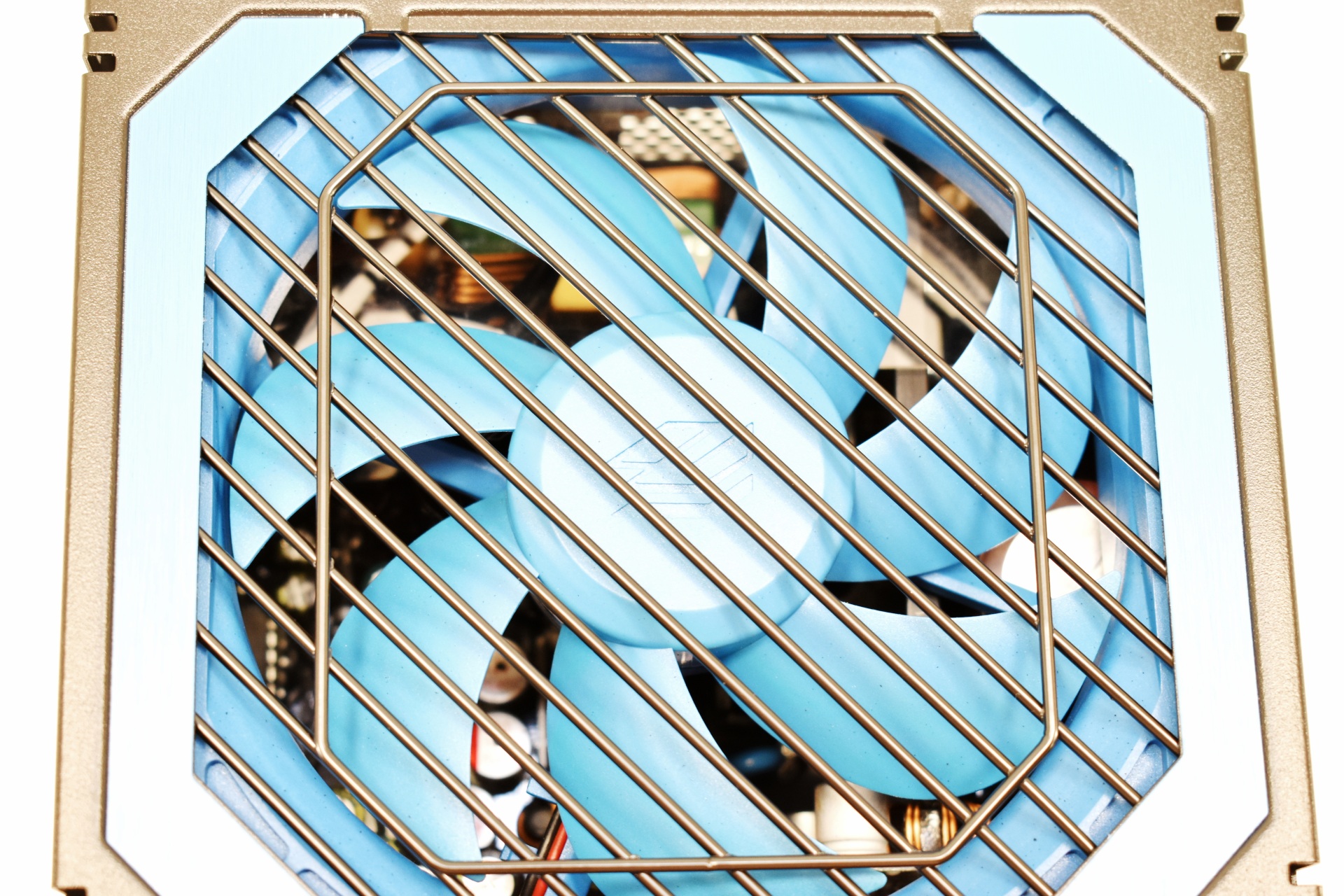
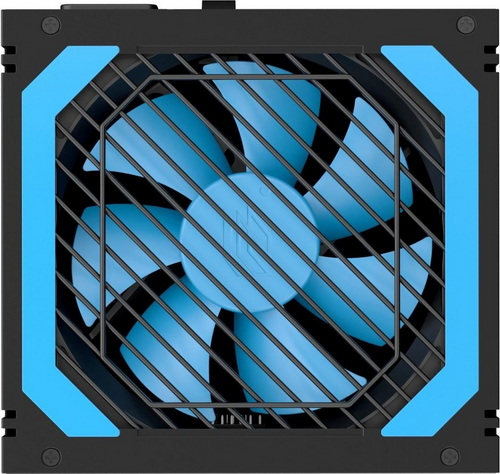
The 120mm fluid dynamic bearing fan sits beneath a nice-looking grille (its blue color certainly stands out).
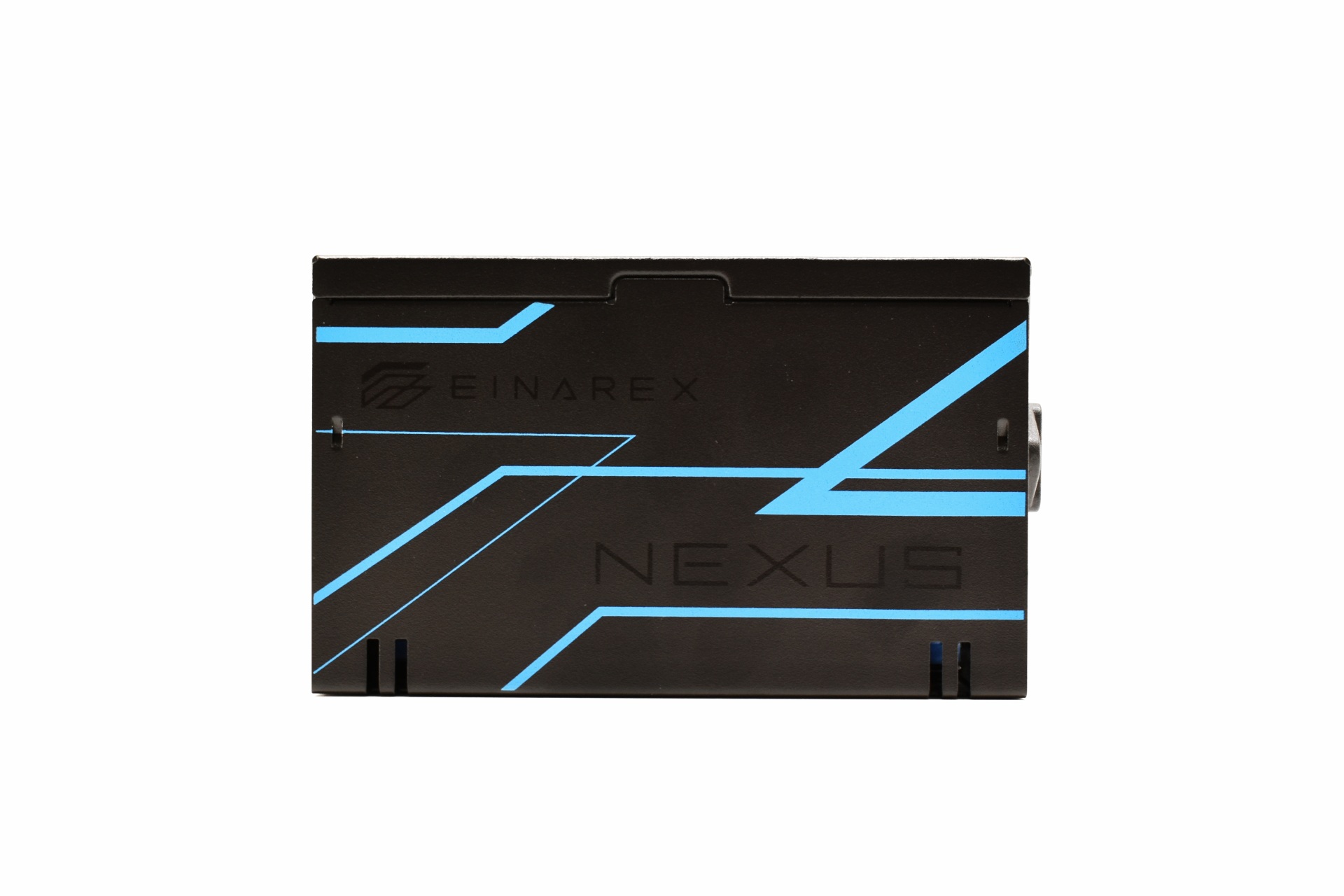
Both the company name and product line are printed on both sides.
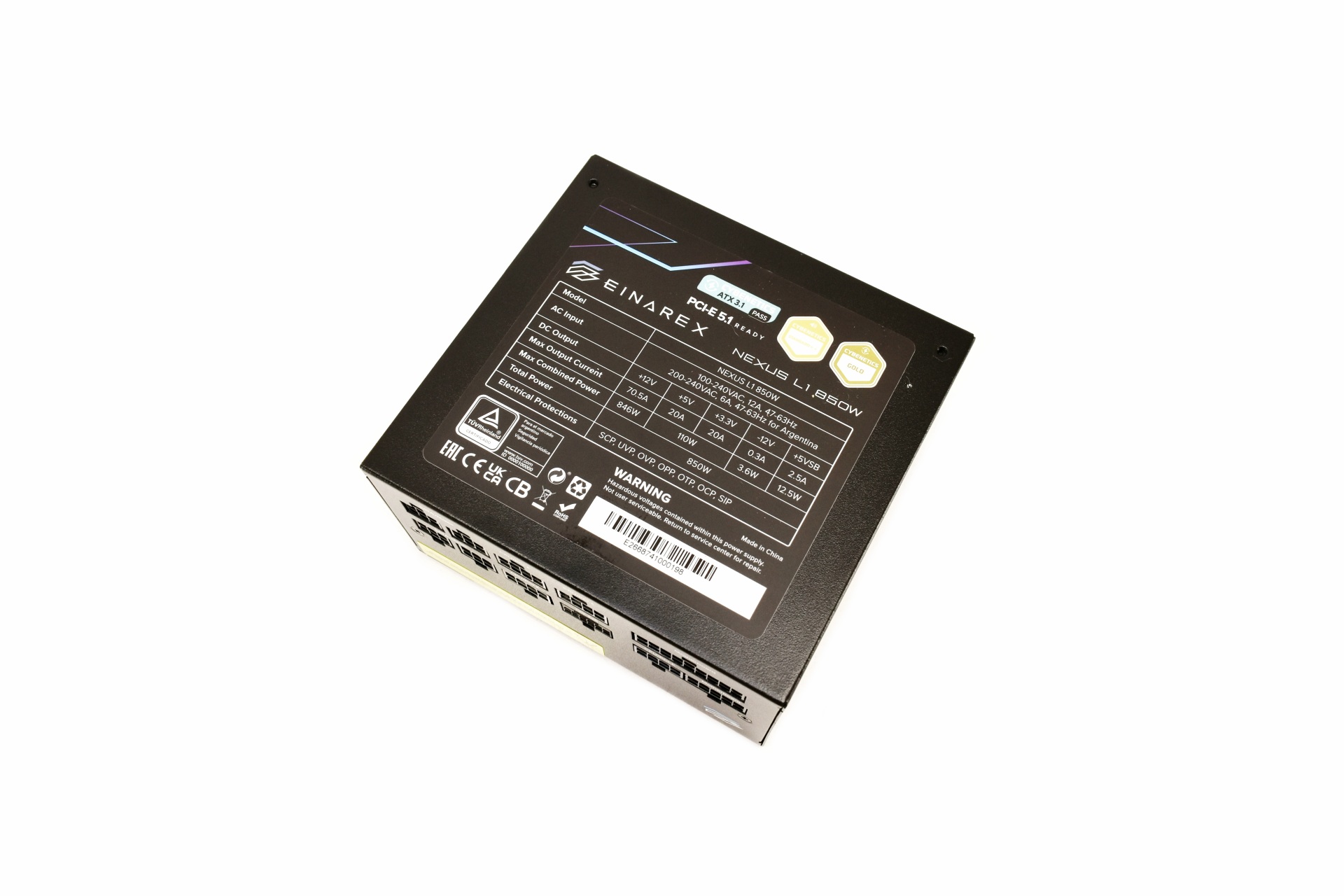
A large sticker with the electrical table, certifications and the serial number is located at the belly of the enclosure.
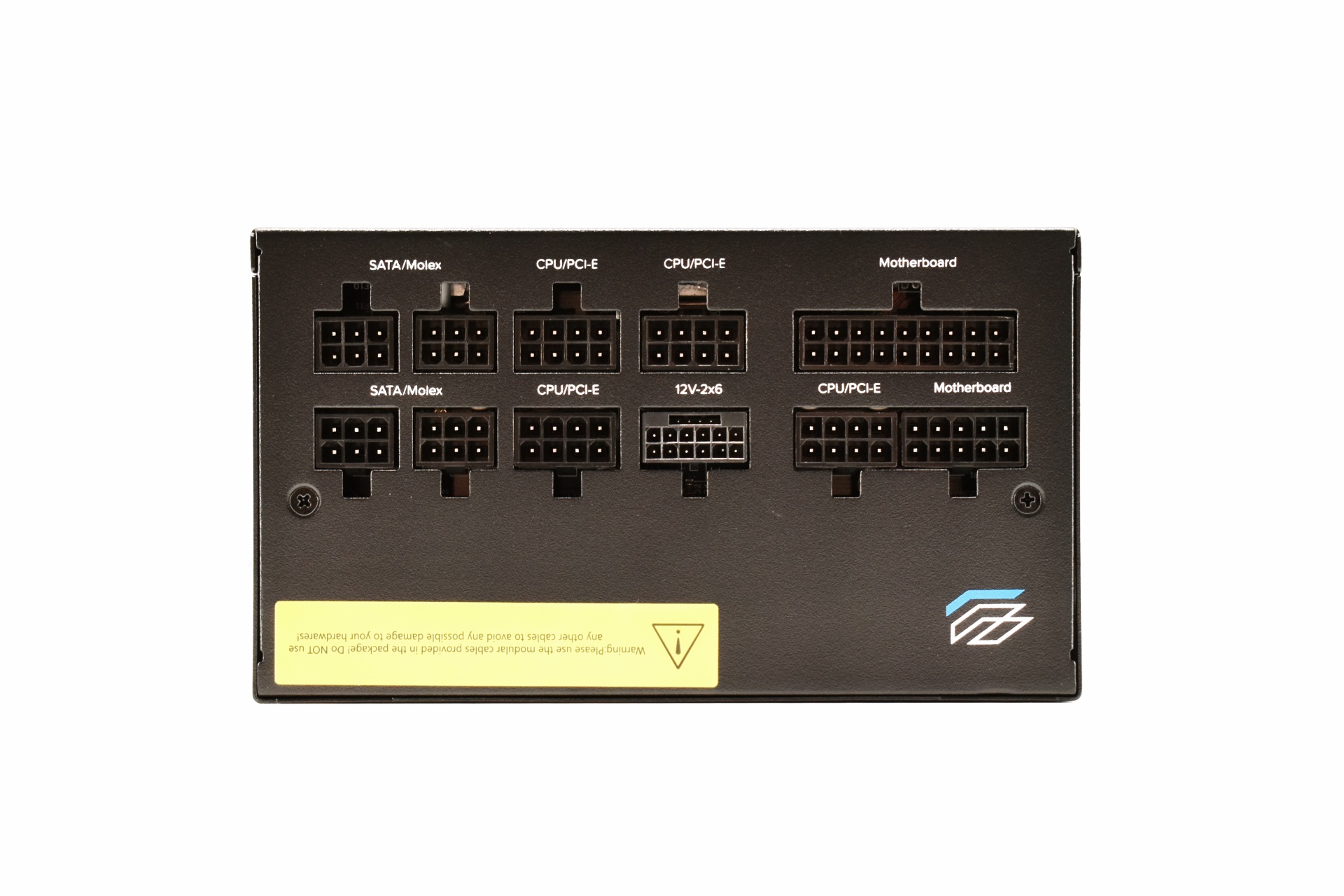
All 11 available power ports at the front are tagged and different in shape.
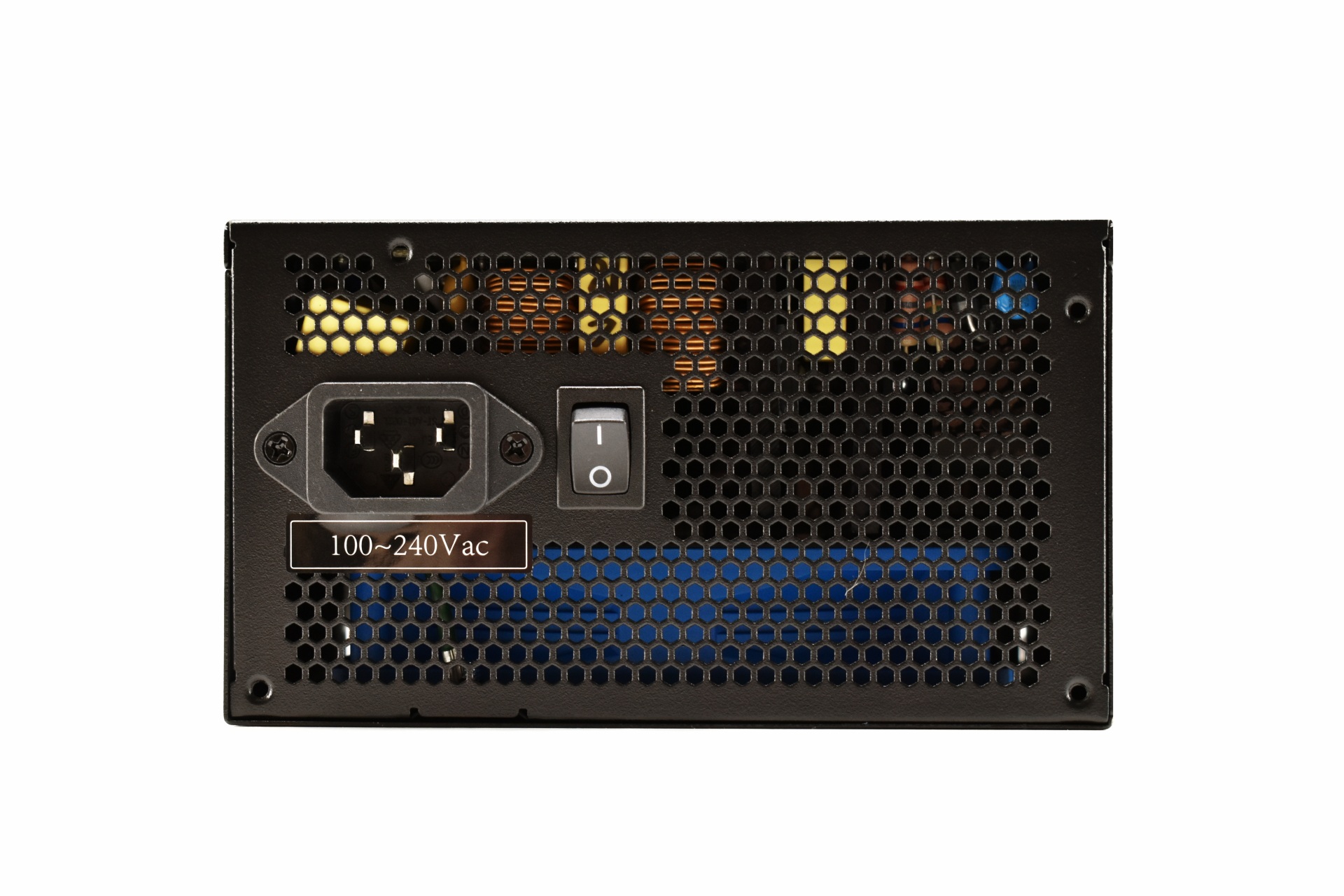
At the rear we find the on/off power button and the power port.
THE NEXUS L1 850W INTERIOR
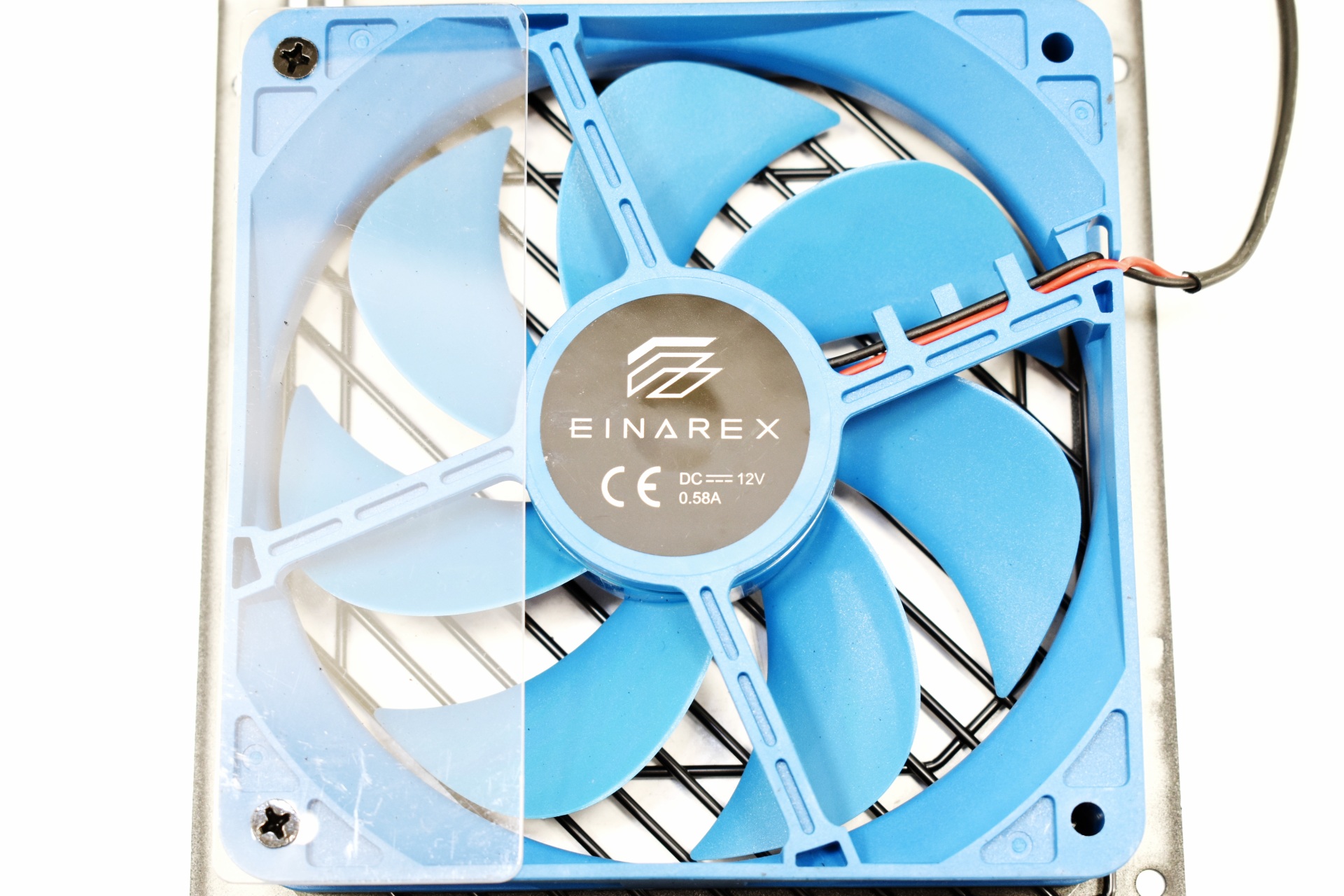
Although EINAREX doesn't offer specific specifications for their fan based on its bearing and electrical requirements it's probably the HA1225H12F-Z model by Hong Hua (2200RPM/73.9CFM/32.4dBA) which CWT has been using with this specific platform.
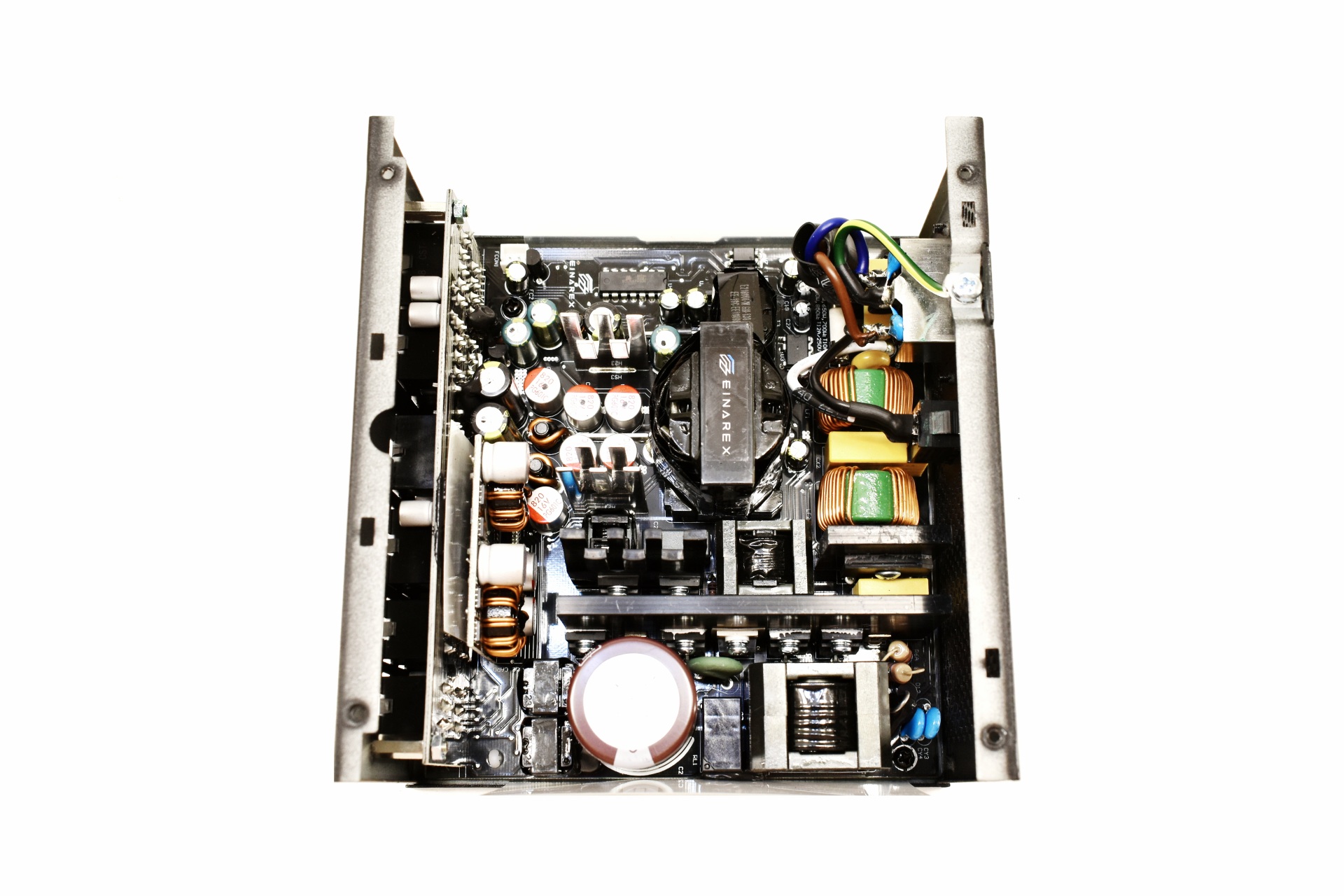
The OEM behind the Nexus L1 850W is no other than CWT (Channel Well Technology).
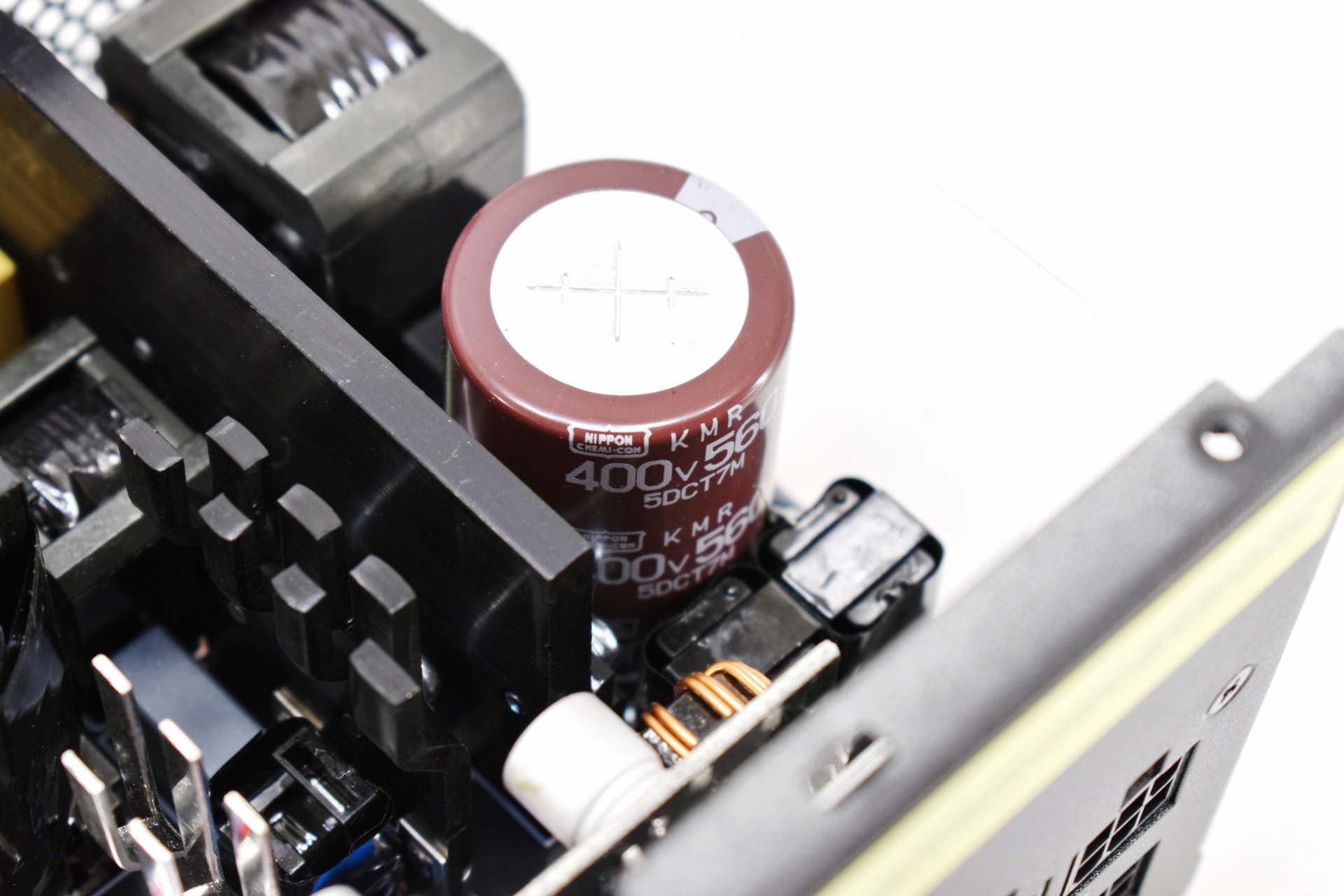
Primary capacitor is manufactured by the Japanese Nippon Chemi-Con and is rated for use up to 105 degrees Celsius.
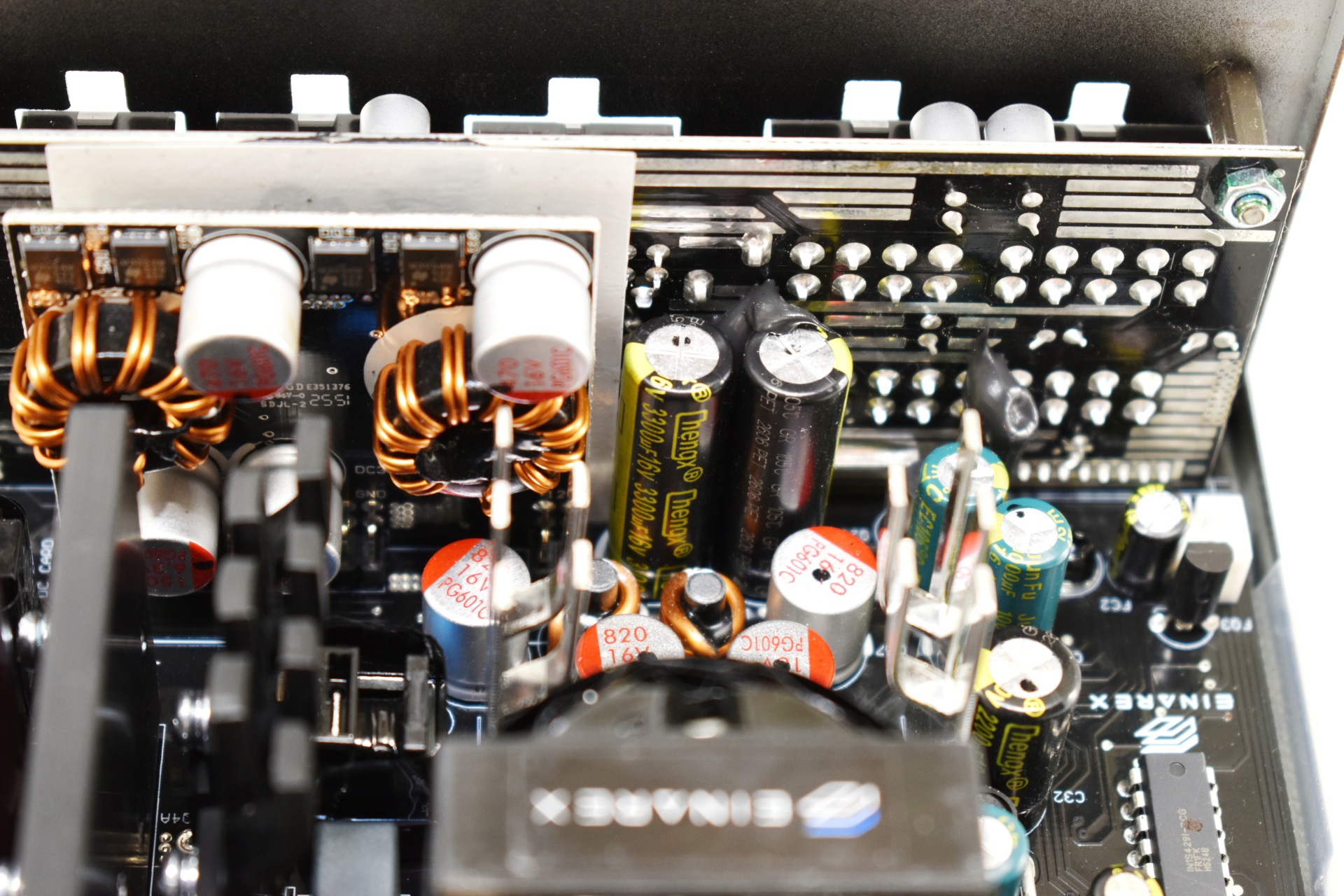
Secondary capacitors are manufactured by the Chinese Dongguan Chengxing Electronic Co. and the Taiwanese Jun Fu and they are also certified for use up to 105 degrees Celsius.
TEST BED
TESTING METHODOLOGY
Using a dedicated measurement instrument such as a Chroma or a SunMoon to test power supply units is without doubt the most ideal and accurate way (not to mention the fastest) to do that currently. However, it's certainly not the only way there is and so pretty much anyone can test a power supply unit just by using a test rig. Certainly, limitations do apply and so you can't really push a 1000W power supply to its limits if your system only uses 500W at peak loads and that's why over the years we saved certain hardware components for the purpose of building a dedicated PSU test rig. True it may not be as accurate as the above-mentioned solutions, but it comes really close and is in fact much closer to real world usage. So as always, we ran several games with maximum graphic options enabled at a resolution of 2560x1600 in order to stress every hardware component and increase the overall power demands of the system. The Passmark BurnIn Test was also used to overstress the components in an effort to provide the most accurate results possible. As a final test we also used the latest OCCT software and its dedicated PSU testing suite since it can really bring a power supply to its knees after inside a few minutes.
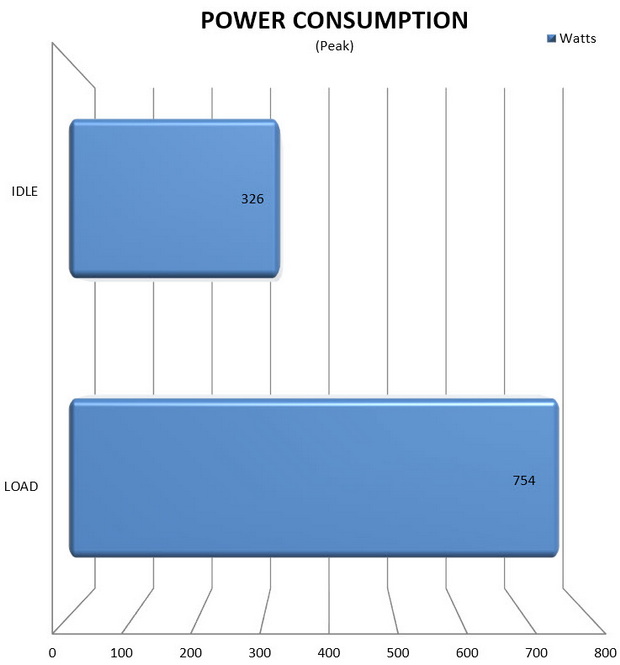
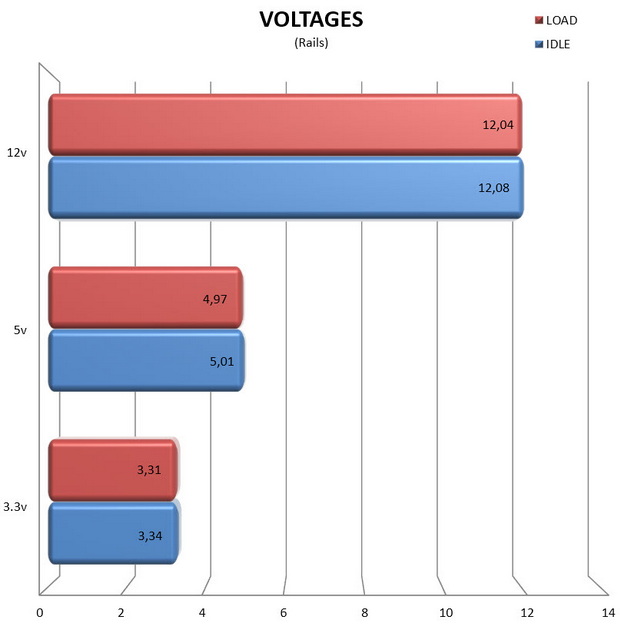
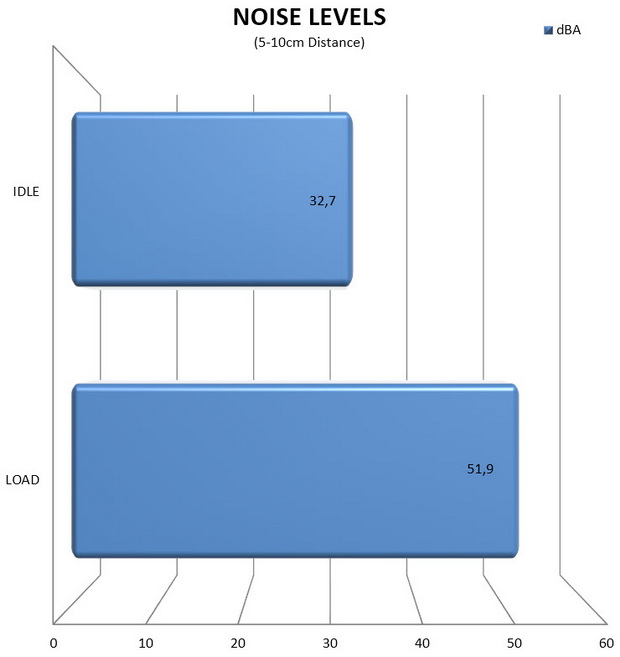
Rail stability was checked/measured with the CPUID Hardware monitor and a Metex multimeter which also recorded the system load in idle and in load. As always try to remember that the power consumption numbers listed in the graph are the highest (Peak) ones recorded during the entire duration of the tests and not the average ones. Noise levels coming from the fan were recorded using the high precision HD600 ExTech Sound dBA Meter from the rear of the unit and at a range of no more than 5-10cm. Readings under load are recorded the exact moment we manually switch the fans of all graphics cards from full speed to almost zero, that way the fan of the power supply does not have enough time to slow its RPM and so by doing this we get very accurate noise level readings. Needless to say, in order to get 100% accurate readings, you need to have a noise isolated room for that exact purpose, something which is quite impossible unless you are working inside a real lab (some people use very small noise insulated boxes but due to their size both heat and noise exceed normal levels and so the results can't really be considered to be 100% accurate, nor realistic for that matter). Also do take into account that since all noise measurements take place from just 5-10cm away the final noise levels to reach your ears will be considerably less.
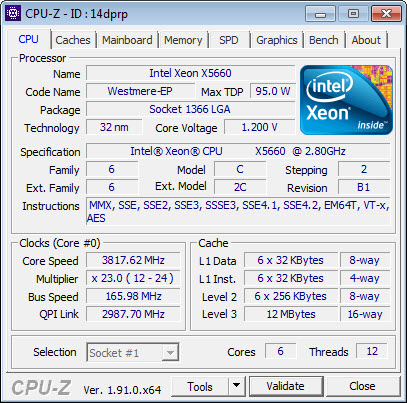
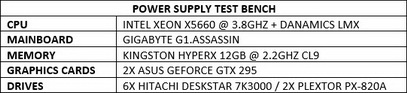
* After well over 10 years of testing PSUs the Intel Core i7-920 CPU of this rig failed and so we replaced it with a Xeon X5660 (we also swapped the GA-X58A-UD7 for the G1. Assassin).
TEST RESULTS
CONCLUSION
The NEXUS L1 850W power supply unit by EINAREX ultimately lands as a well‑built unit with a solid technical backbone. Its CWT (Channel Well Technology) OEM platform gives it reassuring structure, from stable rails to a clean, disciplined internal layout. Those fundamentals make it a dependable performer for systems that need consistent power delivery. The trade‑offs sit elsewhere, noise levels climb significantly under heavier loads (and closer to its rated wattage they will probably increase slightly more than what they did in my tests), the Chinese and Taiwanese secondary capacitors don't have the same "gravitas" as their Japanese counterparts, availability can be very limited depending on region, and finally EINAREX's decision to rely solely on Cybenetics certification instead of the more widely recognized 80 PLUS program feels like a cost‑cutting move that may not inspire the same confidence among buyers. Even so, for users who prioritize electrical stability and proven OEM pedigree, the NEXUS L1 850W remains a competent and trustworthy option.
Just like with many companies just starting to expand their sales channels in the EU and USA the NEXUS L1 850W by EINAREX is not widely available and retails for around 120Euros inside the EU (no availability in the USA as of now). Availability aside the NEXUS L1 850W is a good, mid-end power supply unit aimed towards people who are not only looking at performance but also looks and warranty and so if you can actually come across one, I strongly suggest giving it a shot, it might just be what you’ve been looking for.
PROS
- Overall Build Quality
- Good Rail Stability
- ATX 3.1 & PCIe 5.1 Compliant
- Cybenetics Gold Certified
- Electrical Protections (OCP/OVP/SSP/OPP/UVP/SPD/OTP/SIP)
- 10 Year Limited Warranty
- Design
CONS
- Current Availability
- Noise Levels
- Lack Of 80 PLUS Certification (For Some)
- Secondary Capacitor Manufacturers (For Some)