


INTRODUCTION
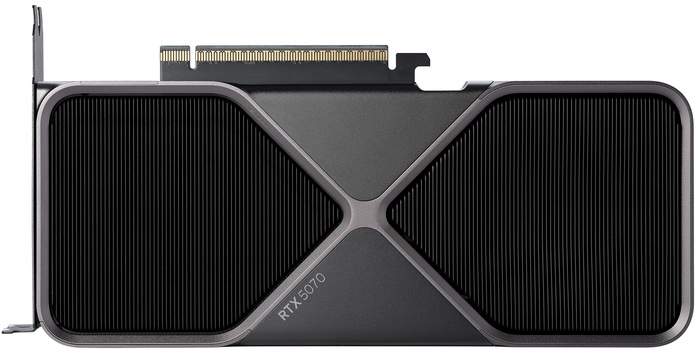
A new GPU generation always arrives with a mix of expectation and skepticism, especially in an era where ray tracing, AI‑assisted rendering, and increasingly complex game engines push hardware harder than ever. NVIDIA’s GeForce 50‑series marked a clear architectural pivot toward neural‑assisted graphics, blending traditional raster performance with machine‑learning‑driven techniques that reshape how frames are built. And after a long wait - nearly 18 months since its original launch window - NVIDIA finally sent over the GeForce RTX 5070 Founders Edition, a card positioned to show what Blackwell’s mid‑range silicon can really do.
NVIDIA (NASDAQ: NVDA) is the world leader in AI and accelerated computing. The pioneer of GPU-accelerated computing, NVIDIA specializes in products and platforms for the large, growing markets of gaming, professional visualization, data center, and automotive.
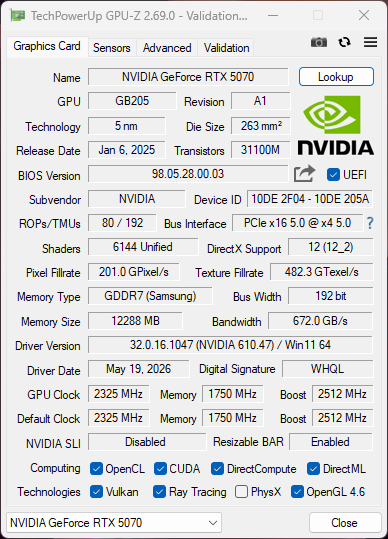
The GeForce RTX 5070 is built on the GB205 silicon with 48 SMs (streaming multiprocessors), delivering 6144 CUDA cores, 192 Tensor cores, 48 RT cores, 192 TMUs, and 80 ROPs, backed by 48MB L2 cache. It features 12GB GDDR7 on a 192‑bit bus running at 28Gbps, yielding 672GB/s bandwidth. GPU boost clocks reach 2512MHz, and the card implements PCIe 5.0x16. The GB205 die includes 5 GPCs, plus one each of the latest NVENC and NVDEC engines, all fabricated on NVIDIA’s 4N process. It also introduces Neural Rendering powered by Blackwell’s AI‑driven graphics pipeline, combining neural objects with traditional rasterization through the new AI Management Processor. It adds concurrent FP32+INT32 execution on every CUDA core, 4th‑gen RT cores prepared for Mega Geometry, and 5th‑gen Tensor cores with FP4 support. The Founders Edition uses a compact Dual Flow‑Through cooler within SFF‑Ready dimensions and targets higher sustained clocks with a 250W TGP. PCIe 5.0, next‑gen NVENC/NVDEC, and architectural IPC gains round out the generational uplift.
SPECIFICATIONS AND FEATURES

PACKAGING AND CONTENTS

NVIDIA uses a simple cardboard box (probably from recycled paper) to ship the GeForce RTX 5070 FE.

The card itself is actually placed inside a secondary box (probably also made by recycled materials).

Along with the GeForce RTX 5070 Founders Edition card NVIDIA has placed just a two 8-pin PCIe to 12V-2x6 power adapter and a quick start guide.
THE GEFORCE RTX 5070 FE

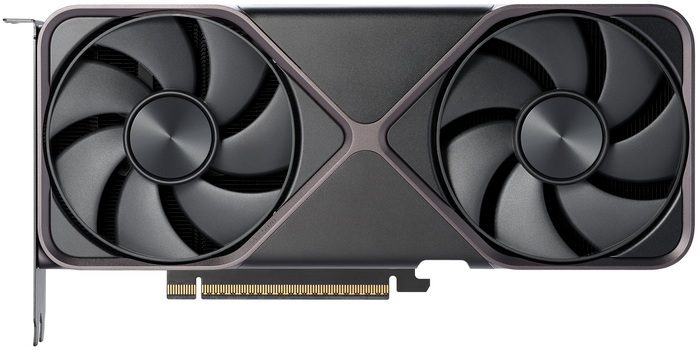
Just like with past Founders Edition models the GeForce RTX 5070 FE carries the same industrial design language NVIDIA has refined over the last few generations, a dense, sculpted block of aluminum with a minimalist, almost architectural presence.

The matte metal frame wraps around the card in a seamless loop, interrupted only by the signature X‑shaped brace that gives the cooler its rigid, engineered look.

On the front, the dual‑axial fans dominate the design, large, quiet, and framed with precision, giving the card a sense of purpose rather than decoration.


The top has two long openings and the 12V-2x6 power connector.
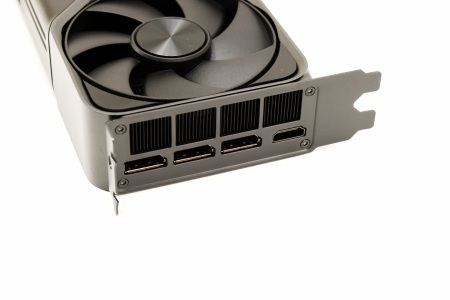
The rear exhaust cutout and the clean row of display outputs (3xDP v2.1b / 1xHDMI v2.1b) reinforce that functional aesthetic.

Yes, for some people the lack of RGB/ARGB lighting may push them towards models by NVIDIA partners but I think it looks great.
TEST BED

TESTING METHODOLOGY
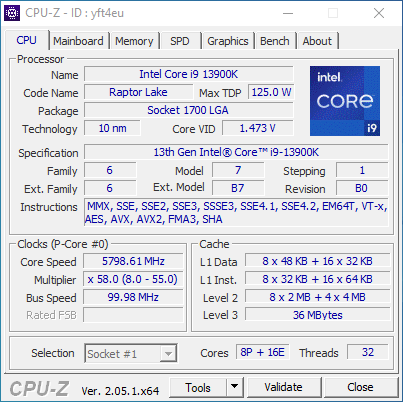
Since I changed my graphics card test rig i decided to tweak things a bit and so the entire testing methodology has changed. So, for the foreseeable future for tests, I’ll be using the EV3285 monitor by EIZO (later on I may also add tri-monitor results since I do have 2 cockpits here in the lab) for 2160p UHD (3840x2160p), 1440p (2560x1440p) and 1080p Full HD (1920x1080p) tests. Needless to say, since most of you voted for it, I’ll also be using the Intel Core I9-13900K (5.8GHz P/4.7GHz E/4.9GHz RING), EVGA Z790 DARK test rig which I’ve completed with the Kingston FURY RENEGADE LIMITED EDITION 48GB DDR5 8000MHz CL36 dual-channel kit.
Most games have also been changed so instead of manually testing every single one (and always allowing a small percentage of error) i chose all the latest ones to feature a built-in benchmark. In certain cases, built-in benchmarks may perform better than in-game, but my purpose is comparison and not what one can expect in terms of in-game performance. So, this list includes Chernobylite, Cyberpunk 2077, F1 2022, Far Cry 6, Forza Horizon 5, Guardians Of The Galaxy, Horizon Zero Dawn CE, Metro Exodus Enhanced Edition, Red Dead Redemption 2 and Returnal. Also, since some of you have asked for Synthetic benchmarks in the past, I’ll also be using Speed Way and Port Royal from 3D Mark.
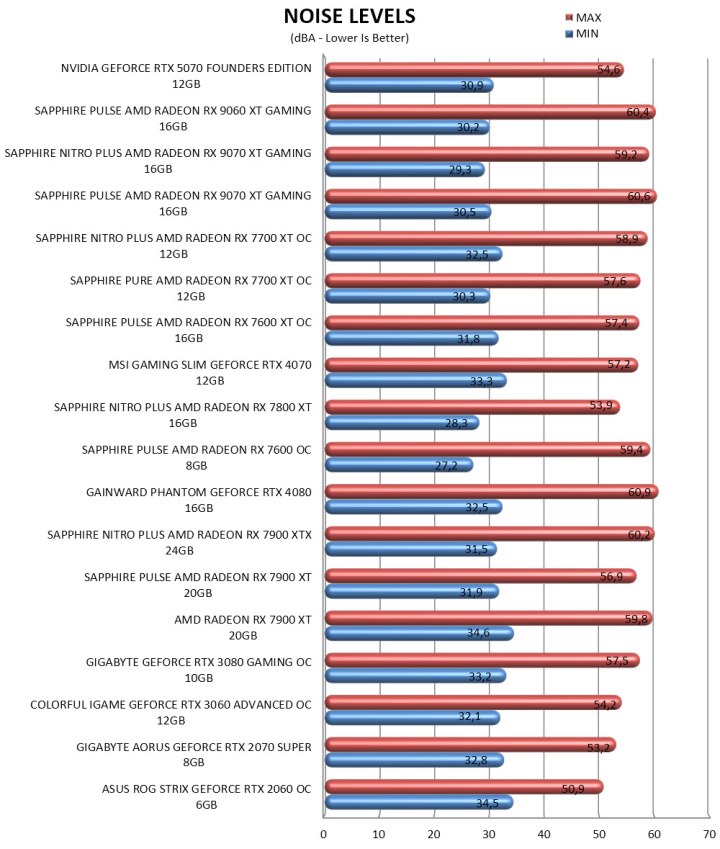
As with the past options like power saving, sharpness, overlays and even zero fan mode are all disabled in the cards we’re testing (to achieve the purest and maximum performance) and all tests are repeated a total of 3 times in a fresh Windows 11 Pro installation with all updates installed until the day of our review (same as all the games used). Room temperature is as usual controlled and steady at 23 degrees Celsius for all tests and to record the temperatures of the cards we used AIDA64, and GPU-Z. Recording noise levels is done with an ExTech HD600 dBA meter from a distance of just 15cm away while power consumption is measured again using GPU-Z.
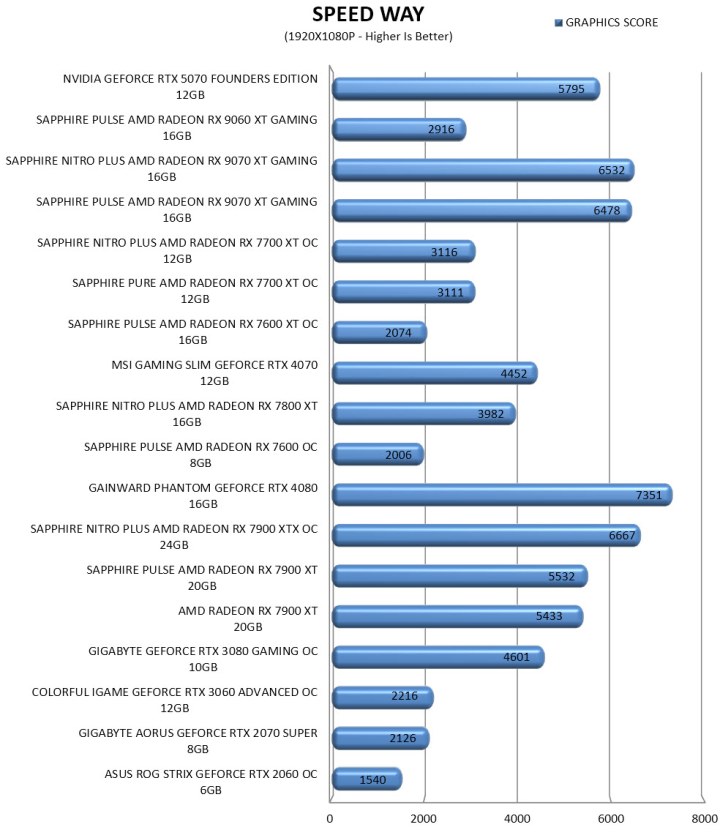
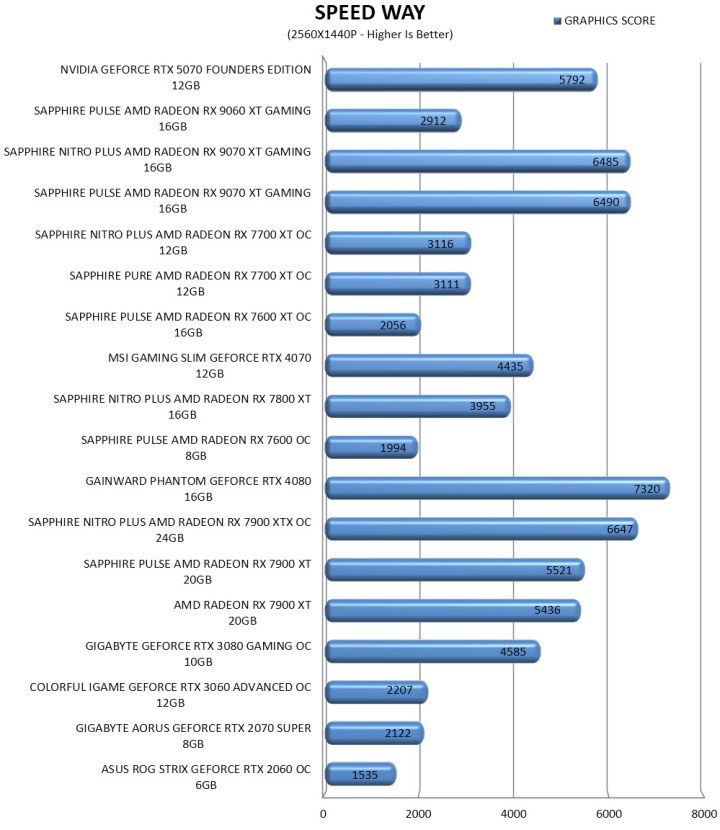
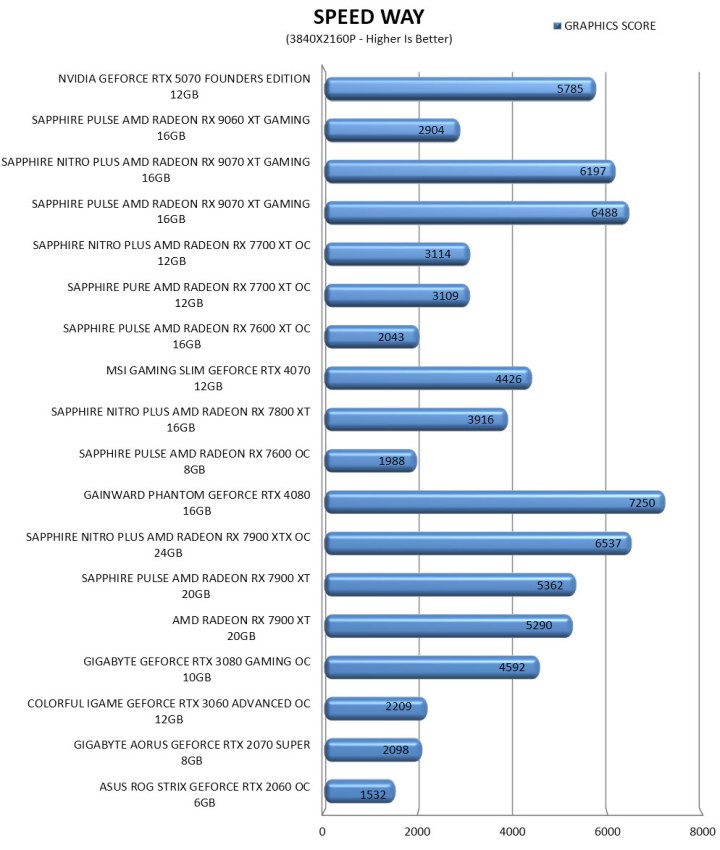
TEST RESULTS – SPEED WAY

3DMark Speed Way’s engine is assembled to demonstrate what the latest DirectX API (12 Ultimate) brings to ray traced gaming, using DirectX Raytracing tier 1.1 for real-time global illumination and real-time raytraced reflections, coupled with new performance optimizations like Mesh Shaders.
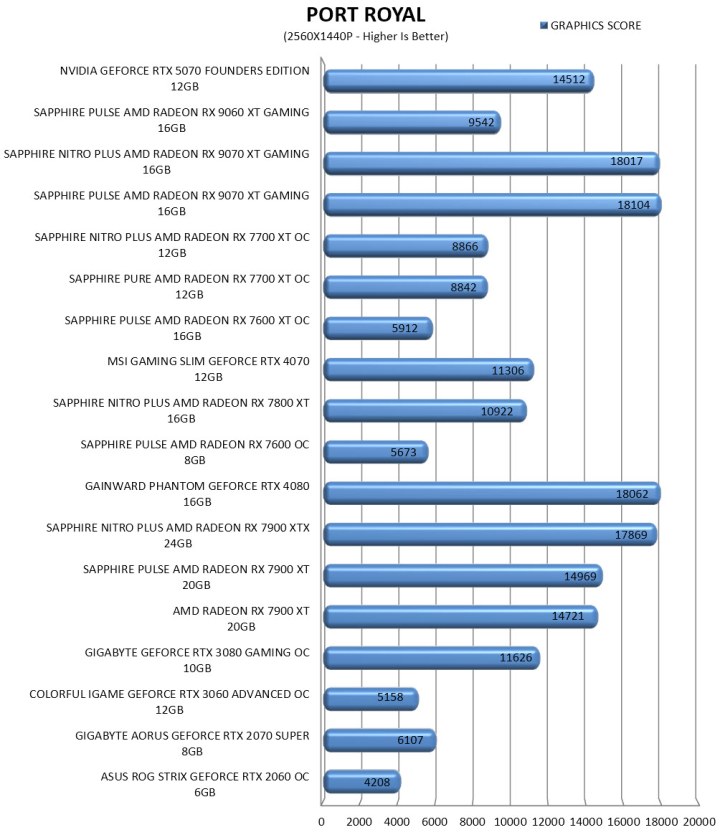
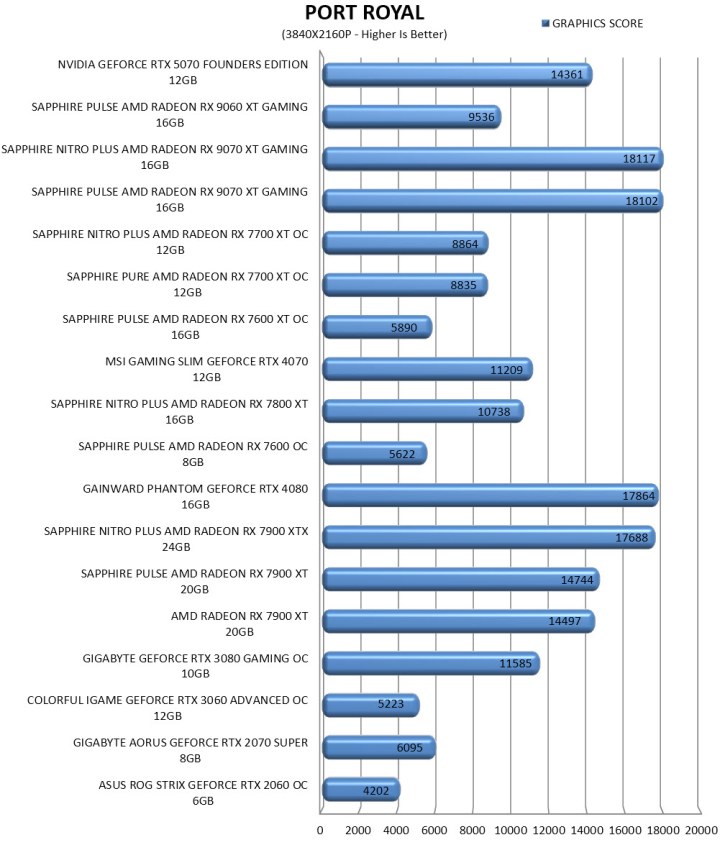
TEST RESULTS – PORT ROYAL

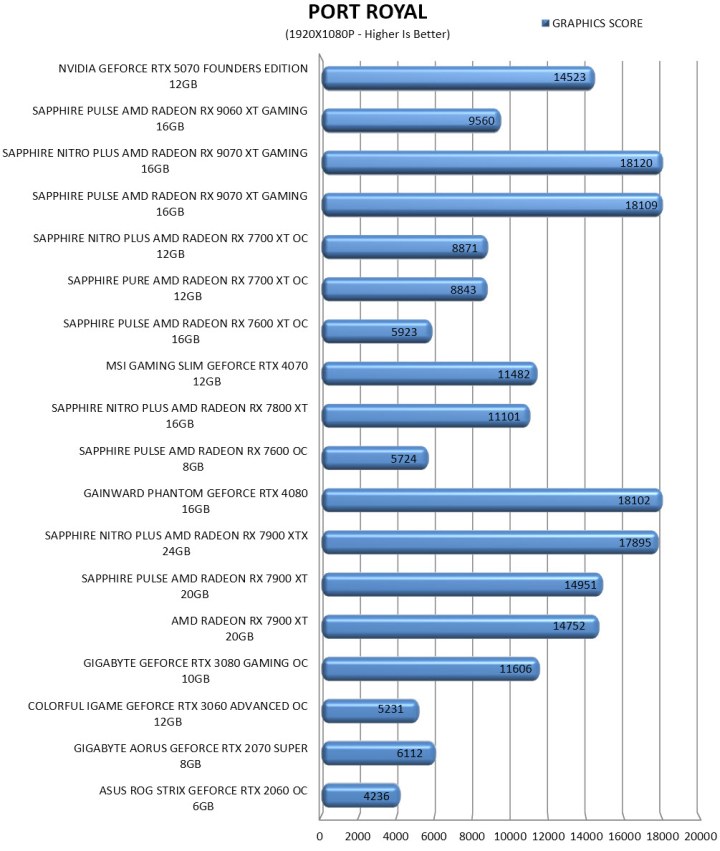
3DMark Port Royal is the world’s first real-time ray tracing benchmark for gamers. It shows you how well your PC handles ray tracing effects in real-time.
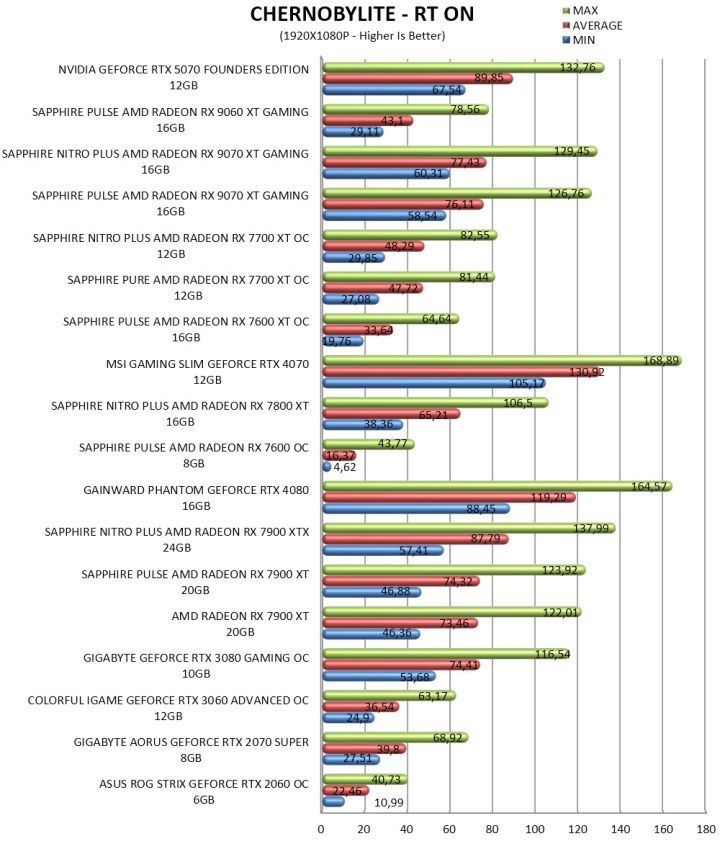
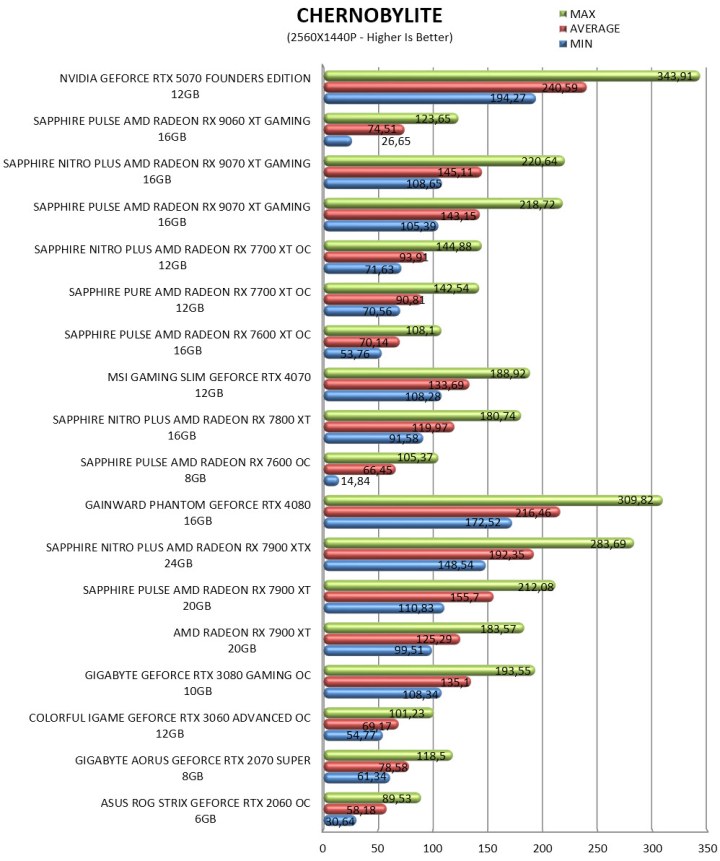
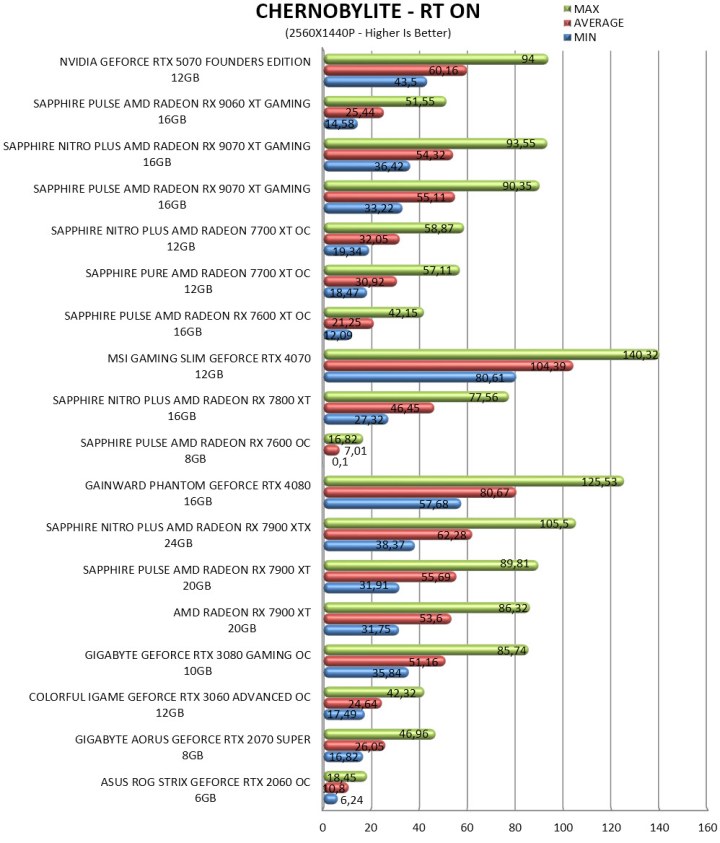
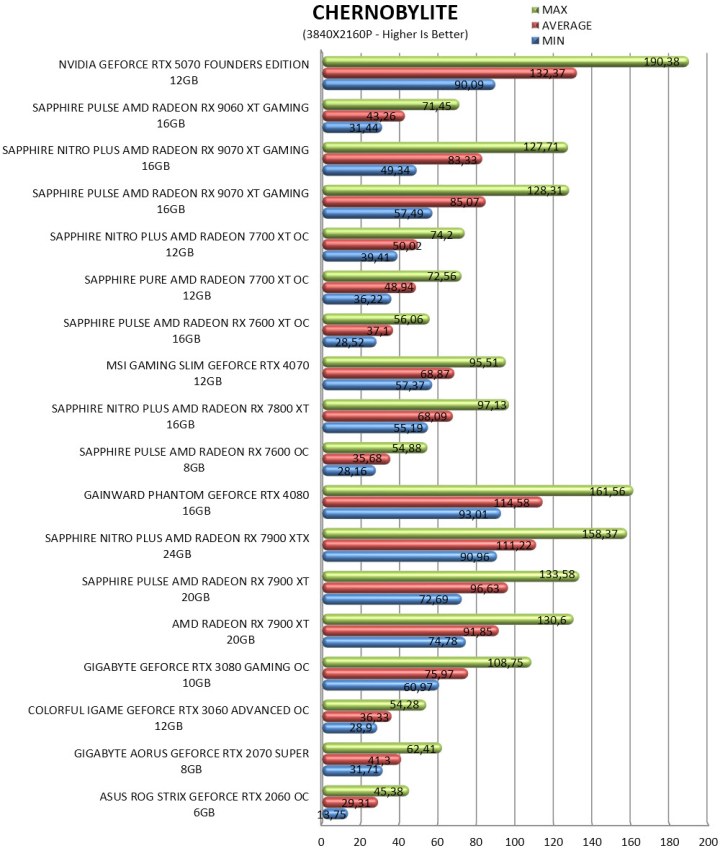
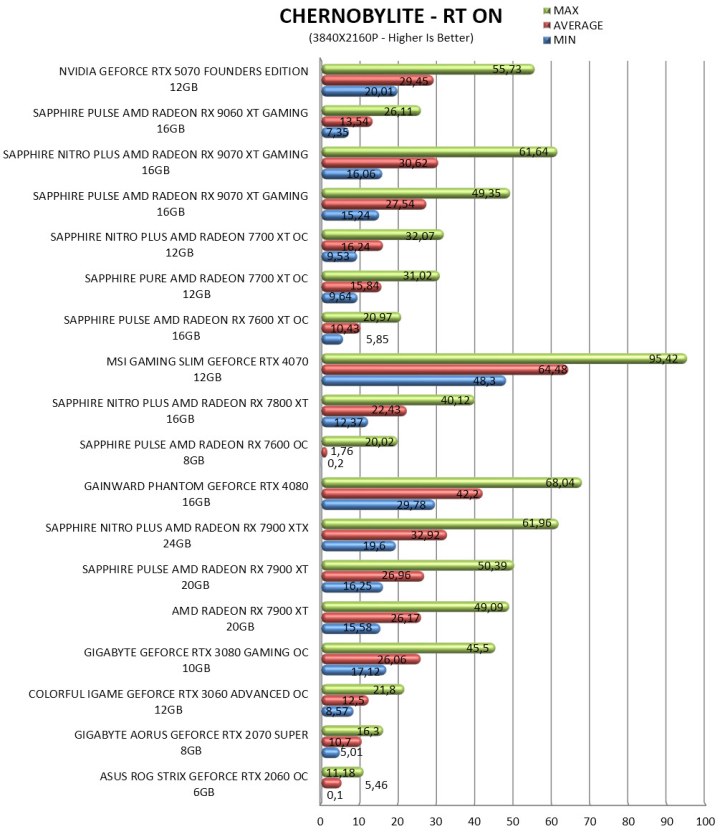
TEST RESULTS – CHERNOBYLITE
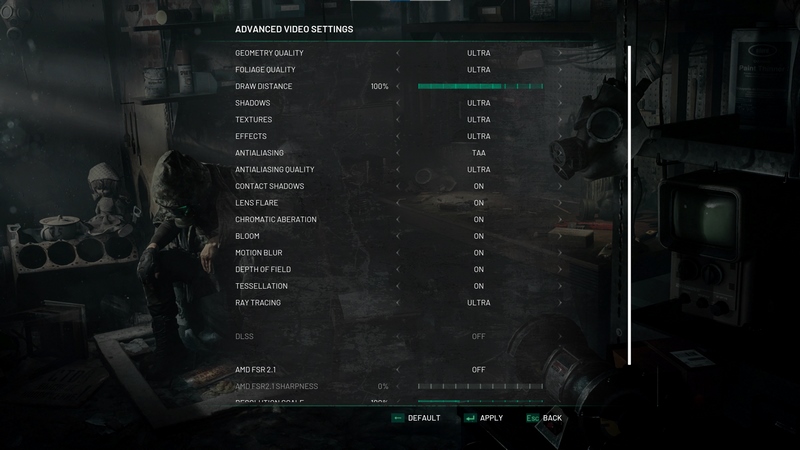
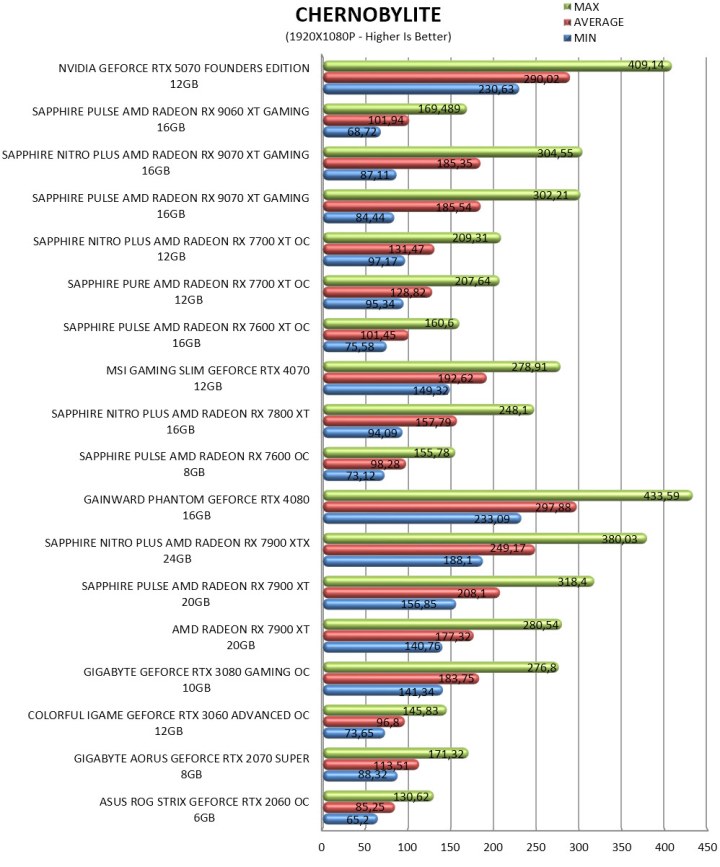
Chernobylite is a 1st person RPG set in the hyper-realistic, 3D-scanned wasteland of Chernobyl's Exclusion Zone. It's based on Unreal Engine 4 and will be used at Ultra graphics (RT Ultra/Off).
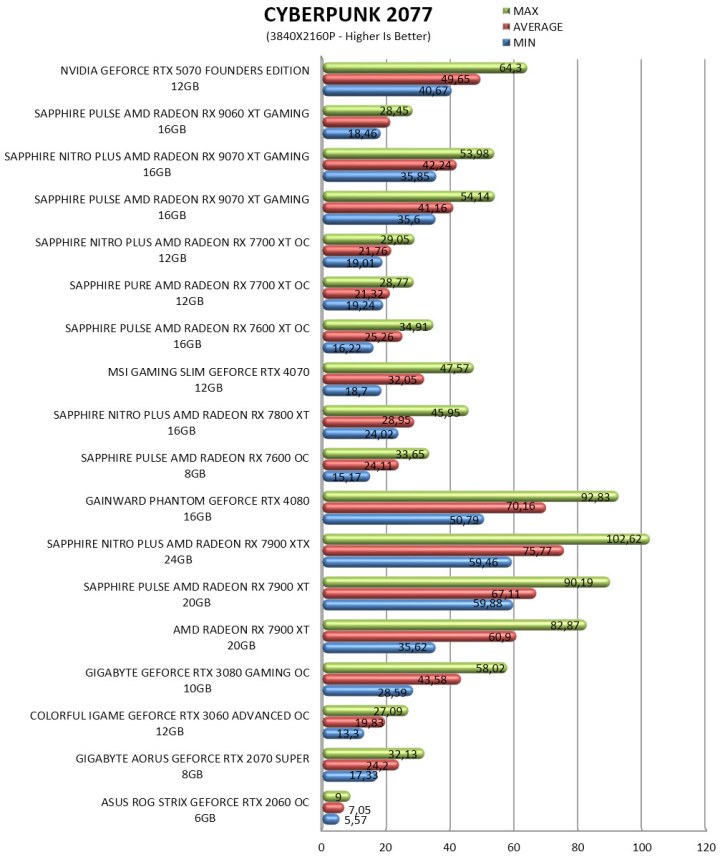
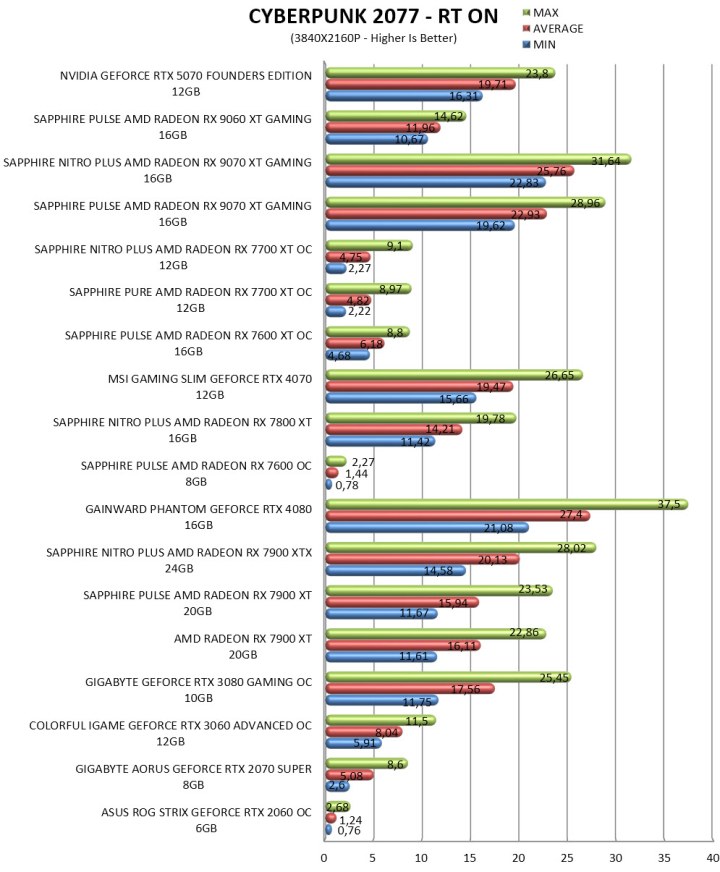
TEST RESULTS – CYBERPUNK 2077
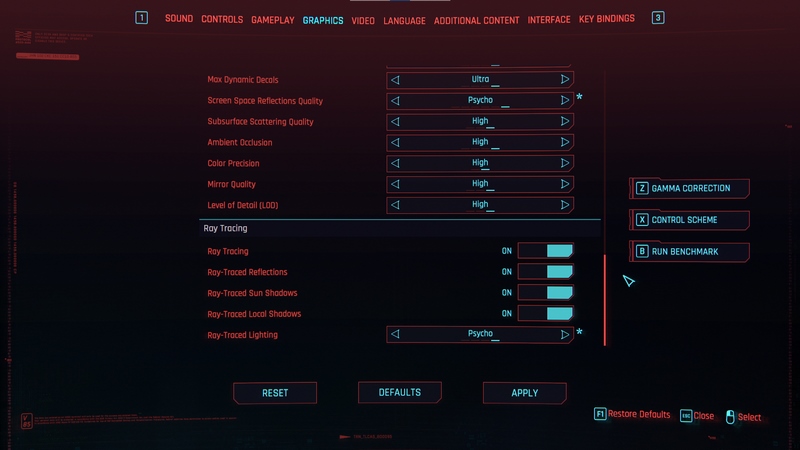
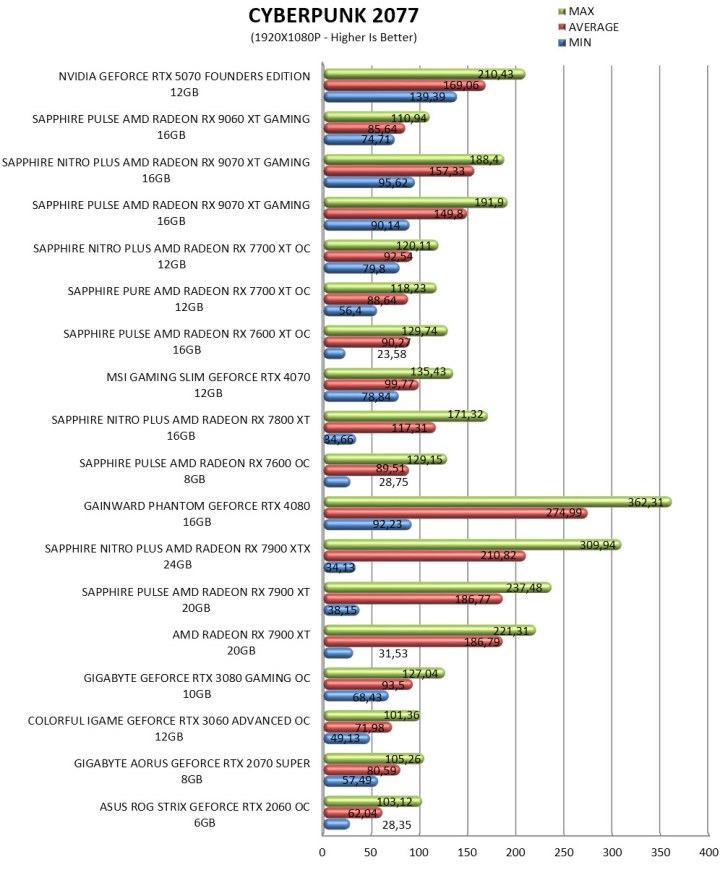
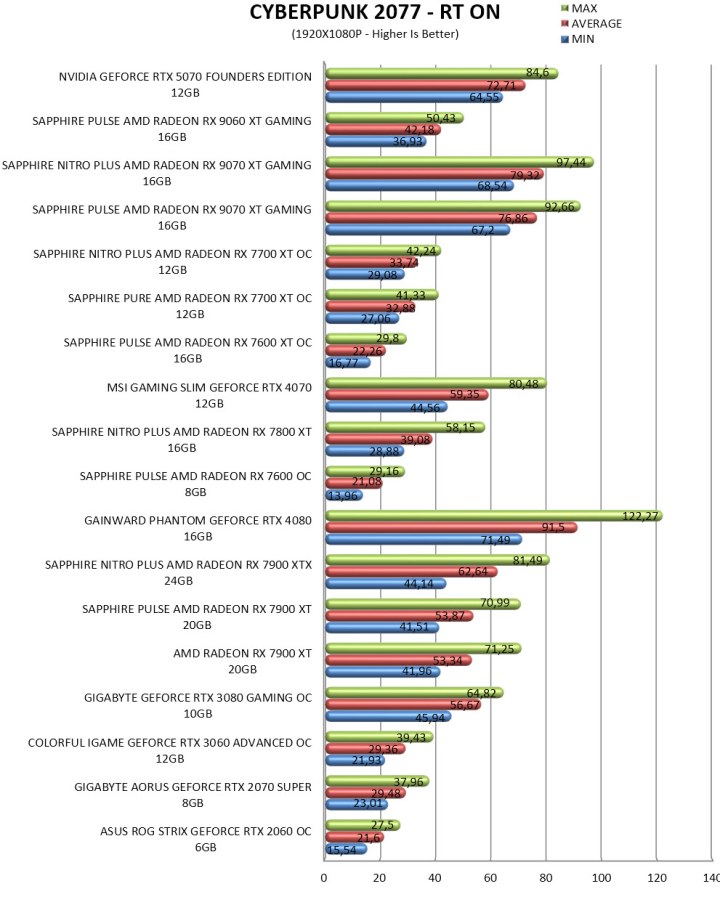
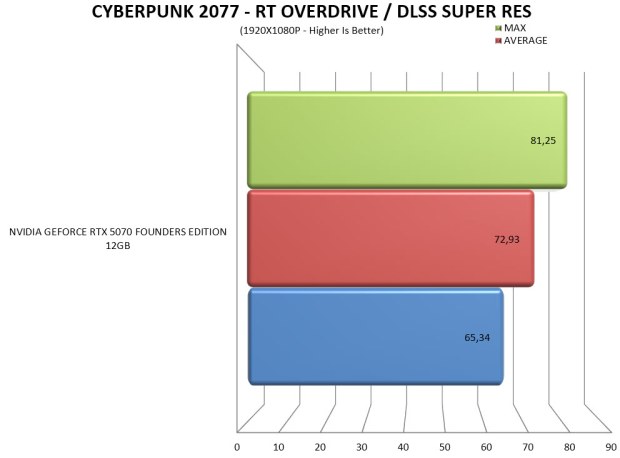
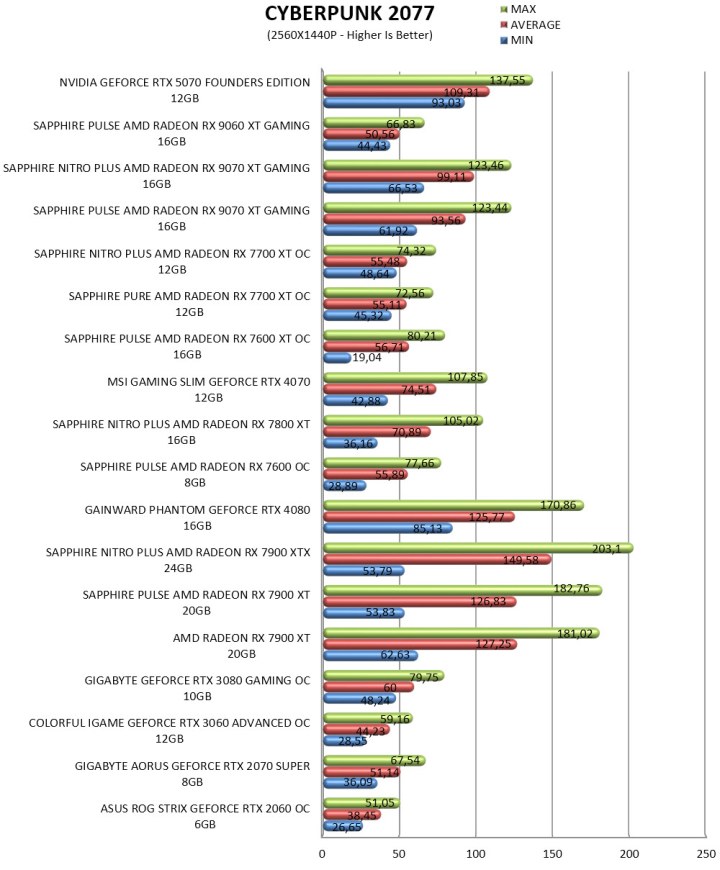
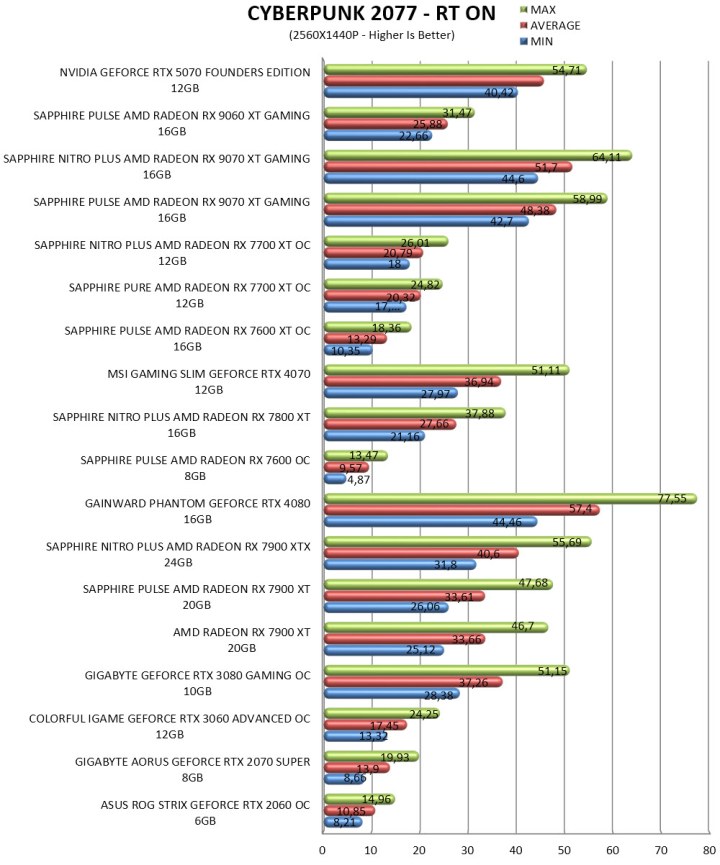
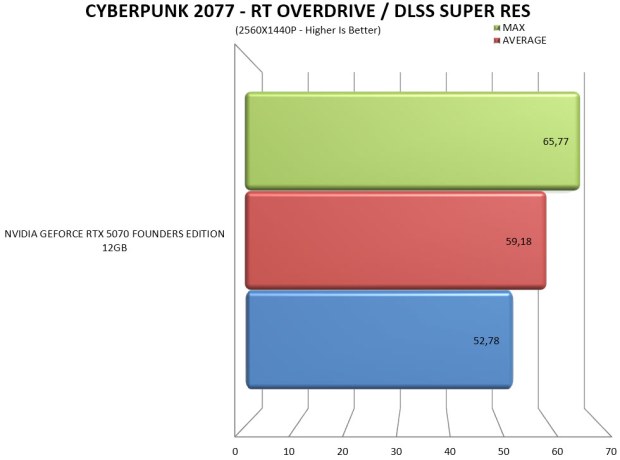
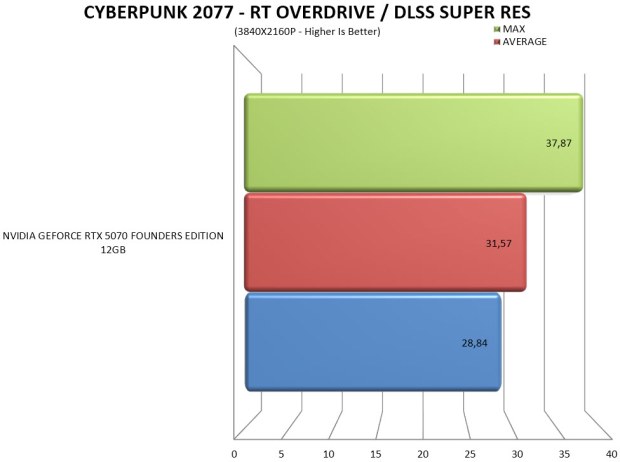
Cyberpunk 2077 is the latest game by CD Project and is based on their REDEngine 4. Graphics are set at Ultra/Psycho (RT Psycho/Off).
TEST RESULTS – F1 2022
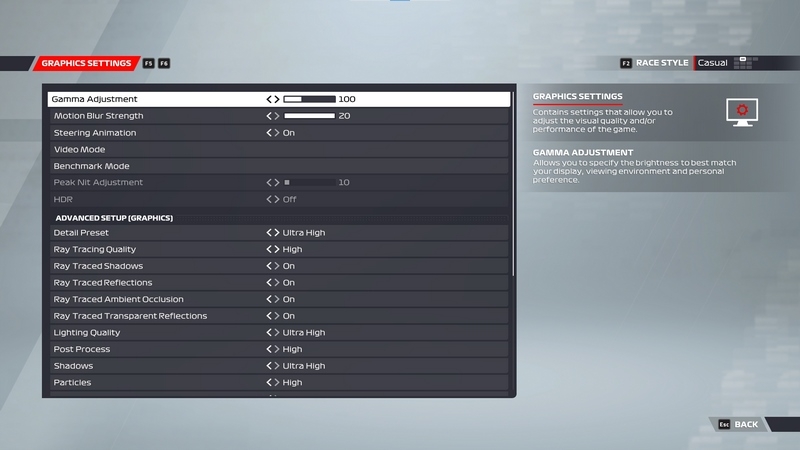
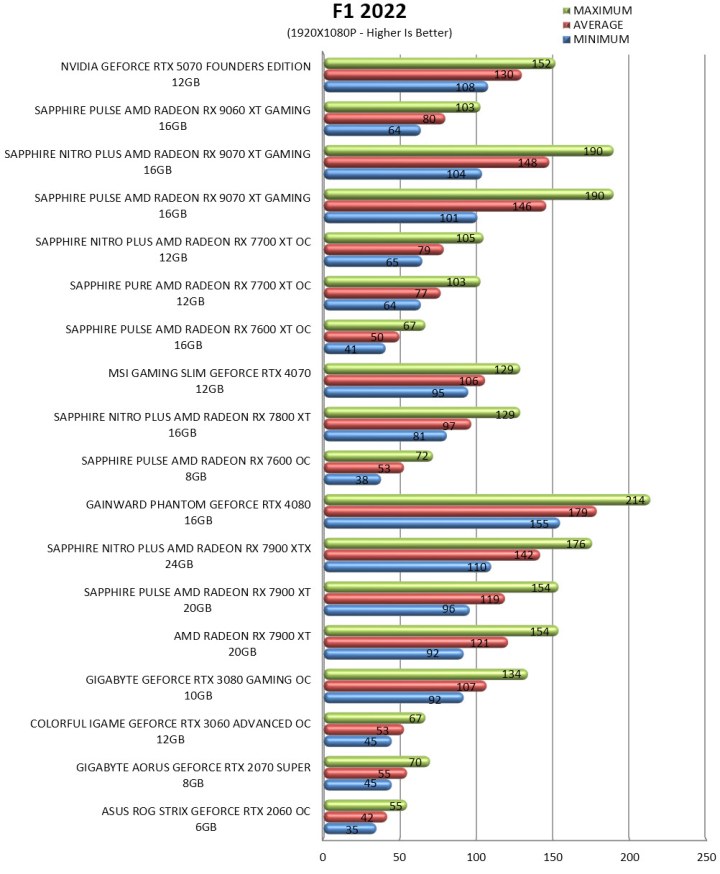
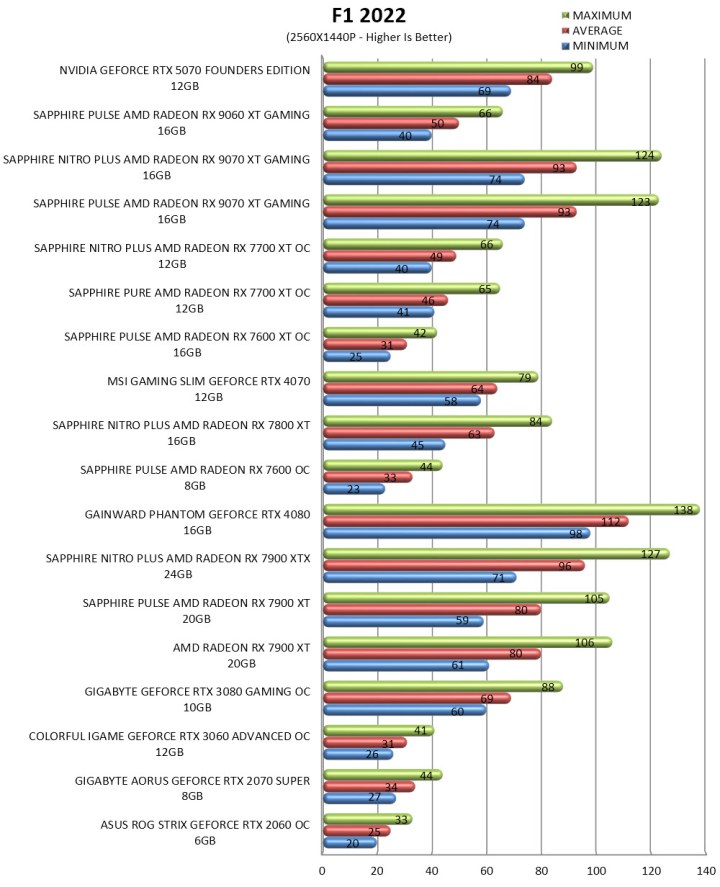
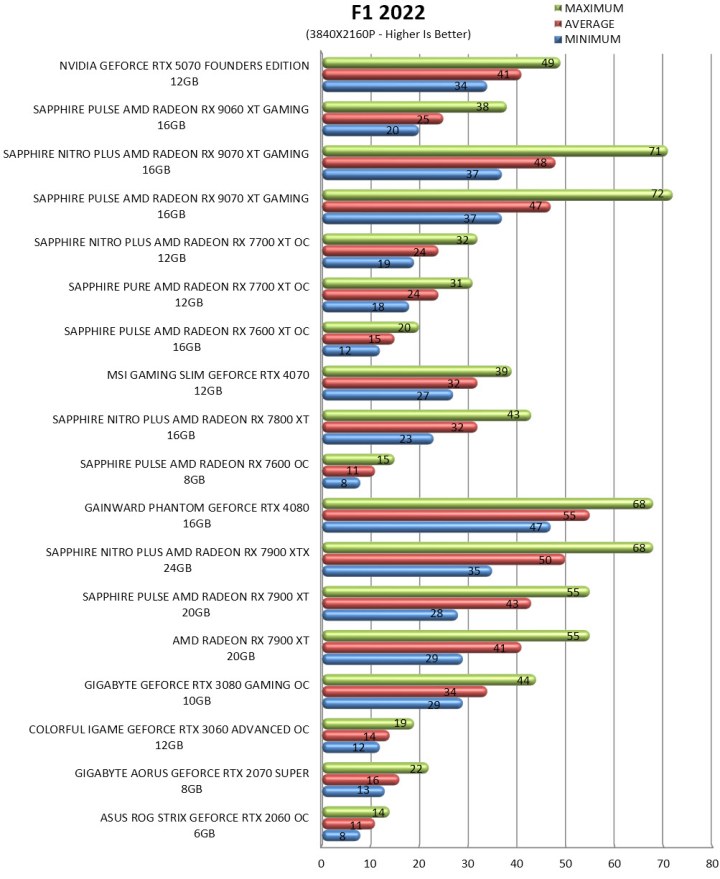
F1 2022 is built on Codemasters' in-house engine, EGO, which has been upgraded to include DX12 and Raytracing. Graphics are set to Ultra High (RT is enabled in all tests).
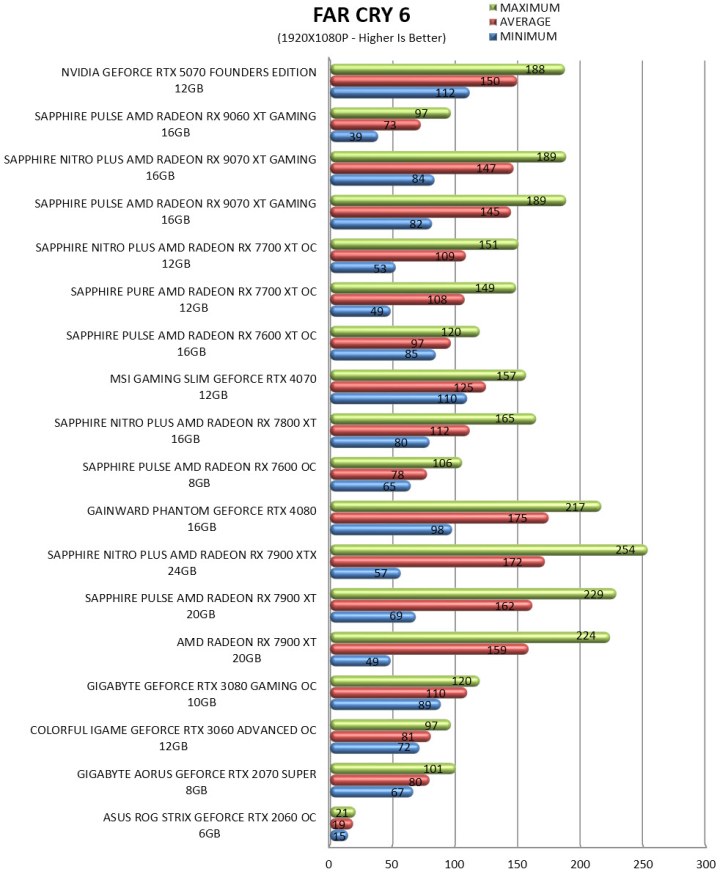
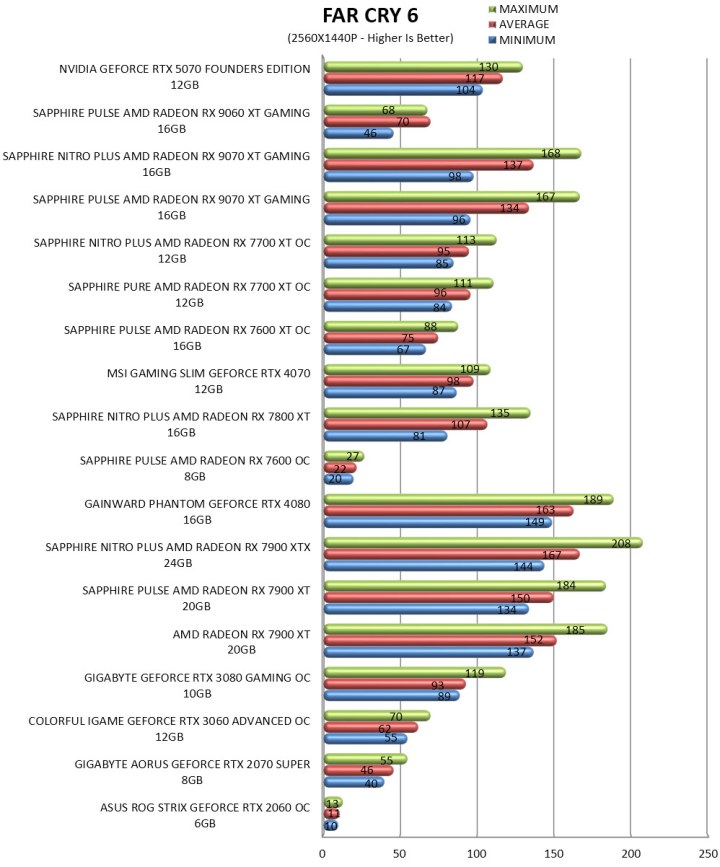
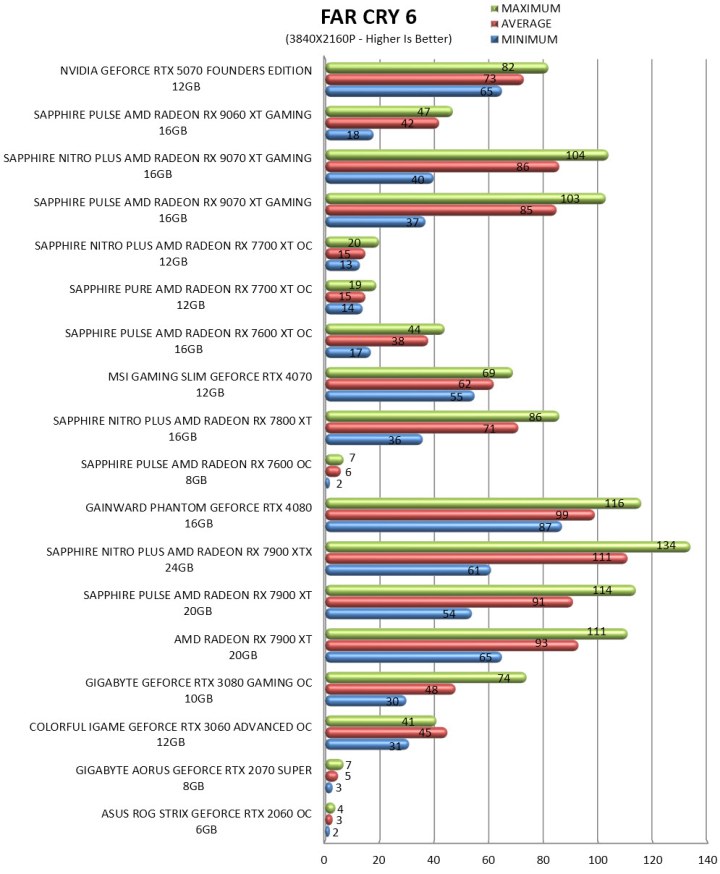
TEST RESULTS – FAR CRY 6
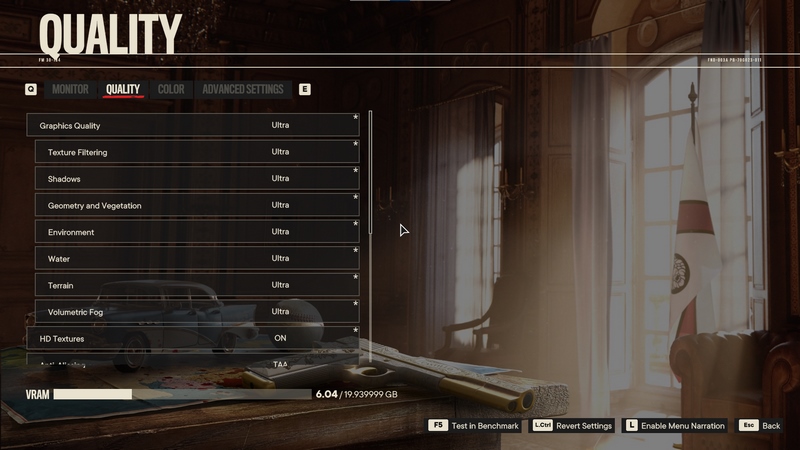
Far Cry 6 is based on the Dunia engine. Graphics are set to Ultra with DXR enabled.
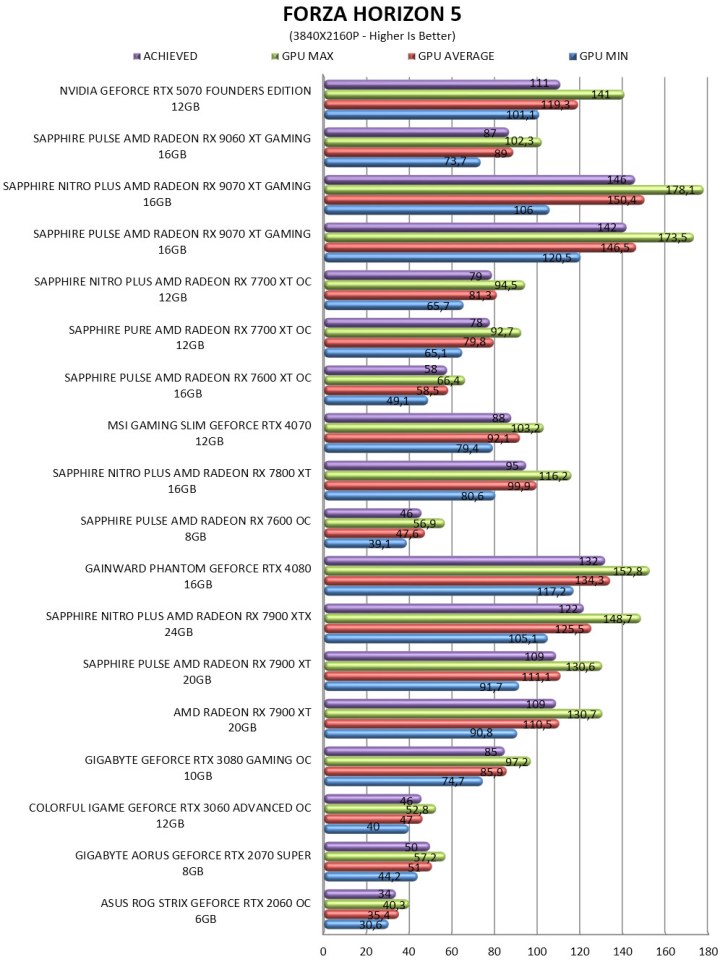
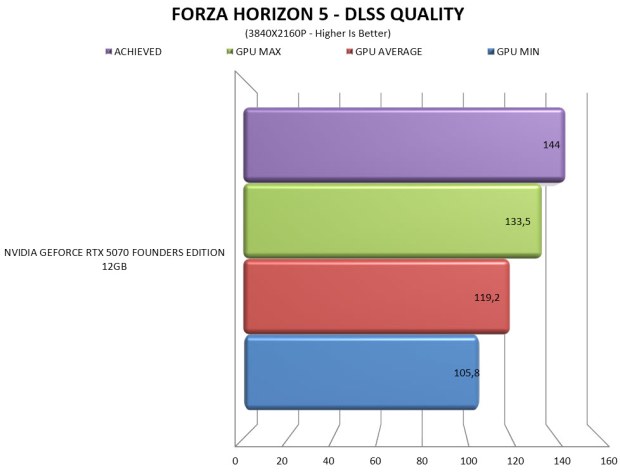
TEST RESULTS – FORZA HORIZON 5
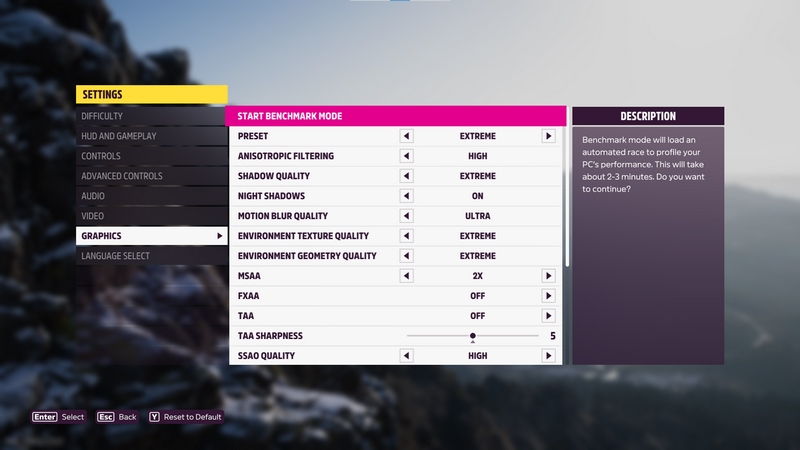
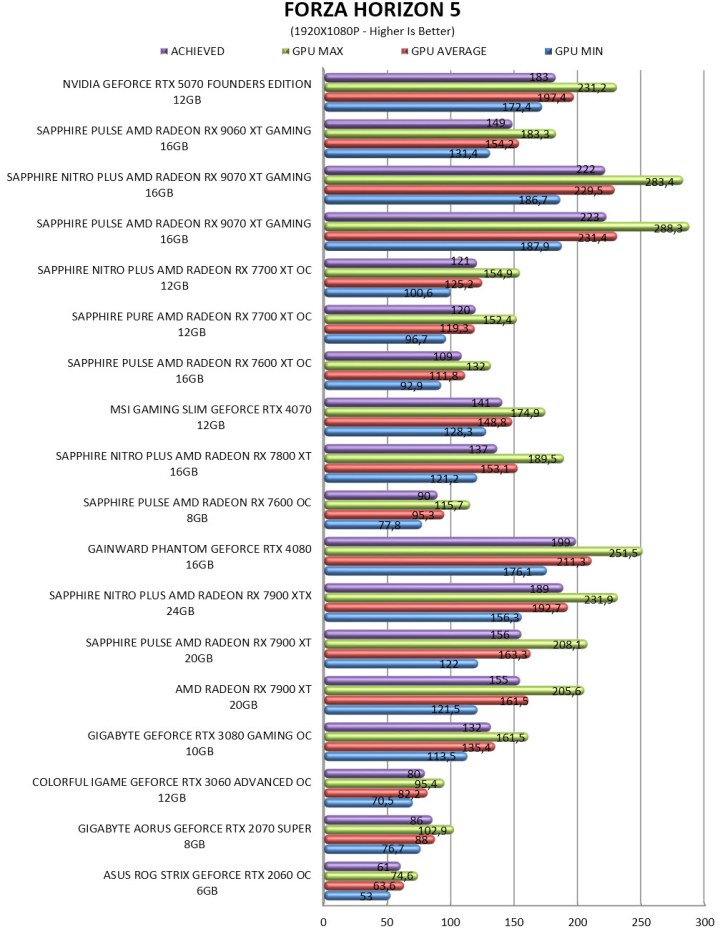
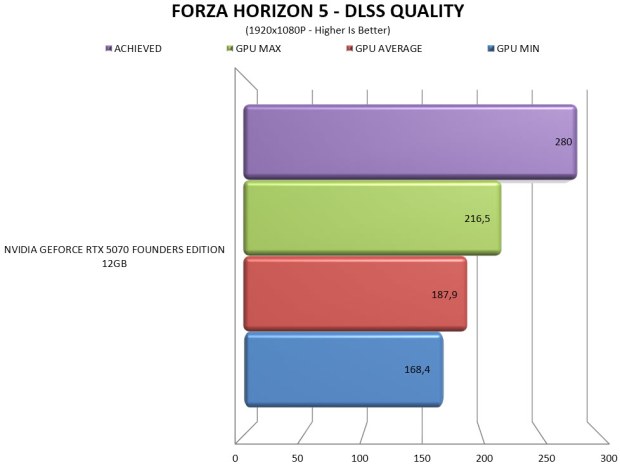
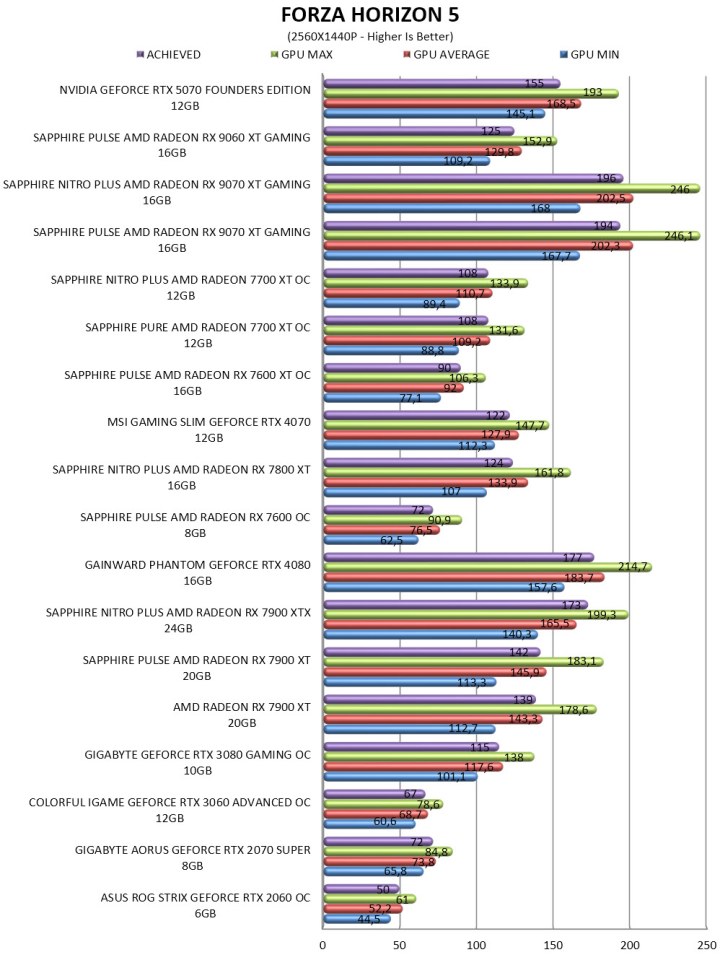
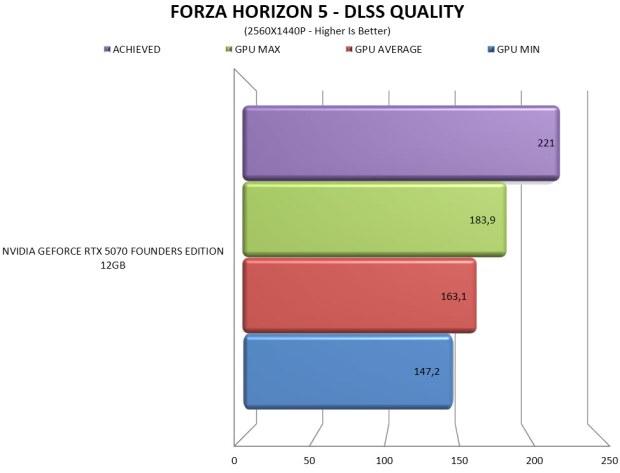
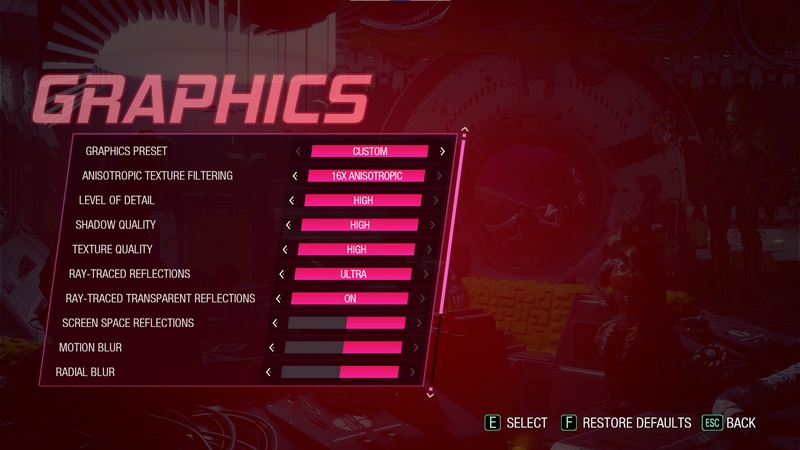
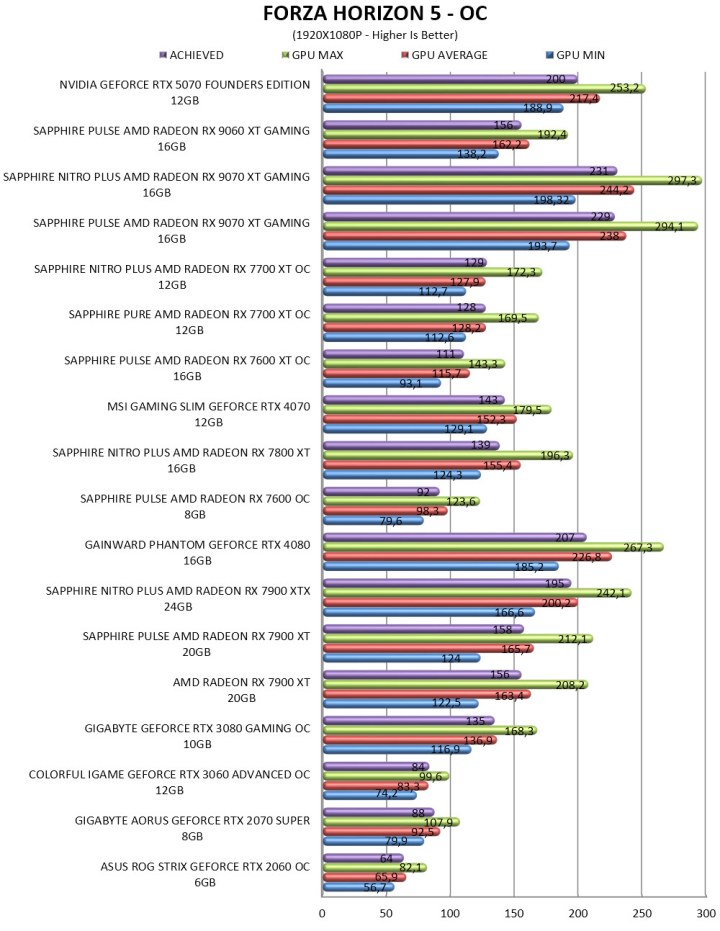
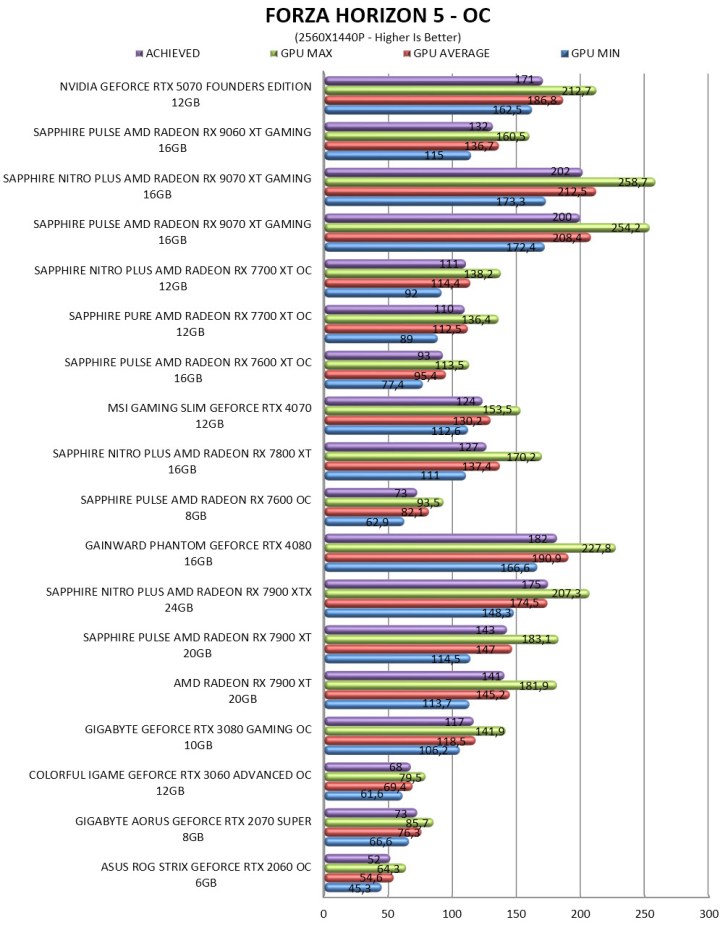
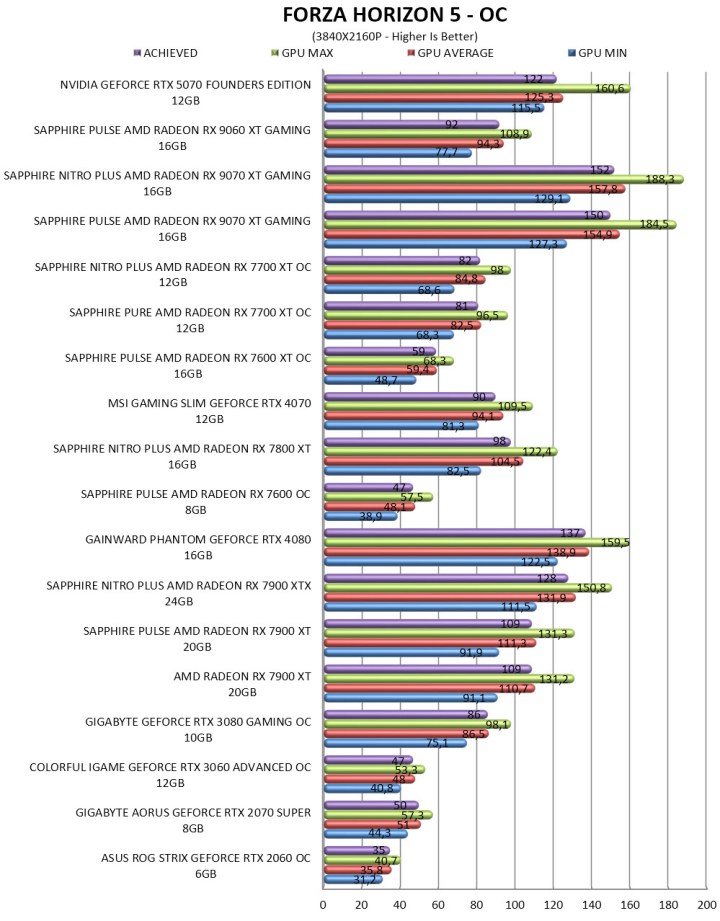
Forza Horizon 5 uses ForzaTech, a proprietary engine built by Turn 10. Graphics are set to Extreme (RT is always enabled at high).
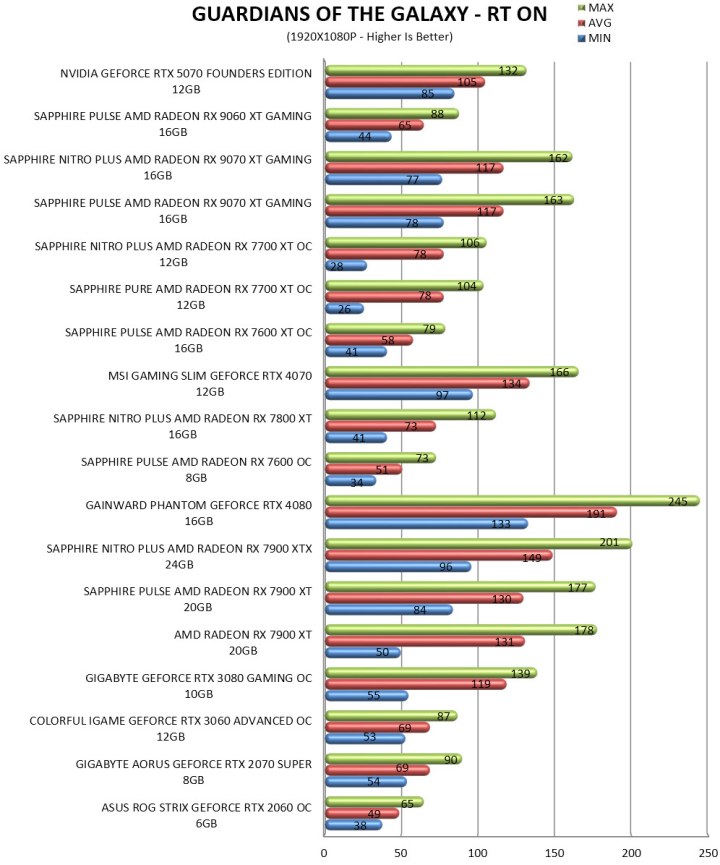
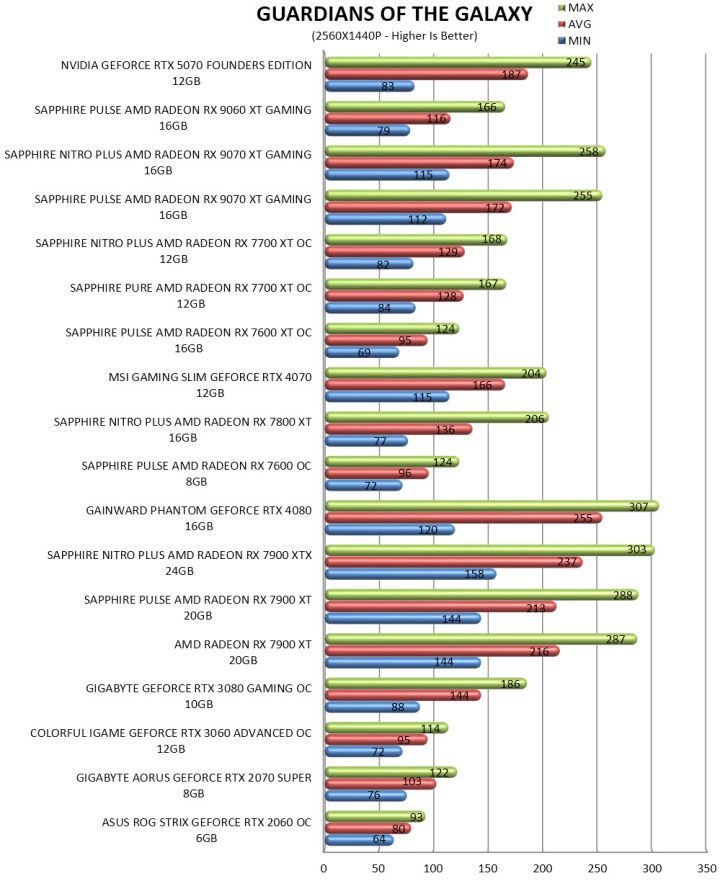
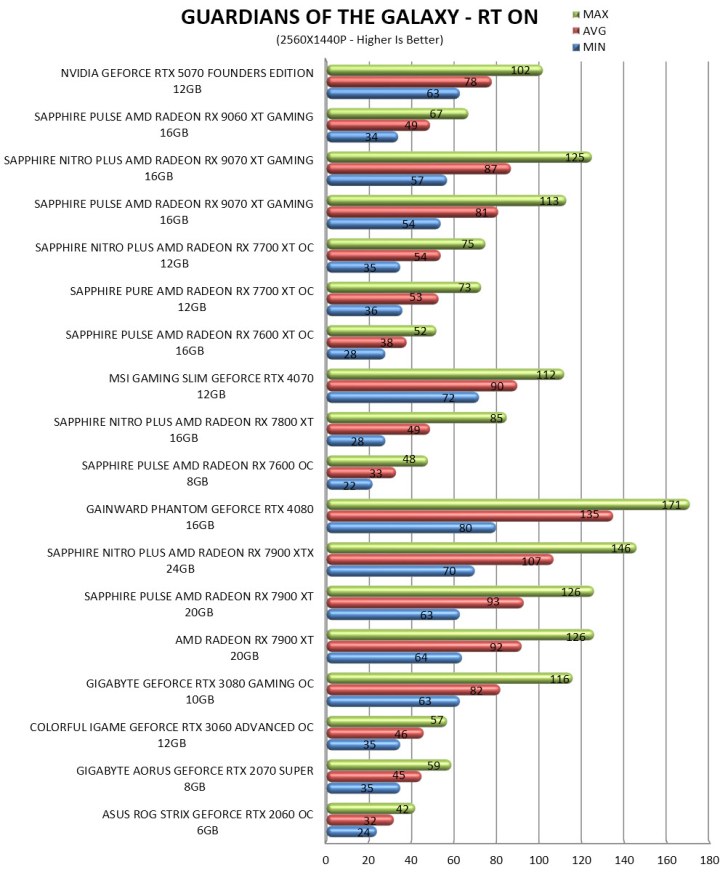
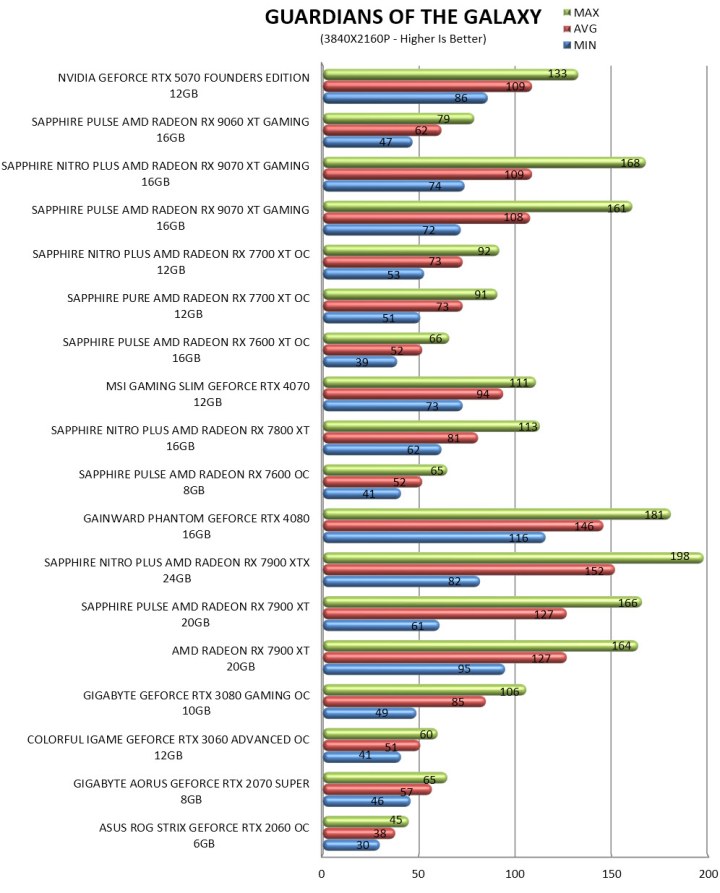
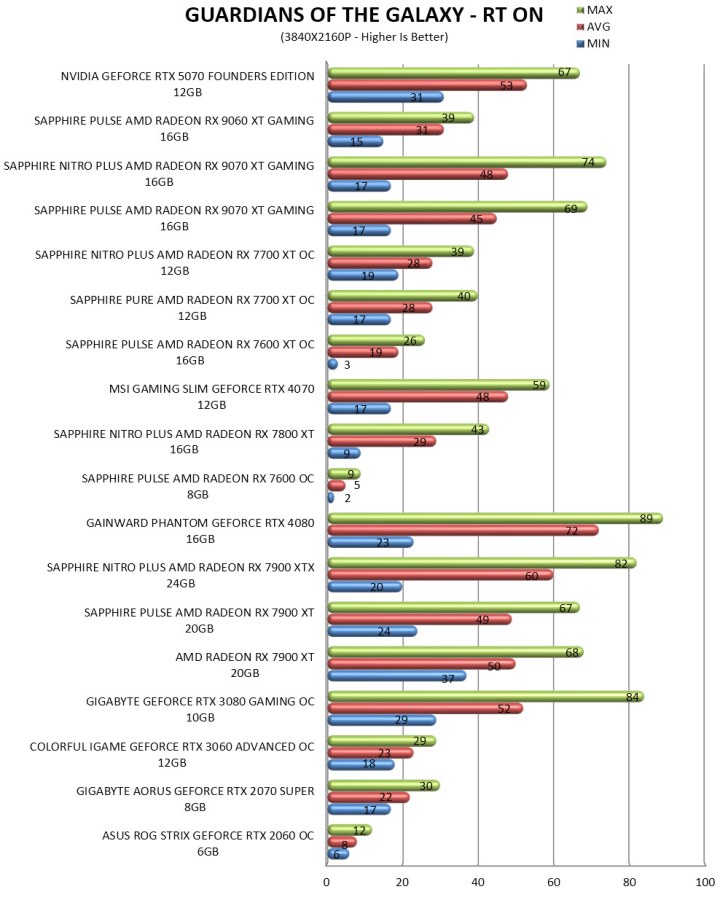
TEST RESULTS - GUARDIANS OF THE GALAXY
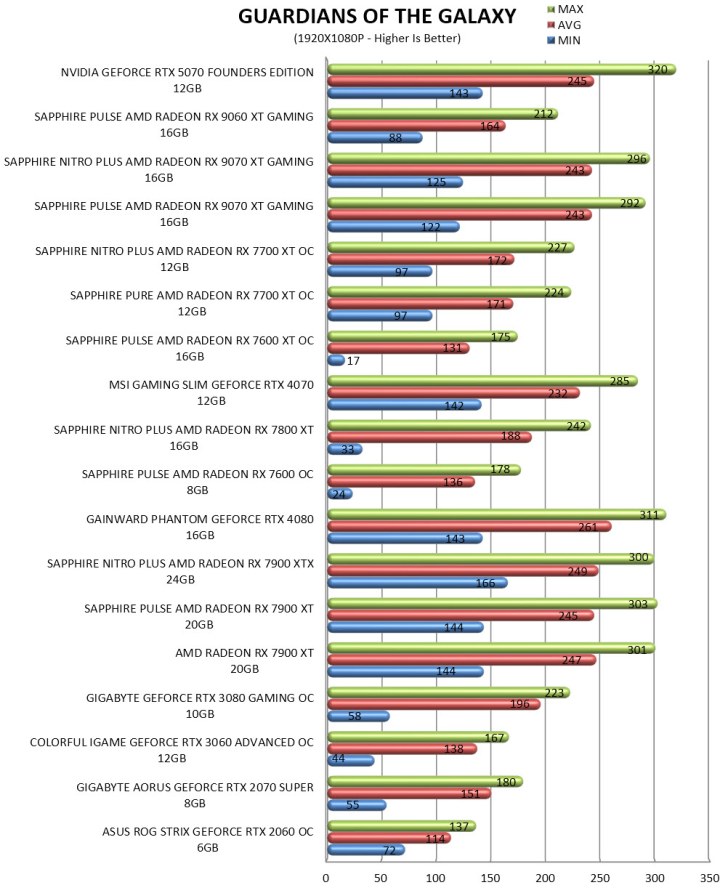
Guardians Of The Galaxy is based on the Dawn Engine by EIDOS. Graphics are set to maximum (RT Ultra/Off).
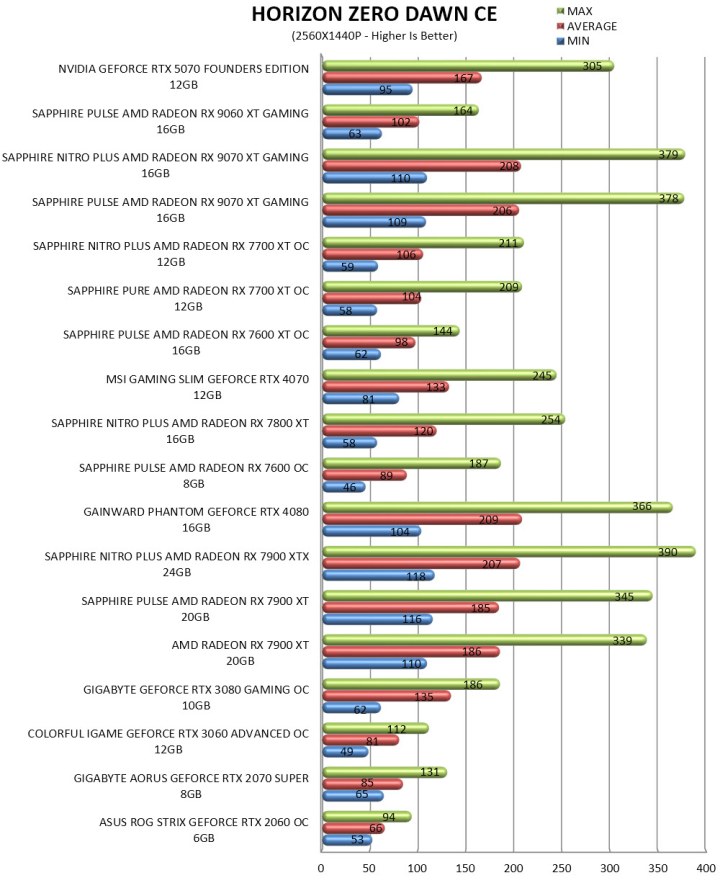
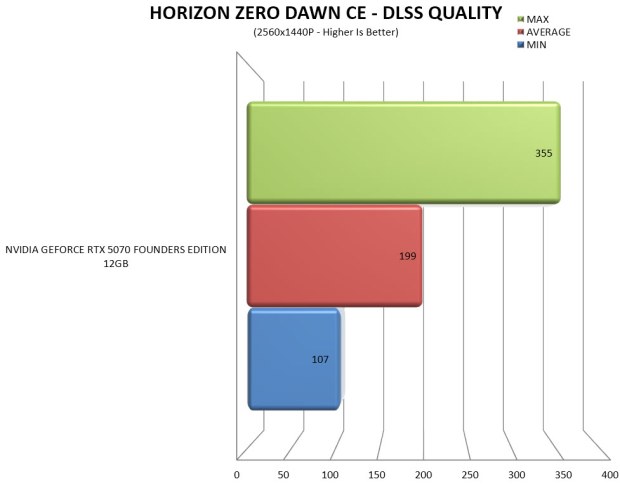
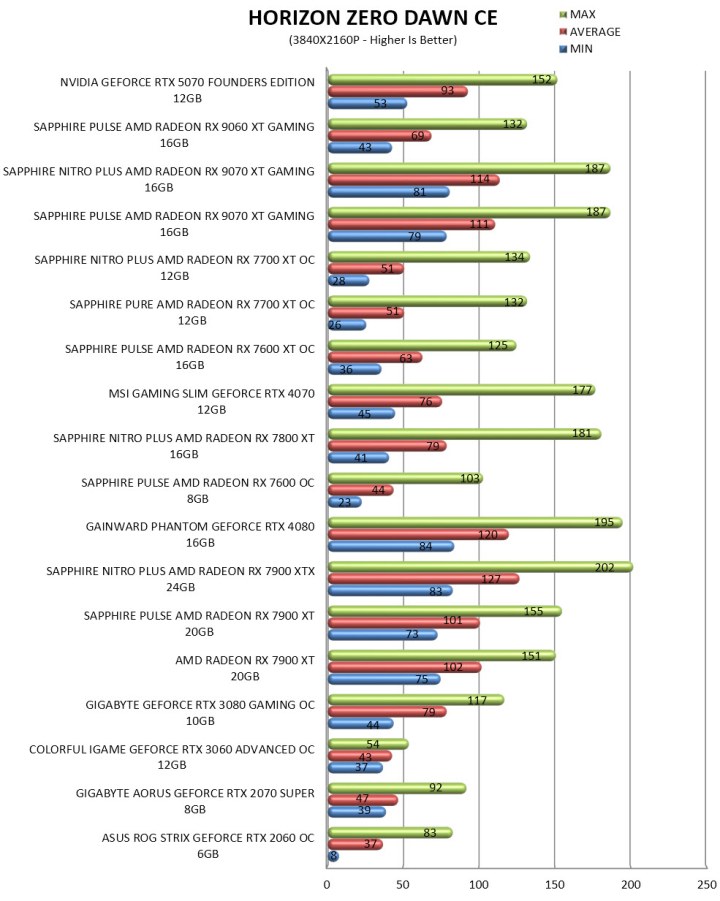
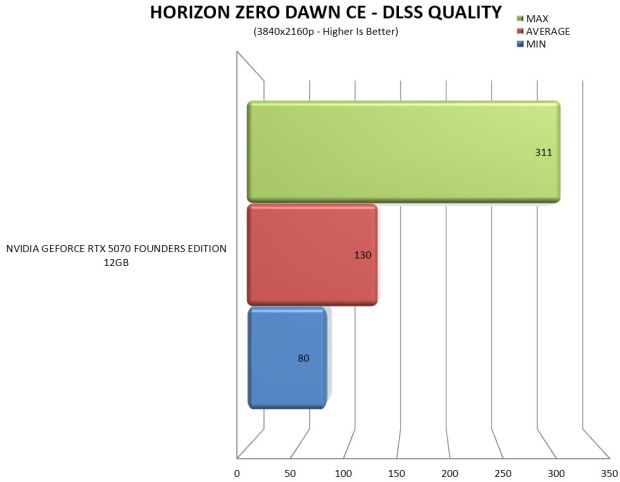
TEST RESULTS - HORIZON ZERO DAWN CE
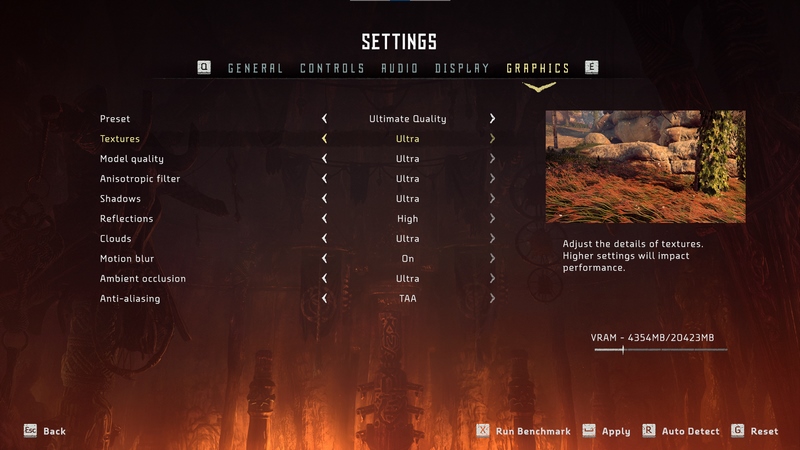
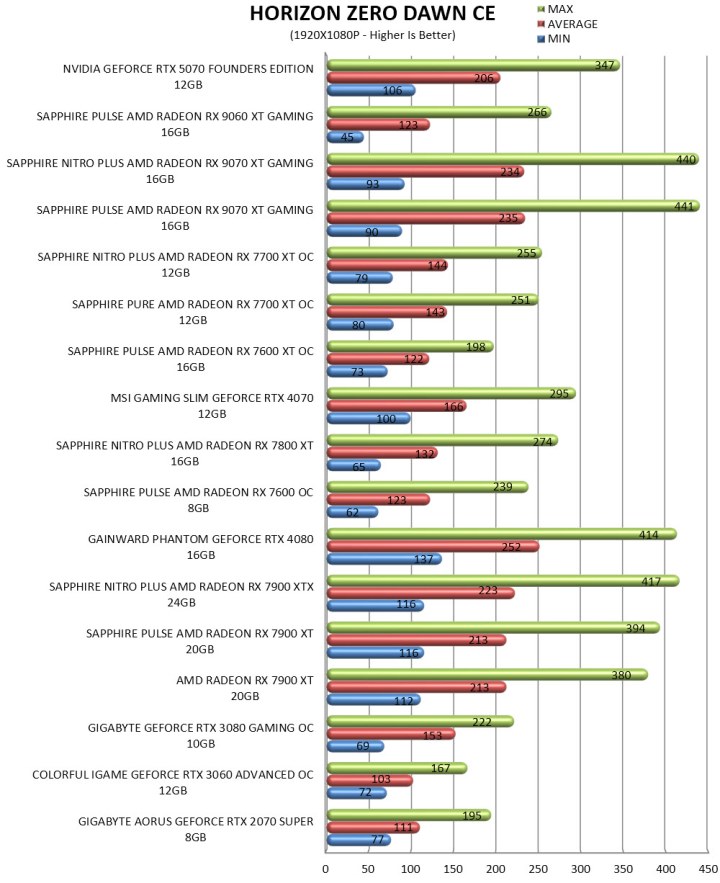
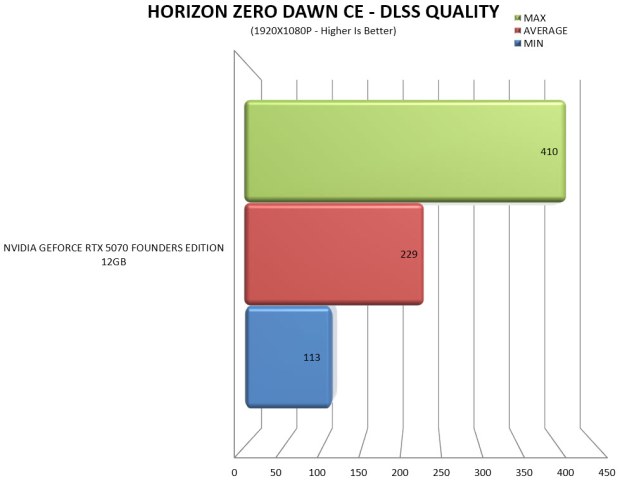
Horizon Zero Dawn CE (Complete Edition) is based on Guerrilla Games' Decima engine. Graphics are set to Ultimate Quality.
TEST RESULTS - METRO EXODUS ENHANCED EDITION
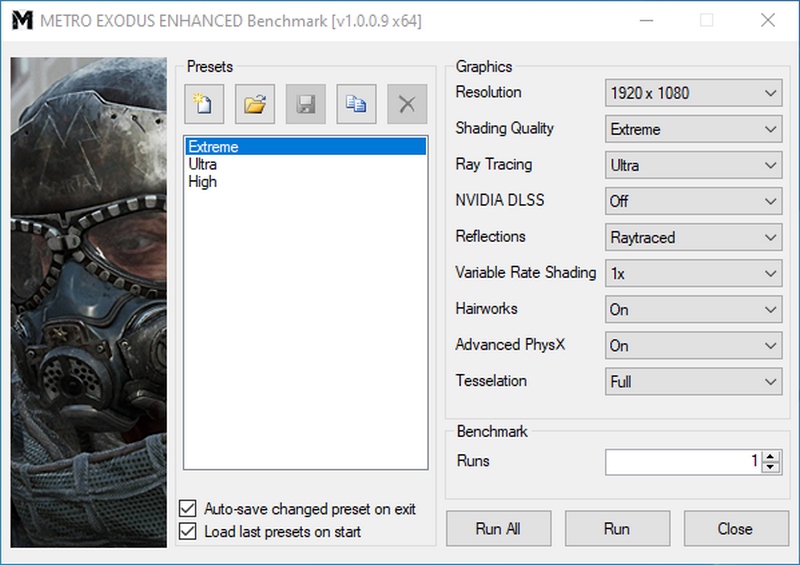
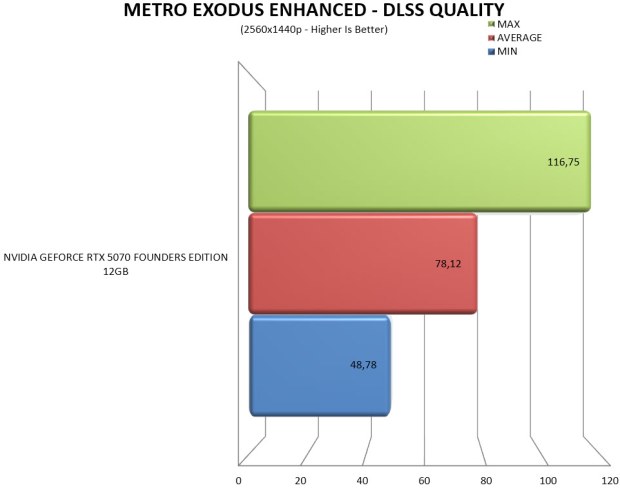
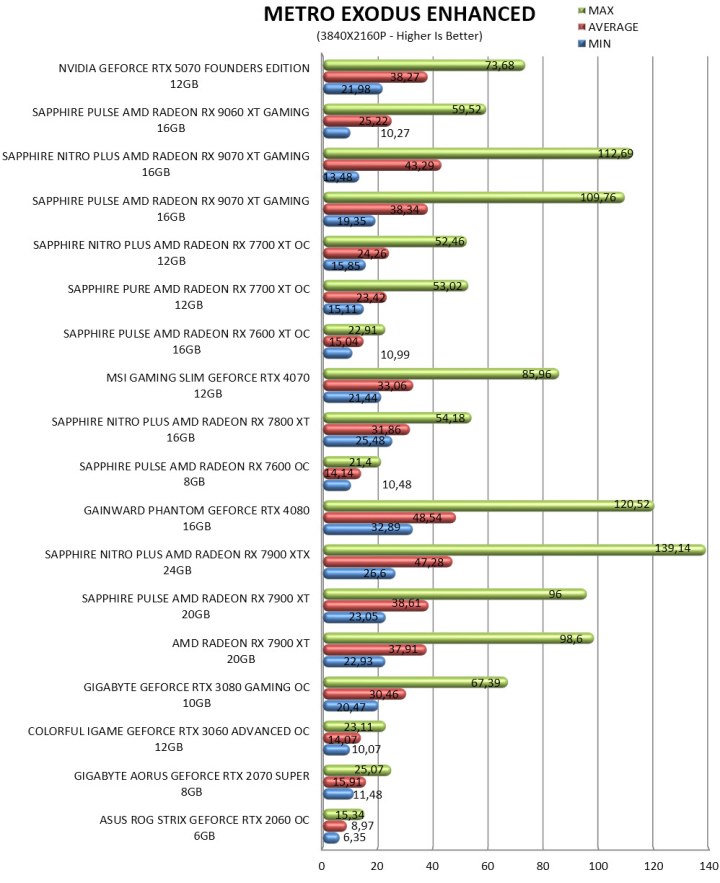
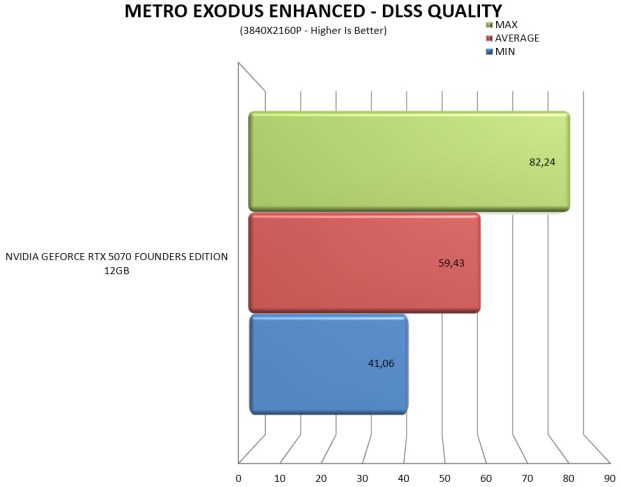
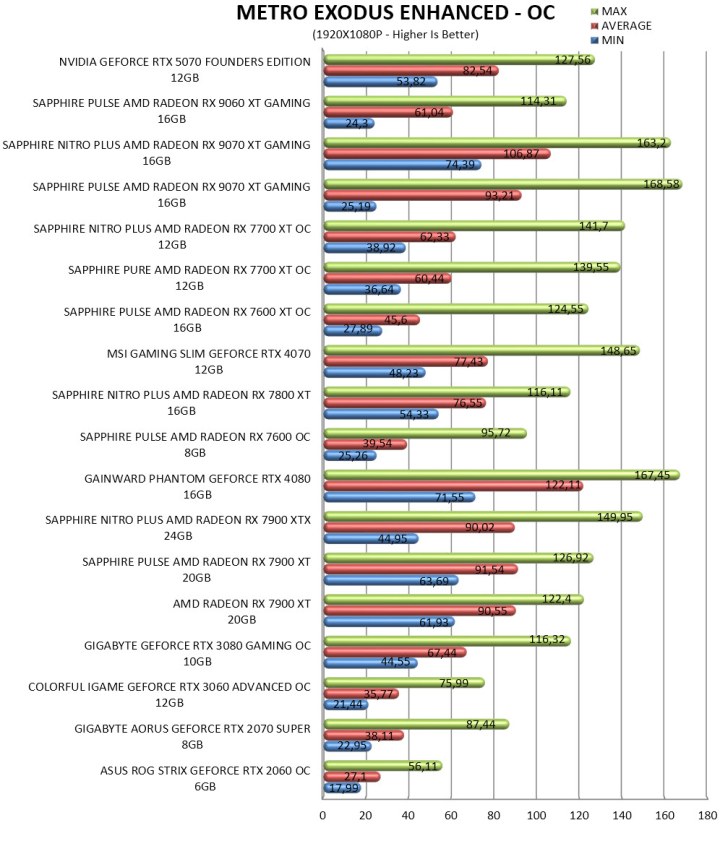
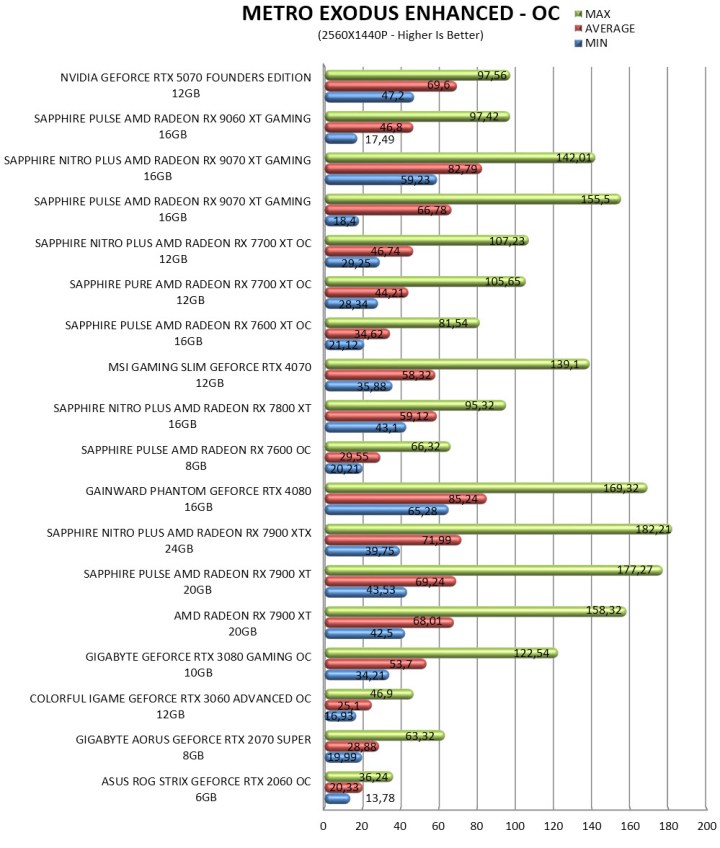
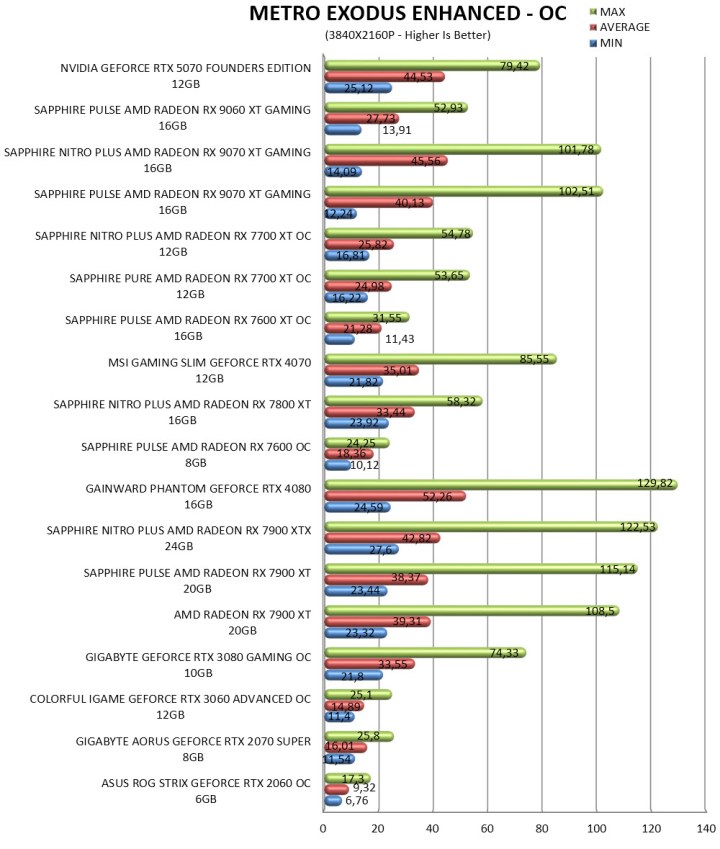
Metro Exodus Enhanced Edition is based on the 4A Engine and contains huge graphical upgrades compared to the normal version, including Ray Traced Emissive Lighting. Graphics are set at Extreme quality.
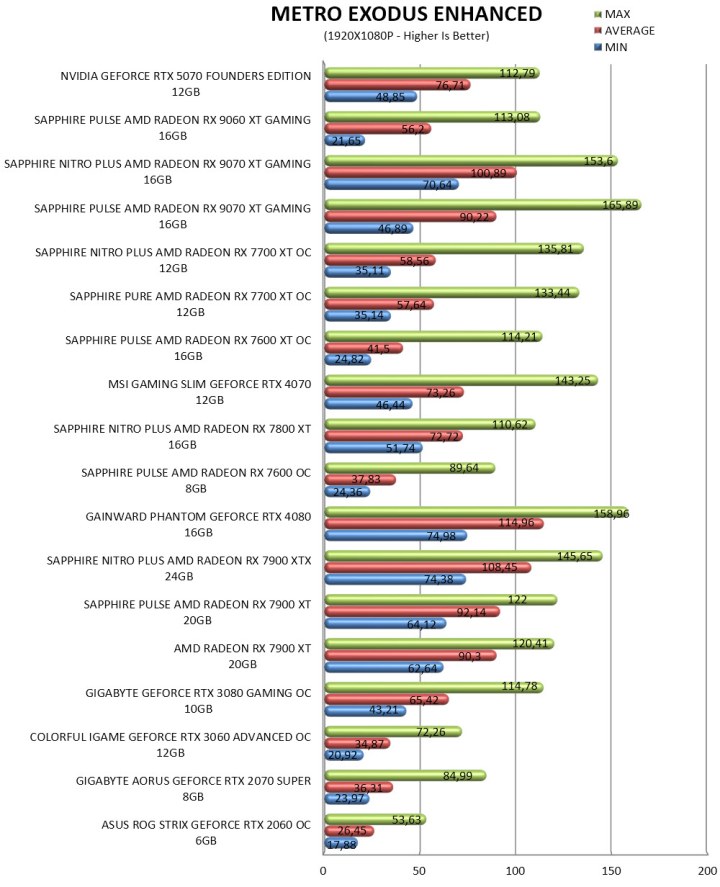
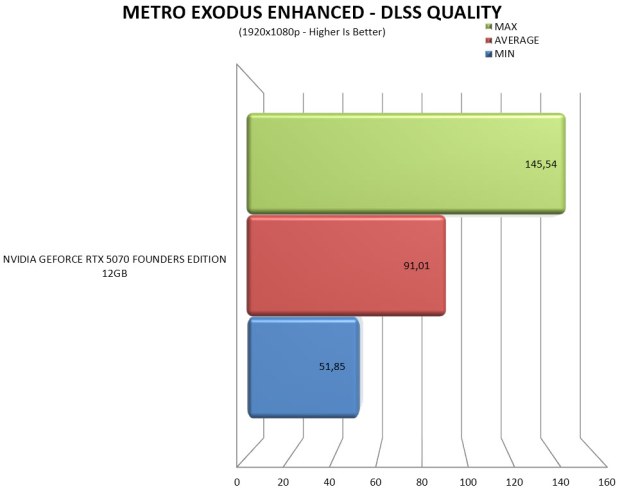
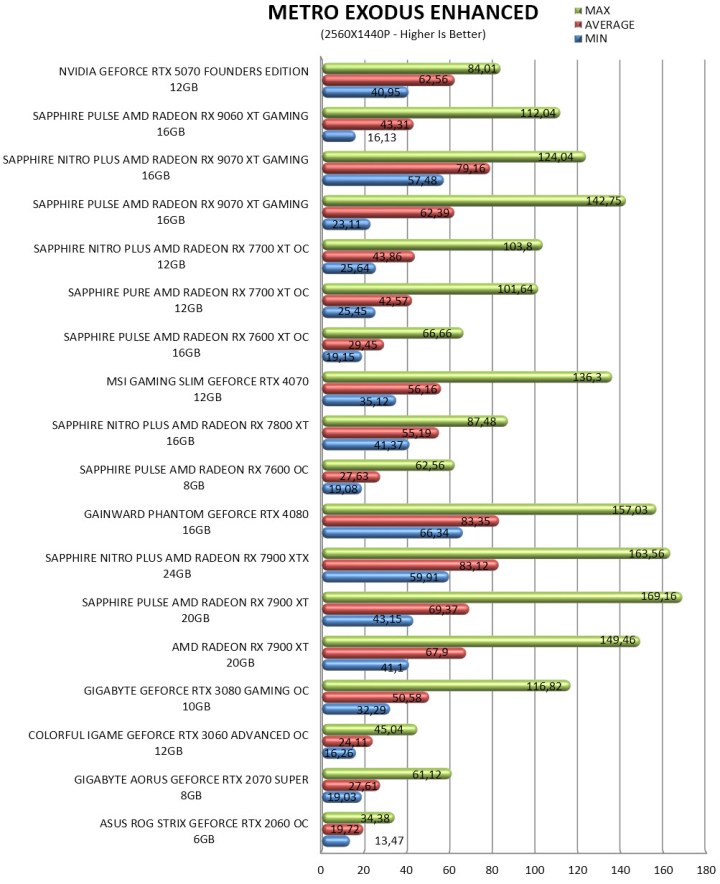
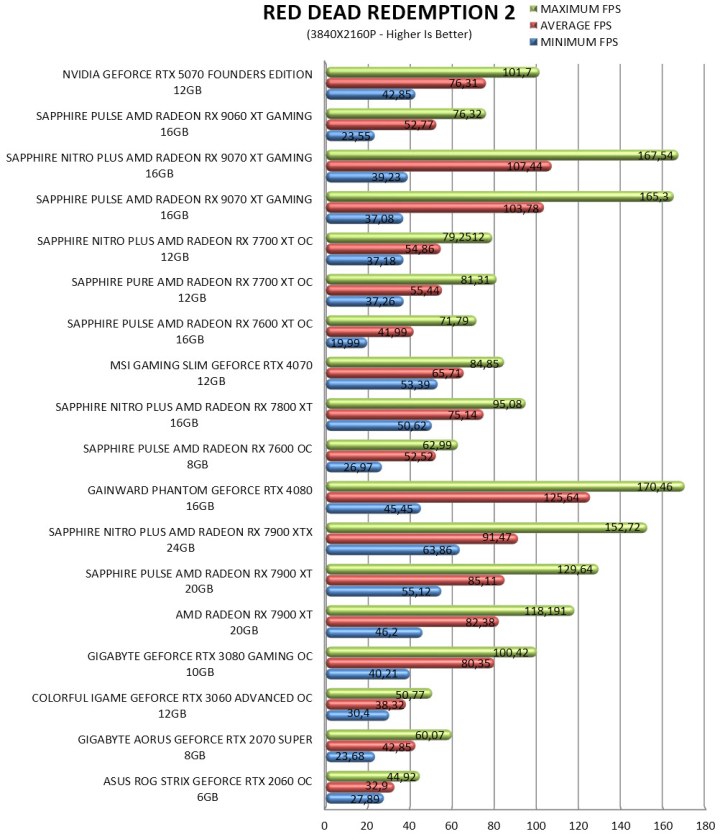
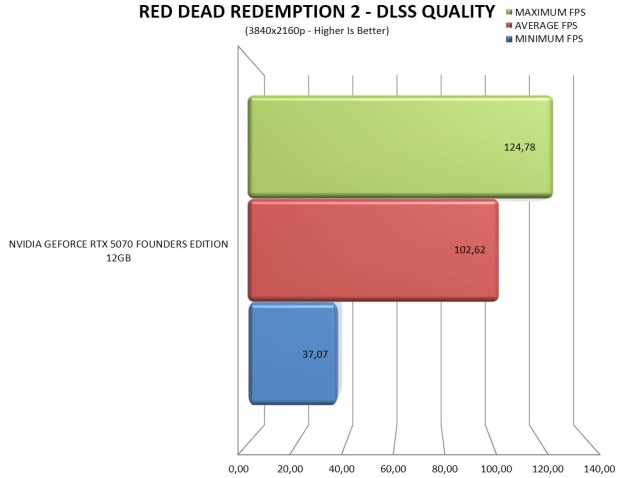
TEST RESULTS – RED DEAD REDEMPTION 2
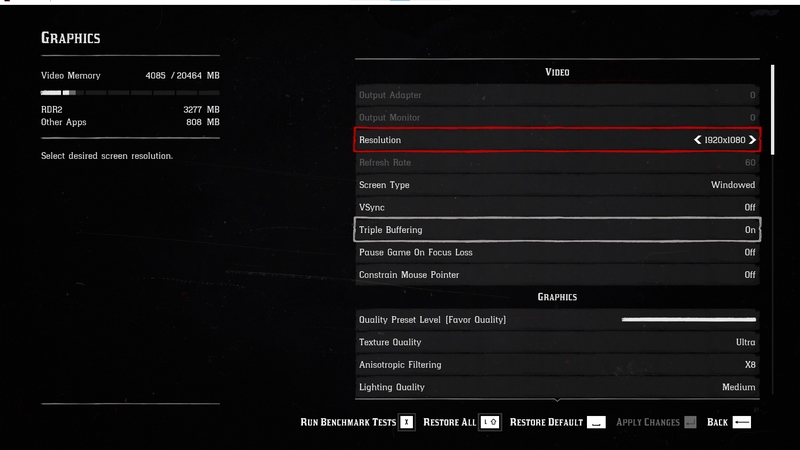
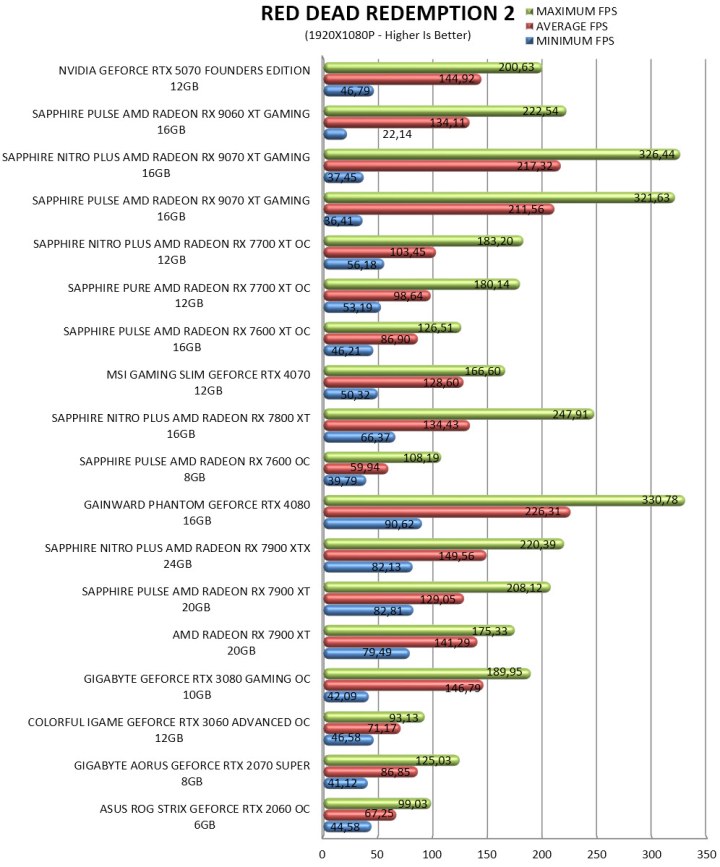
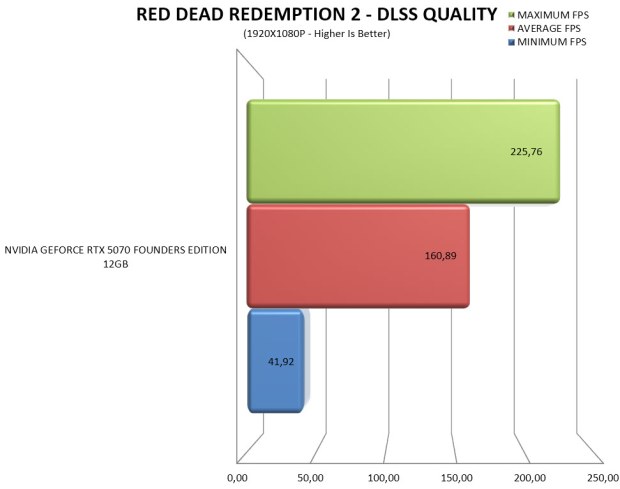
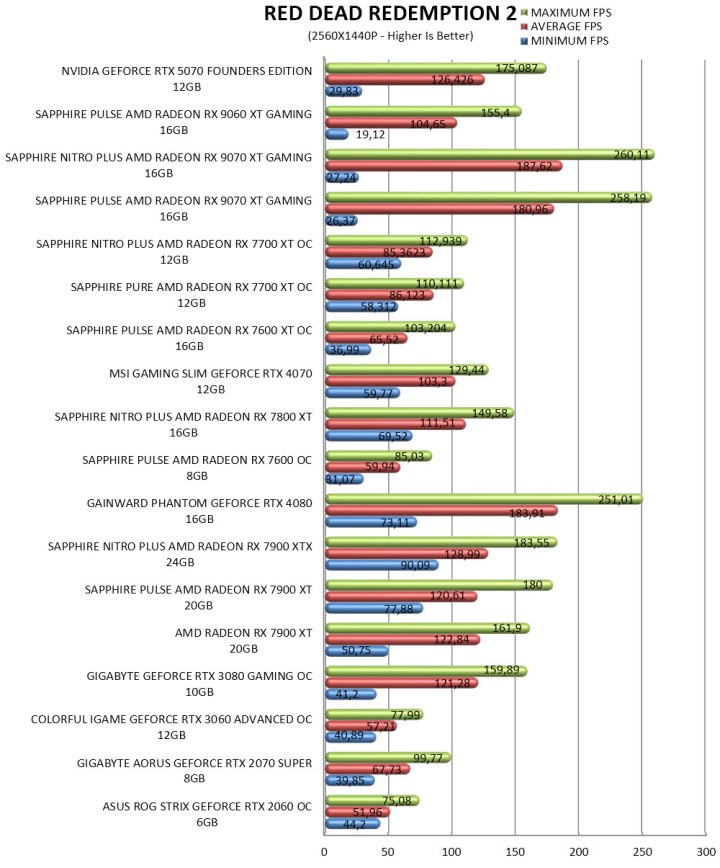
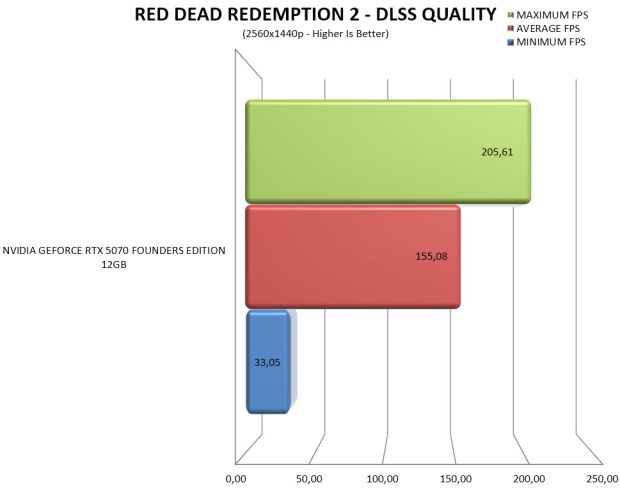
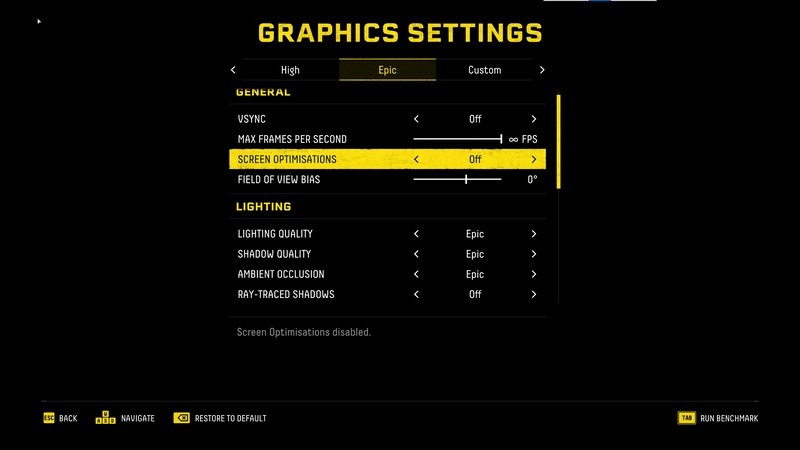
For Red Dead Redemption 2 Rockstar has used their RAGE engine (Rockstar Advanced Game Engine). Graphics preset level slider is set to favor quality.
TEST RESULTS – RETURNAL
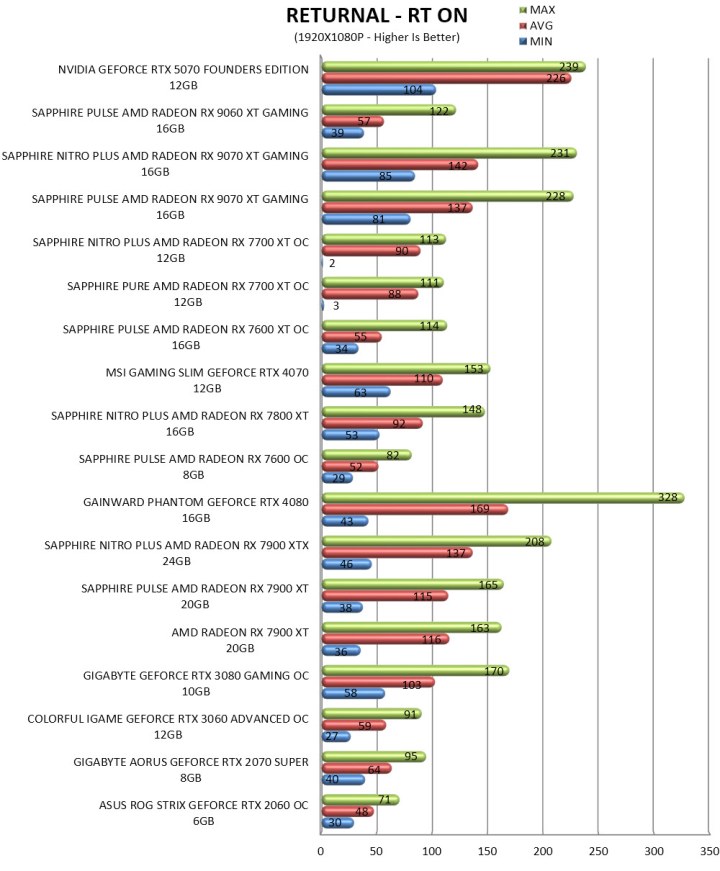
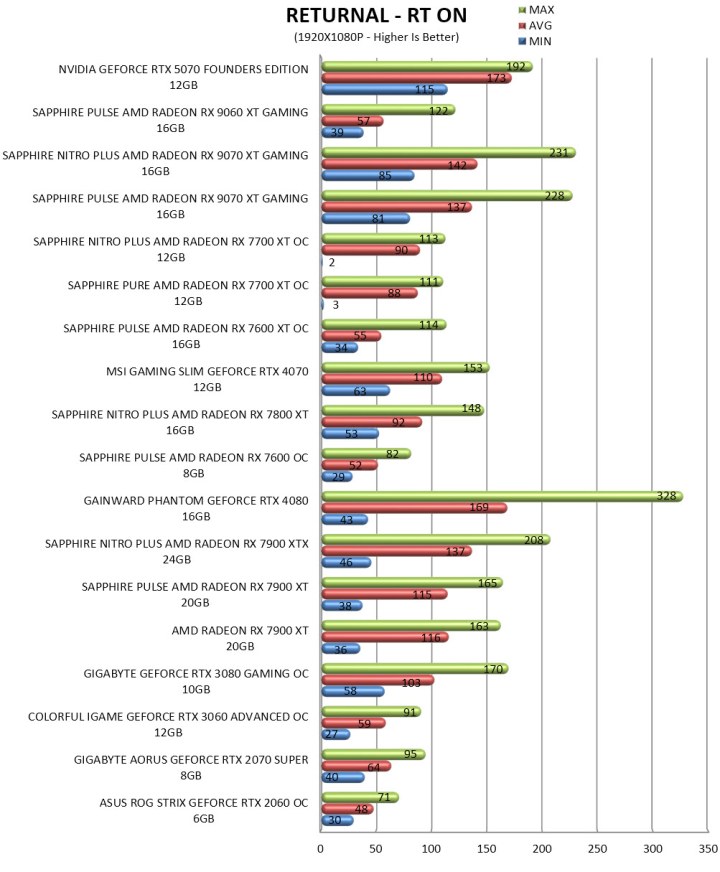
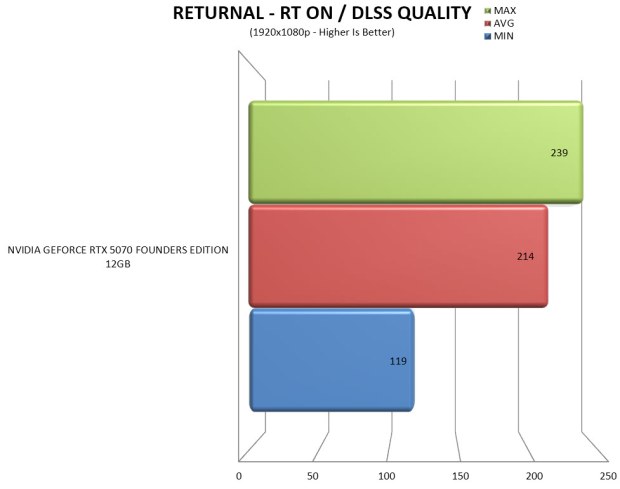
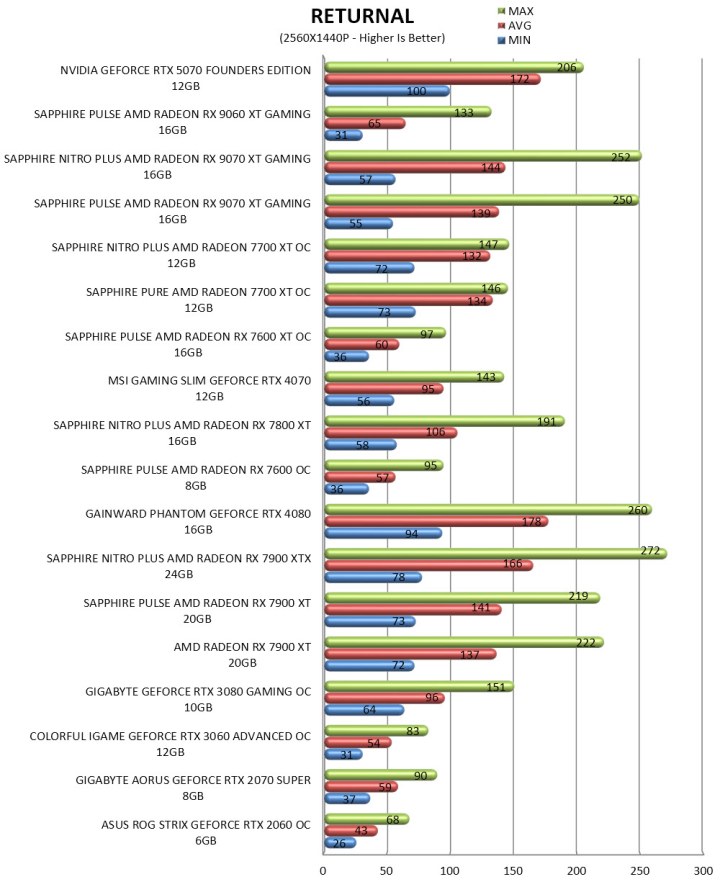
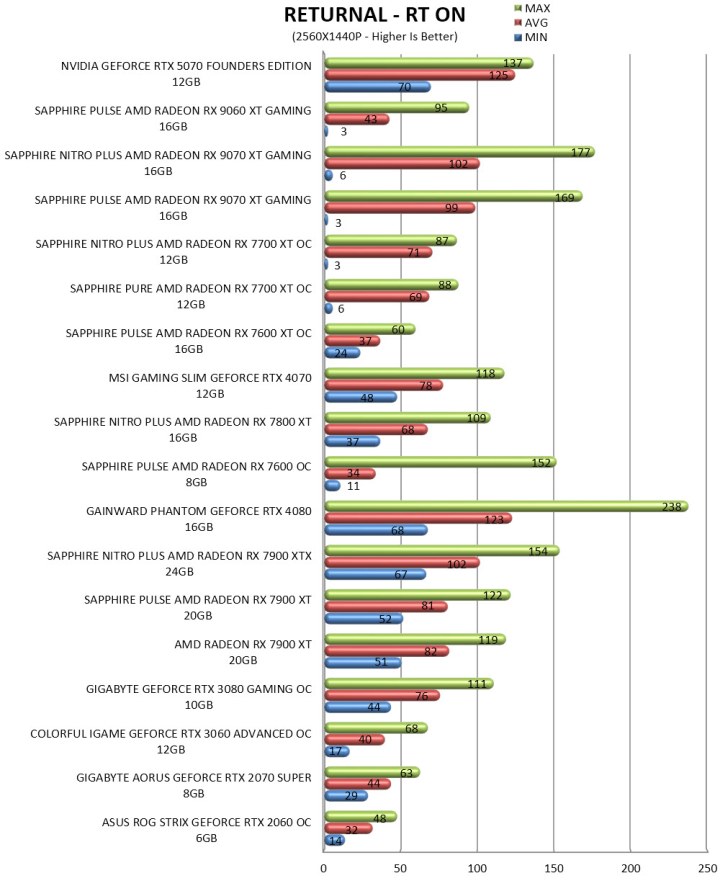
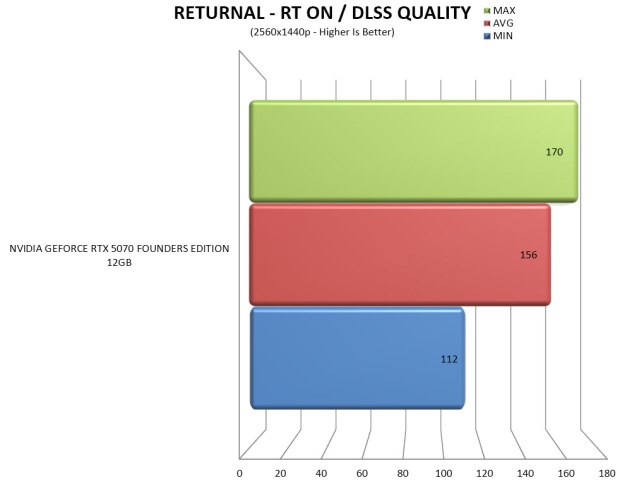
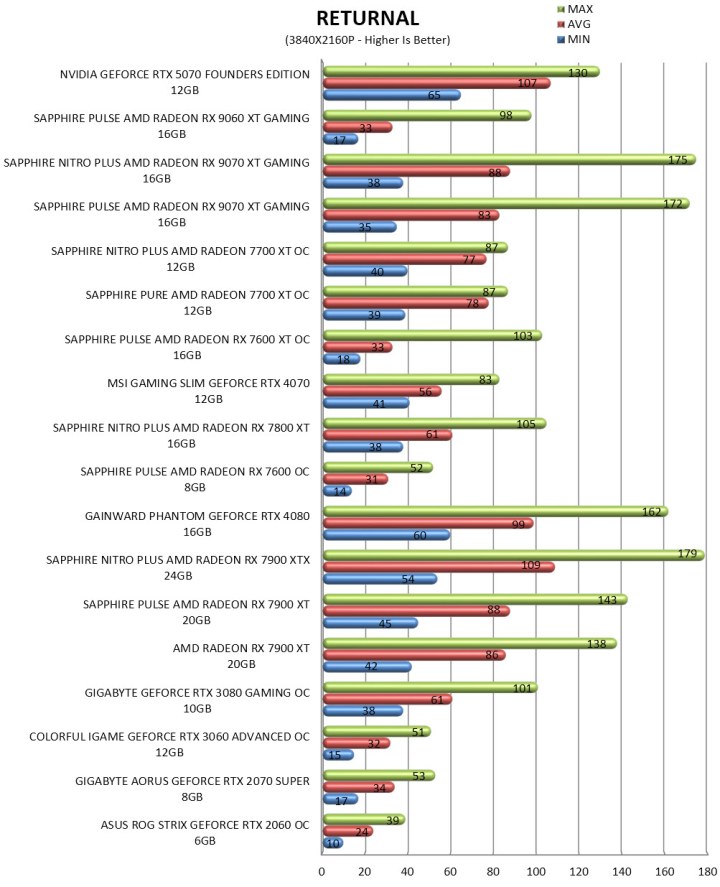
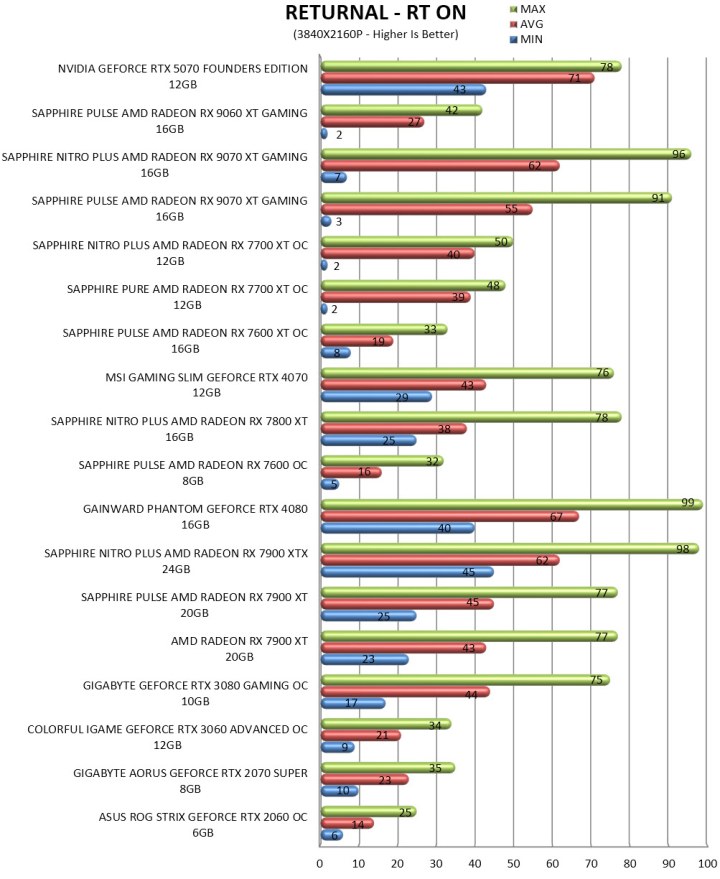
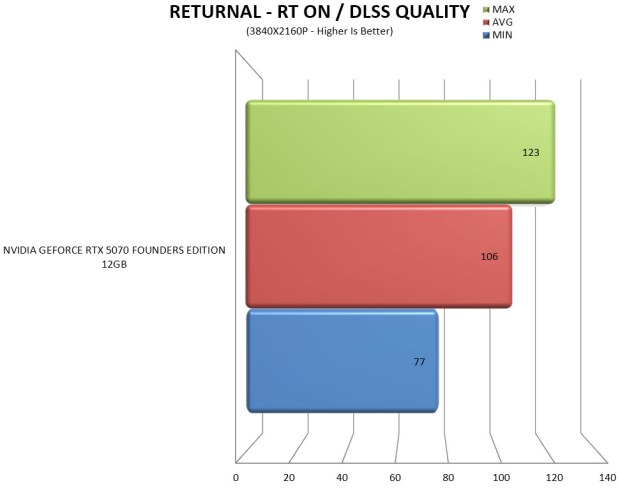
Returnal is also based on Unreal Engine 4. Graphics are set to EPIC (RT EPIC/Off).
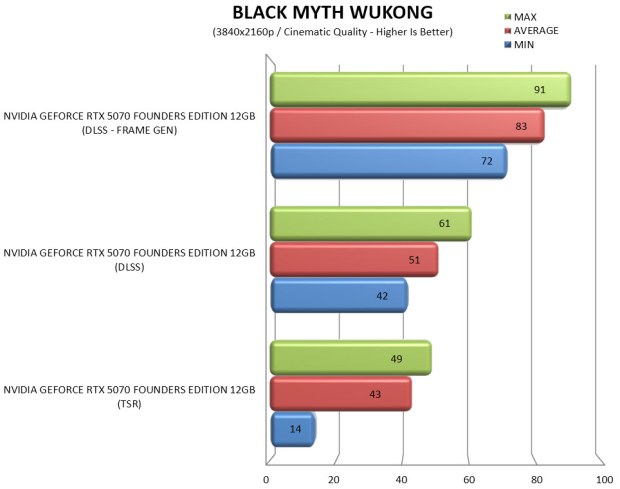
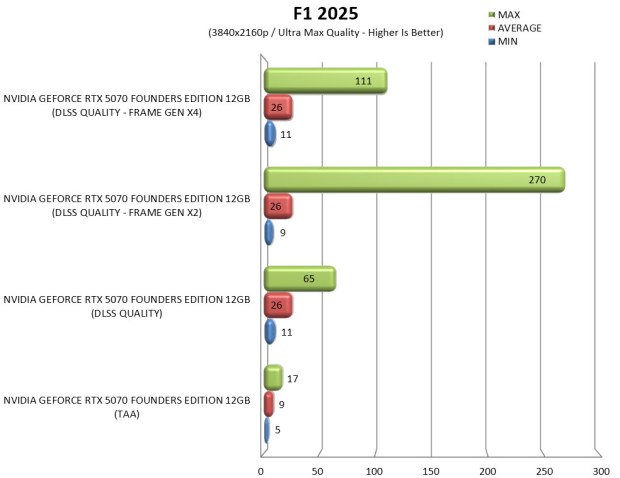
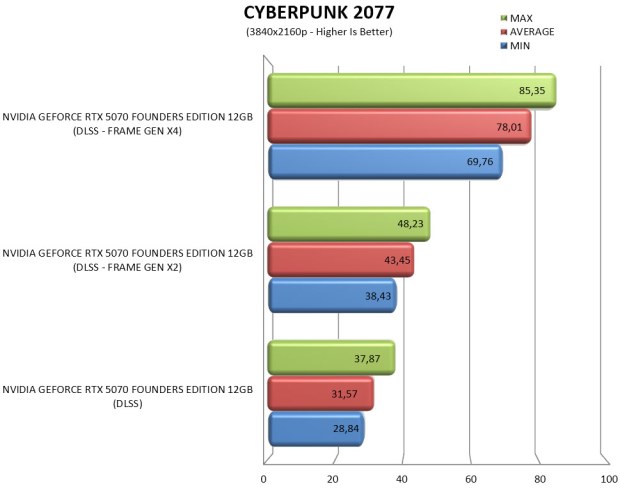
TEST RESULTS – MULTI FRAME GENERATION / BLACK MYTH WUKONG / F1 2025 / CYBERPUNK 2077 PHANTOM LIBERTY
TEST RESULTS - OVERCLOCKING
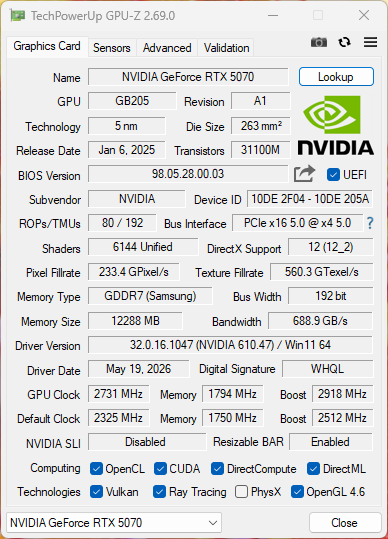
Using 406MHz extra on the core and 350MHz on the VRAM (strangely enough GPUZ didn’t show the jump in RAM speed) resulted in a very good boost in performance (going higher would result in games crashing to desktop). I also recommend tweaking voltage curves since undervolting this card is quite easy (recommend MSI Afterburner for anything OC).
TEST RESULTS - POWER CONSUMPTION / TEMPERATURES / NOISE LEVELS
CONCLUSION
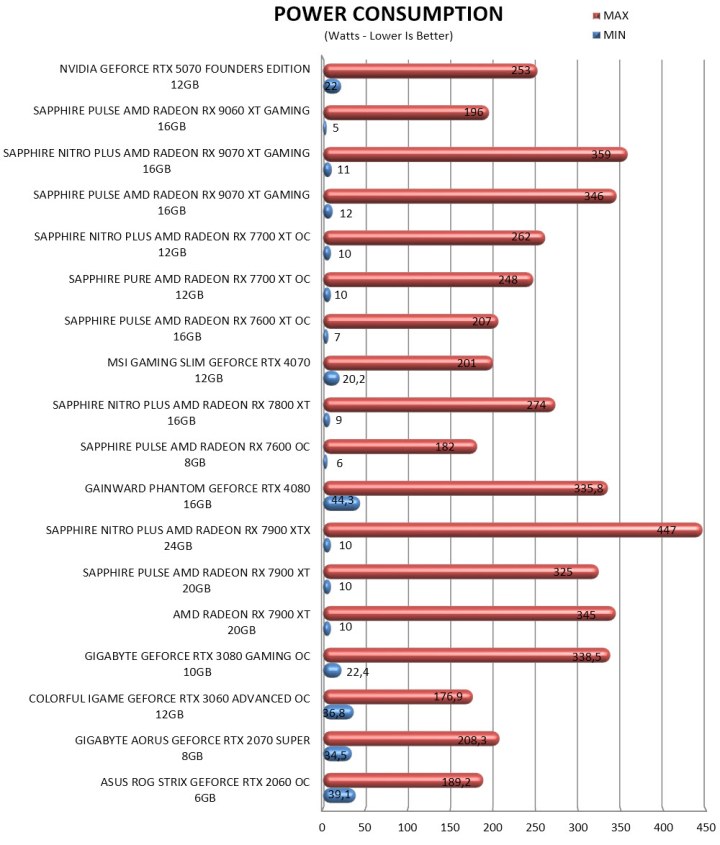
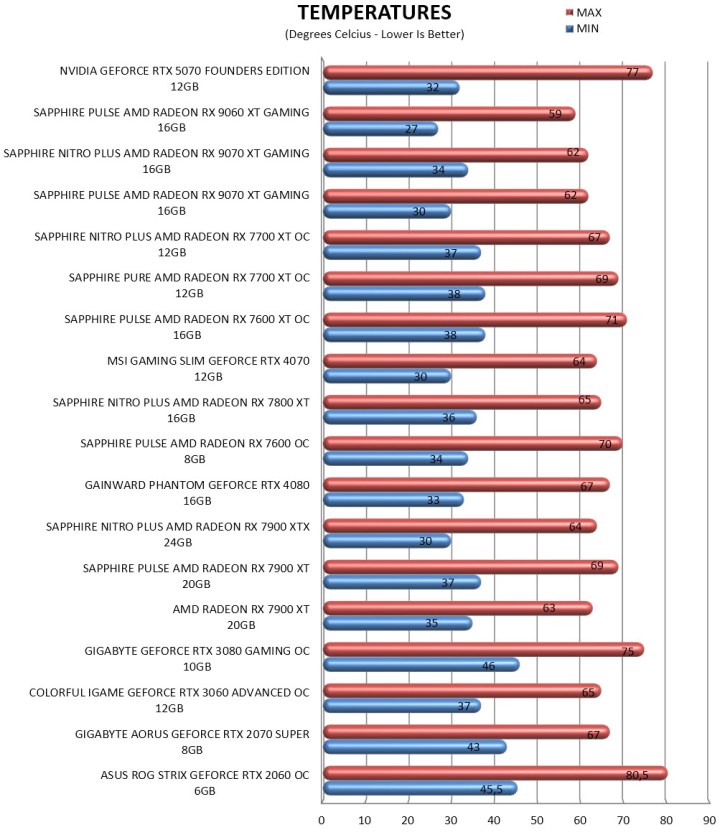
NVIDIA taking so long to send over a GeForce RTX 5070 FE sample ended up being both a blessing and a drawback. On the positive side, over a year's worth of driver updates have noticeably improved the card’s performance compared to launch. On the negative side, eighteen months is a long wait in this industry. NVIDIA also put extra emphasis on DLSS 4.5 and Multi‑Frame Generation with the GeForce RTX 5xxx series, so I evaluated those gains by adding DLSS tests across several titles and using Black Myth Wukong, Cyberpunk 2077 Phantom Liberty, and F1 2025 to measure MFG performance (DLSS Quality mode, 2x/4x MFG). So, from my time with the GeForce RTX 5070 Founders Edition, it’s clear that DLSS 4.5 and Multi‑Frame Generation aren’t optional extras, they’re the backbone of the experience. Raw performance alone puts the card in familiar 70‑series territory (Raster performance alone is a small improvement over the RTX 4070, and even ray‑traced workloads don’t dramatically shift the hierarchy), but once you flip on DLSS 4.5, the GPU suddenly feels a tier higher. The updated transformer model cleans up motion stability, and Dynamic MFG although not quite perfect yet does a very good job of pushing frame rates right up to your panel’s refresh ceiling without the jitter or input‑lag spikes older FG versions struggled with. Even 4x and 6x MFG modes feel surprisingly natural, delivering a level of fluidity that belies the card’s mid‑range positioning. Yes, you can still spot the occasional artifact in chaotic scenes (in my case I encountered instant white screens a few times), but the trade‑off is overwhelmingly worth it, DLSS 4.5 is what transforms the RTX 5070 from “solid” to “genuinely exciting” in modern AAA workloads. Power consumption is another quiet win since in most cases during real gaming the GeForce RTX 5070 hardly ever surpasses 200W (although during all my benchmarks it did break the 250W barrier), making it both cooler and more efficient than you’d expect for this class. Unfortunately, even though the cooling system is sufficient in order for NVIDIA to keep noise levels at low levels they had to compromise.
NVIDIA’s GeForce RTX 5070 Founders Edition has quietly slipped out of the retail ecosystem, no store lists it, no distributor expects it, and NVIDIA hasn’t pushed any new batches. With the FE effectively gone, the only remaining path is to pick from the various AIC partner designs, which currently start at around USD549–579 in the USA and roughly 620–670Euros in the EU for brand‑new cards. In terms of price‑to‑performance, the GeForce RTX 5070 lands in a strong position, it outpaces the previous‑gen RTX 4070 while launching at a lower street price, and on the AMD side, the only real modern counter is the RX 9070 GRE, a card that trades blows in pure raster but still falls behind once ray‑tracing and mixed workloads enter the picture, leaving the GeForce RTX 5070 as the more balanced option at roughly the same money. Overall, the GeForce RTX 5070 FE delivers where it matters and even though it’s not quite perfect the Golden Award is in order.

PROS
- Build Quality
- Design
- Excellent 1440p Performance
- Supported Technologies (DLSS 4.5 / MFG / Reflex / GSync)
- Size (242x112x39mm, 2 Slot Card)
- Good Overclocking Headroom
- Power Consumption, Noise Levels
CONS
- 12GB (For Some)
- Temperatures
- Availability