



With a return to MWC 2026, global innovation and technology leader Xiaomi continues to demonstrate its AI-empowered "Human × Car × Home" smart ecosystem, highlighting how AI is being deeply integrated into real-world scenarios at scale. With this ecosystem, Xiaomi demonstrates its transition from conceptual innovation to practical deployment, bringing AI beyond the digital interface and into the everyday physical world.
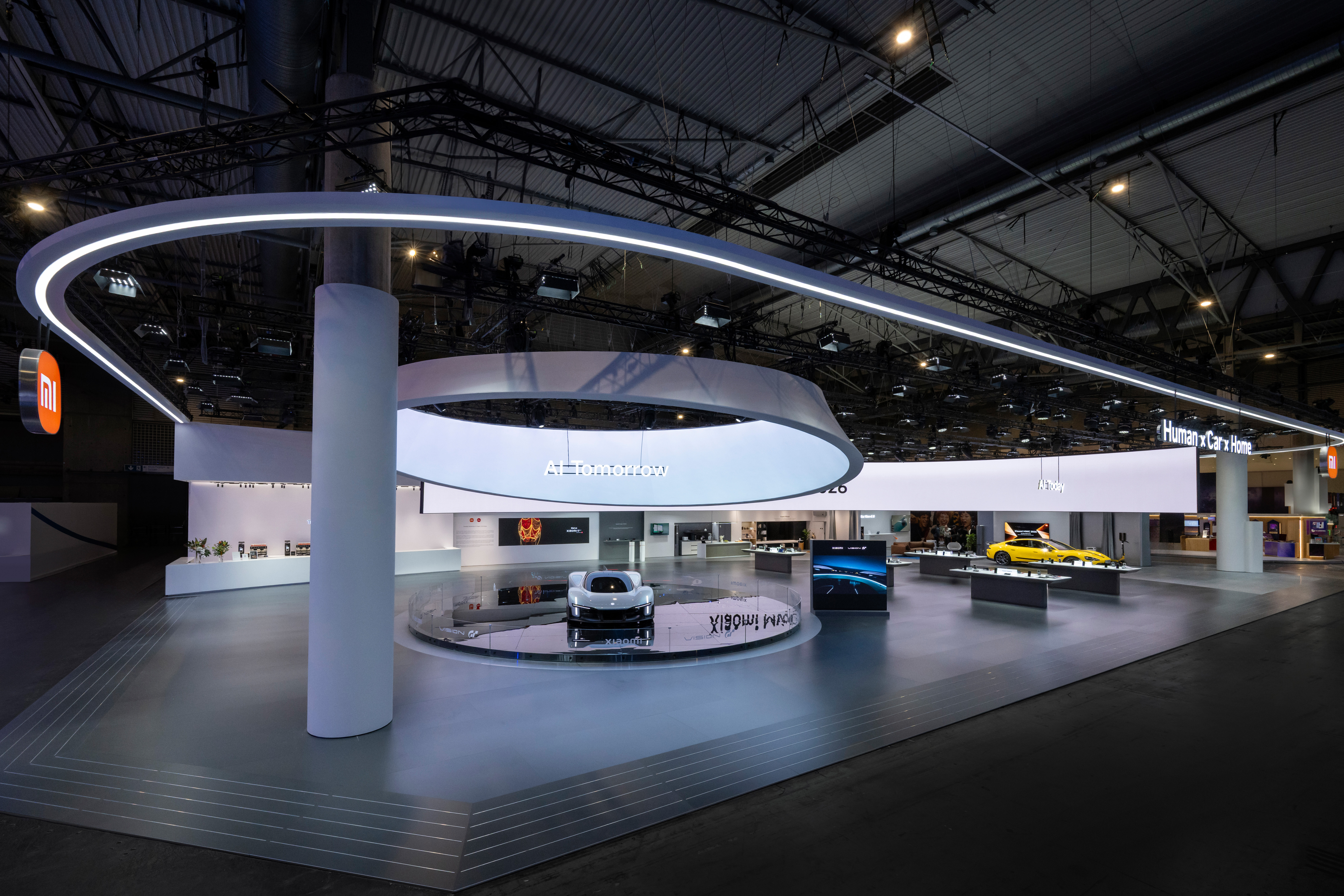
"At Xiaomi, AI is designed to serve people in real life," said Angus Ng, Director of Communications for Xiaomi International. "Through our AI-powered Human x Car × Home smart ecosystem, we are extending intelligence beyond the screen and into everyday life. This marks Xiaomi's first step toward bringing AI into the physical world—where technology becomes more intuitive, more connected, and seamlessly embedded into how people live, move, and interact."
At MWC 2026, Xiaomi presents a comprehensive portfolio that brings this ecosystem to life, led by Xiaomi 17 Series and Leica Leitzphone powered by Xiaomi, both reflecting deep collaboration between Leica in imaging and design. The ecosystem is further expanded through Xiaomi's latest AIoT devices, Xiaomi Electric Scooter 6 Series, and a full lineup of Mijia smart home appliances. In mobility, Xiaomi underscores its growing ambitions in intelligent transportation with Xiaomi SU7 Ultra, alongside the forward-looking Xiaomi Vision GT, offering a glimpse into the future of automotives.
AI's First Step: From Screens to the Physical World
At MWC, Xiaomi unveiled its latest advances in artificial intelligence, marking a pivotal moment in the evolution of AI from digital assistance to real-world intelligence. Rather than remaining confined to isolated features or on-screen interactions, Xiaomi is accelerating AI's integration into real-world environments across its "Human × Car × Home" smart ecosystem—bringing intelligence closer to everyday life.
A key milestone in this journey is Xiaomi Miloco (Xiaomi Local Copilot), a major leap forward in smart living intelligence and the first real-world deployment of Xiaomi's self-developed foundation model, Xiaomi MiMo. As an industry-first exploration of large-model–powered whole-home intelligence, Xiaomi Miloco represents a shift from device-level smart functions to system-level intelligence across the home.
Xiaomi Miloco integrates advanced large-model reasoning with multimodal perception and data analysis, enabling devices to interpret and respond intelligently to real-world contexts through vision and multimodal intelligence. Its edge-cloud collaborative architecture seamlessly supports on-device data processing, keeping sensitive data local to ensure user privacy and security.
By learning from user behavior across home scenarios, Xiaomi Miloco can automatically adjust lighting based on activities such as watching TV, reading, or using a smartphone; proactively detect household clutter and cue the robot vacuum to clean; and dynamically regulate indoor temperature by recognizing sleep states and comfort conditions. Users can also interact with the system through natural conversation, enabling complex smart home tasks and creative automation through AI reasoning rather than manual rule-setting.
Beyond single-device responses, Xiaomi Miloco enables more sophisticated, cross-device intelligence. It can infer emotional context to play appropriate music through smart speakers, coordinate lighting colors across the home to match mood or scenes, and even adapt ambient lighting based on visual elements in the environment, such as the color of flowers in a room. This marks a fundamental shift from rule-based automation to conversational, proactive AI systems, turning smart homes into responsive living environments rather than collections of connected devices.
Beyond the home, Xiaomi continues to expand its HyperAI ecosystem, integrating AI capabilities seamlessly across smartphones, vehicles, and smart home devices. Enabled through collaboration with Google Gemini, Xiaomi HyperAI delivers system-level intelligence that operates consistently across devices, rather than as fragmented, app-level features. This unified AI layer enables more natural interactions, smarter task execution, and fluid cross-device collaboration, forming the backbone of Xiaomi's multi-device intelligent experience.
Xiaomi also showcased new forms of AI interaction through innovative hardware design, including the Dynamic Back Display on the latest Xiaomi 17 Pro and Xiaomi 17 Pro Max. Designed to enable more intuitive and expressive AI engagement, the rear display supports personalized visuals, real-time previews of high-quality selfies captured with the main camera, and immersive rear-panel gaming. By extending AI interaction beyond the front screen, Xiaomi is redefining how users engage with intelligence on their devices.
Xiaomi Vision Gran Turismo Makes Global Debut
Making its physical world debut at MWC, Xiaomi Vision Gran Turismo, a visionary concept electric hypercar, is now on display at Xiaomi's booth. Created for the legendary Gran Turismo franchise following an invitation from series creator Kazunori Yamauchi, the concept represents Xiaomi's design exploration into the future of hypercar design. At the booth, visitors can get a close look at the car's teardrop-shaped cockpit, sculpted aerodynamic channels, Active Wake Control System, and signature halo-shaped taillight — all of which embody the brand's "Sculpted by the Wind" design philosophy. The concept also envisions a "Sofa Racer" interior, where the continuous loop architecture integrates intelligent features like Xiaomi Pulse to create an experience best described as racing on a sofa, fully integrated into Xiaomi's "Human × Car × Home" smart ecosystem.
Xiaomi Teams With Leica to Redefine the Mobile Imaging Experience
Xiaomi has been on a long-term journey of exploration in mobile imaging, committed to delivering refined, user-centric imaging experiences. Since entering into a strategic partnership with Leica in 2022, Xiaomi has continued to deepen its collaboration with the legendary camera maker. In 2025, the two companies announced a global upgrade of their strategic imaging cooperation, evolving the effort from a highly successful Joint R&D framework to a new Strategic Co-Creation Model—marking a decisive step toward redefining the future of mobile imaging through deeper, end-to-end collaboration.
At MWC, Xiaomi unveiled Xiaomi 17 Ultra for global markets, the first flagship smartphone developed under its upgraded partnership. The device introduces a new-generation optical system, including a newly developed 1-inch LOFIC main camera sensor and the industry's first Leica APO-certified optical telephoto zoom lens for mobile imaging, delivering significant improvements in night photography, high-contrast detail accuracy, and telephoto performance.
Also showcased is Leica Leitzphone powered by Xiaomi, representing the most advanced stage of collaboration to date. Designed in direct collaboration with Leica's design team, the device draws inspiration from the iconic Leica M-series cameras. Its dual-tone back panel combines a leather-textured finish with a matte surface, delivering both improved grip and a distinctive, camera-inspired design language.
Empowering a New Phase of Smart Appliances Worldwide
Xiaomi also presents its full portfolio of major smart home appliances on the global stage, marking a key step in the international expansion of its smart living business. As part of its "Human × Car × Home" strategy, Xiaomi is accelerating the global rollout of large home appliances, including air conditioners, refrigerators, and washing machines, transforming them from passive household devices into intelligent terminals that understand, adapt to, and proactively support everyday life.
Today, Xiaomi's smart home appliances are available across four major regions and 14 countries, enabling more users worldwide to experience a fully interconnected smart living ecosystem. Through AI-driven coordination across devices, Xiaomi delivers a unified, human-centered living experience that enhances comfort, efficiency, and usability across markets.
Building a More Responsible and Efficient Intelligent Ecosystem
Sustainability is an integral and enduring commitment within Xiaomi's "Human × Car × Home" strategy. Beyond product innovation, Xiaomi is advancing sustainability through intelligent manufacturing. The operational launch of Phase One of Xiaomi's Smart Home Appliance Factory in Wuhan marks a major milestone, becoming Xiaomi's third large-scale smart production base after its smartphone factory and EV super factory. Together, these facilities form an integrated manufacturing system spanning smartphones, smart home appliances, and smart vehicles, powered by automation, digitalization, and AI.
These intelligent manufacturing systems enhance Xiaomi's ability to improve resource efficiency, reduce waste, and lower carbon intensity across the entire product lifecycle, supporting sustainable growth at scale. Xiaomi’s progress has gained global recognition, including an upgrade of its MSCI ESG rating to "A", and inclusion in Forbes' 2025 China ESG 50 list and World's Best Employers ranking, underscoring its commitment to responsible innovation and long-term sustainability.